
Functional Fitness for Everyday Life: Train for the Life You Actually Live
I do not train people to lift big numbers in the gym. I train them for the life outside it: to carry the groceries, chase the kids, and finish a long day with energy left over. Here is what functional fitness really means and how to start.
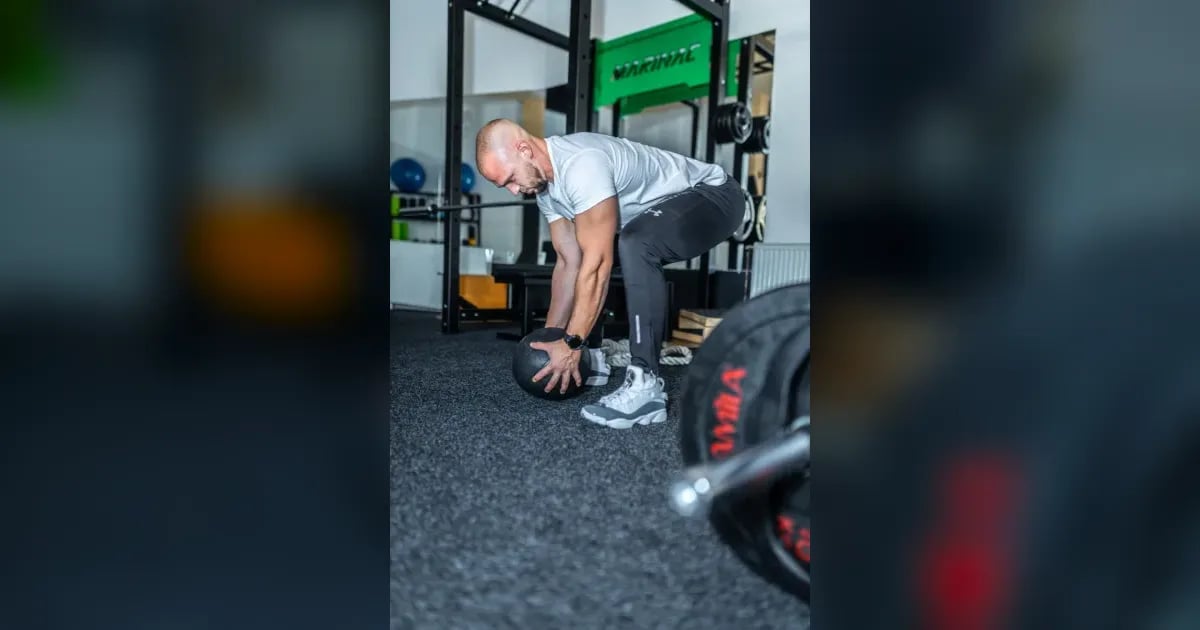
I want to tell you something I say to almost every new client who walks into my studio in Bijeljina. You do not train for the numbers on the barbell. You train for the life that happens after you leave the gym. You train so you can carry both shopping bags up to the third floor without stopping. So you can lift your kid onto your shoulders without your back complaining for two days. So you can work a full shift, come home, and still have something left for your family. That is the whole point. Everything else is just detail.
My name is Igor Koprivica. I am the founder of X-Hibrid, the X Hybrid System. For more than five years I have coached over 300 people, both online and one-on-one here in Bijeljina, and I still compete myself in OCR and triathlon. That competition keeps me honest. It reminds me every season what a body is actually for: to move, to carry, to climb, to keep going when it would be easier to stop. And that is exactly what I want to give my clients, whether they are athletes or busy parents who have not exercised in ten years.
What functional fitness really means
The word functional gets thrown around a lot, so let me make it simple. Your body does not know what a bicep curl is. It does not think in muscles. It thinks in movement patterns. Every physical thing you do in a day is one of a handful of basic patterns, and if you train those patterns, you get stronger at life itself.
There are seven of them, and I build almost every program around these:
- Squat - sitting down and standing up, getting off the floor, lowering yourself to a low shelf.
- Hinge - bending at the hips to pick something up off the ground with a strong, protected back.
- Push - pushing a door, a stroller, a heavy cart, or yourself up off the floor.
- Pull - pulling a rope, opening a heavy drawer, pulling yourself up.
- Carry - the most underrated pattern of all: holding weight and walking with it.
- Rotate - twisting to reach the back seat of the car, to swing, to turn under load.
- Gait - walking, running, changing direction, moving through the world on your feet.
Now compare that to what most people do in a gym: they sit on a machine and isolate one muscle at a time. There is nothing wrong with looking good, and building muscle is healthy. But if all you ever do is chase aesthetics with isolation exercises, you can end up with a body that looks trained but does not work when life asks it to. I have seen strong-looking people throw their back out lifting a suitcase, because they never trained the hinge under real conditions. Functional fitness fixes that. It builds a body that performs, not just one that poses.
Why this matters for regular people, parents, and desk workers
Here is the truth I see every single week. My clients are not professional athletes. They are parents, office workers, drivers, nurses, business owners. Their biggest complaints are almost always the same: my lower back hurts by the afternoon, I am out of breath after two flights of stairs, I feel weak, I have no energy for my kids in the evening.
None of these are gym problems. They are life problems, and life is exactly where functional training pays off. If you sit at a desk eight hours a day, your hips get tight, your glutes switch off, and your posture collapses forward. No machine chest press will fix that. But teach that same person to squat, hinge, and carry properly, add some mobility, and within weeks they stand taller, breathe easier, and stop dreading the stairs.
For parents it is even more direct. A toddler is a live kettlebell that never stops moving. Lifting, carrying on one hip, getting up and down off the floor a hundred times a day - that is functional load whether you signed up for it or not. My job is to make sure your body is ready for it, so that instead of ending the day sore and drained, you end it strong and safe in your own body. That feeling of safety, of trusting your body to do what you ask, is one of the most underrated things fitness gives you.
The carryover: from the gym to the ordinary day
Let me connect the dots so you can see it clearly. When you train the hinge with a kettlebell, you are rehearsing the exact movement you use to lift a grocery crate or a bag of cement. When you do farmer carries, you are training the grip and posture you need to carry shopping bags from the car. When you squat, you are practicing getting up off the floor for the next fifty years of your life. When you do carries and rotations together, you are building the trunk strength that protects your spine every time you twist to lift your child into the car seat.
This is why my people report the same thing after a couple of months: the daily stuff just got easier. Stairs stop being an event. A long workday stops flattening them. A full match or a long hike on the weekend is no longer something to recover from for three days. That is the real scoreboard. Not the weight on the bar - the energy left in the tank at 9pm.
A simple functional full-body routine
You do not need a fancy gym for this. A pair of kettlebells (or even one), your own bodyweight, and enough room to walk a few steps is plenty. Here is a routine I give beginners. Do it two or three times a week, with a day of rest between sessions.
Warm-up and mobility (5 to 8 minutes):
- Deep squat hold, gently rocking side to side - 60 seconds
- Hip hinges with no weight, feeling the stretch in the hamstrings - 10 reps
- Cat-cow for the spine - 10 slow reps
- Shoulder circles and thoracic rotations - 10 each side
The main circuit - go through it 3 rounds, resting about a minute between rounds:
- Goblet squat (hold one kettlebell at your chest) - 10 reps. This trains the squat and teaches an upright, strong torso.
- Kettlebell deadlift or hinge - 10 reps. Push the hips back, keep the back flat, drive through the heels. This is the pattern that protects your back for life.
- Push-up (on knees or against a bench if needed) - 8 to 10 reps. Your push pattern.
- Bent-over kettlebell row - 10 reps each side. Your pull pattern, and great for desk-worker posture.
- Farmer carry - walk 20 to 30 steps holding weight in both hands, tall and braced. The king of functional training.
- Standing rotation (hold the kettlebell and rotate side to side under control) - 8 each side. Trains the trunk to resist and produce twist safely.
Finish with two or three minutes of easy walking to bring the heart rate down. That is it. Seven patterns, one full body, real-world strength. As you get stronger, add weight, add a round, or shorten the rest. Simple does not mean easy, and it does not need to be complicated to work.
Do not skip mobility
One thing I will not let my clients neglect is mobility. Strength without range of motion is a car with the handbrake on. If your hips and shoulders are stuck, you cannot squat deep or carry tall, and you leak power everywhere. Five to ten minutes a day of gentle mobility - deep squat holds, hip openers, thoracic rotations - will do more for how you feel than almost anything else. It is the difference between a body that grinds and a body that flows.
How to start
Start smaller than you think you should. The biggest mistake I see is people going too hard for two weeks, getting sore and discouraged, and quitting. Consistency beats intensity every time. Two honest sessions a week, done for months, will transform you far more than a heroic month that ends in burnout. Master the movement first, add load later. Move well, then move heavy.
And if you want someone to build the right plan for your body, your schedule, and your life, that is exactly what I do. I coach people fully online with programs tailored to you wherever you are, and one-on-one in person here in Bijeljina. Whether you are a parent trying to keep up with your kids, a desk worker whose back has had enough, or someone who just wants to feel strong and capable again, I will meet you where you are.
Your first consultation with me is free. We will talk about your goals, your body, and your daily life, and I will show you exactly how functional training can change how your days feel. Reach out, and let us build a body that works for the life you actually live.
FAQ
- Do I need a gym or expensive equipment to train functionally?
- No. One or two kettlebells, your own bodyweight, and a little floor space are enough to train every important movement pattern. Many of my online clients train at home with minimal gear and still make excellent progress. Good coaching matters far more than fancy machines.
- I have never really exercised or I have a bad back. Is functional training safe for me?
- Yes, and it is often the best place to start, because we build the patterns that protect your back and joints in daily life. We begin with light load, perfect technique, and mobility, then progress at your pace. In your free consultation we assess where you are and design something safe and realistic for you.
- How quickly will I feel a difference in everyday life?
- Most of my clients notice easier stairs, better posture, and more energy within three to four weeks of consistent training. Real strength and body composition changes take a few months. The point is that the improvements show up where you live: carrying groceries, lifting kids, getting through a long day.