
How to Train for an OCR (Obstacle Course Race): A Coach's Race-Prep Guide
I race OCR and triathlon myself, and I have prepared hundreds of people for their first obstacle course race. Here is exactly how I build an athlete over 8 to 12 weeks: running base, strength, grip, carries and conditioning.
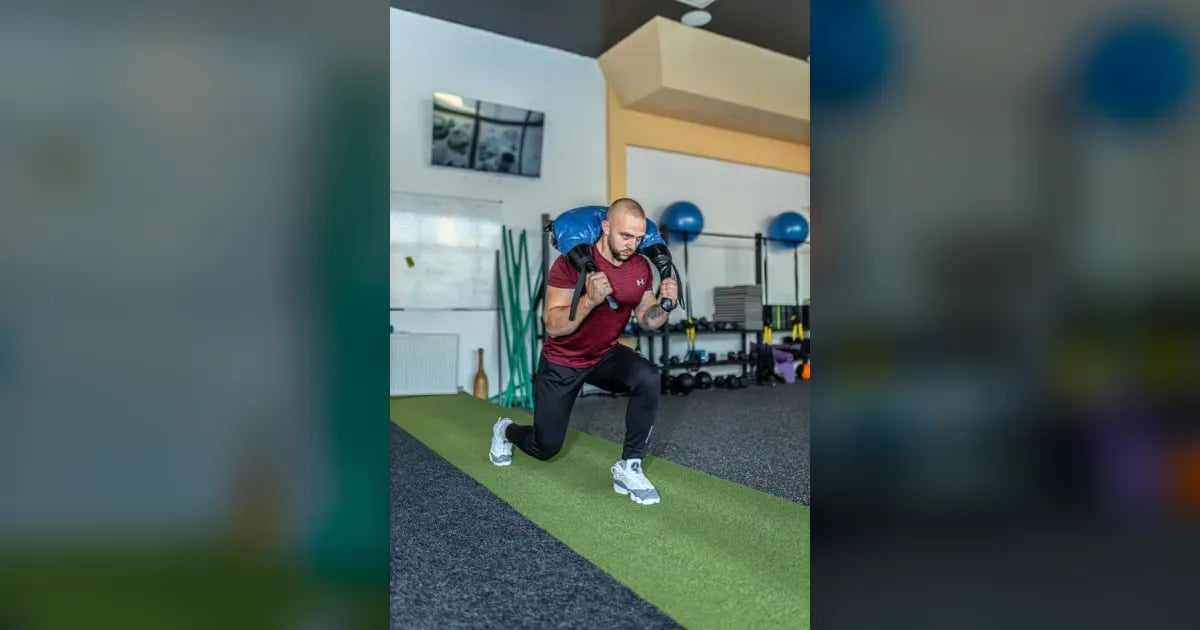
I still remember my first obstacle course race. I thought I was fit, I ran regularly, I lifted a few times a week, and I figured that would carry me through. Then I hit the first heavy carry, my forearms were on fire by the third rig, and I understood something that took me a few races to fully respect: OCR is its own sport. It is not just running, it is not just strength, it is the messy, muddy combination of both under fatigue. Since then I have raced OCR and triathlon for years, and I have prepared more than three hundred people in Bijeljina and online for everything from their first local mud run to serious competitive events. In this guide I want to hand you the exact structure I use to build a racer.
What an OCR Actually Demands
Before you write a single training session, you have to understand what you are training for. An obstacle course race is a series of demands stacked on top of a run. You are running between obstacles, often on uneven trail, up and down hills, and then, with your heart rate already high, you are asked to do something hard with your body.
- Running endurance: the bulk of any OCR is running. If you cannot cover the distance comfortably, nothing else matters.
- Grip strength: monkey bars, ropes, rigs, carries. Your hands give out long before your legs do if you have not trained grip specifically.
- Carries: sandbags, buckets, logs, kettlebells over distance and up hills. This is raw, honest work.
- Crawling and climbing: barbed wire crawls, walls, cargo nets. Full-body coordination under fatigue.
- Muscular endurance: the ability to repeat hard efforts again and again without your muscles quitting.
Notice that pure maximal strength is quite low on this list. You do not need a huge bench press to finish an OCR. You need to be strong relative to your bodyweight, and you need that strength to last. The athletes who struggle most are usually the ones who are strong for one all-out effort but fall apart when they have to be strong for the tenth time in an hour. That repeatability is the whole game, and it is trainable.
The other thing beginners underestimate is the mental side. An obstacle course race is a long conversation with your own discomfort. There will be a moment, usually somewhere in the middle, where your legs are heavy, your hands are cold and raw, and a part of you wants to walk. Everything we do in training is also preparing you for that moment, so that when it comes you already know it is normal and you keep moving.
The 8 to 12 Week Plan Structure
Here is how I split the preparation. I think of it in three overlapping blocks, but every single week contains a bit of everything so nothing goes stale.
Block 1: Build the Base (Weeks 1 to 4)
The foundation is aerobic. In these first weeks the priority is your running base and your general strength. I want you running three times a week: one easy longer run to build distance, one steady run, and one session of hill running or intervals to teach your legs to work hard and recover. Alongside that, two strength sessions focused on the big patterns: squats, deadlifts, presses, rows and pull-ups. We are laying bricks here. Do not rush it.
Block 2: Get Specific (Weeks 5 to 8)
Now we make it look like a race. Running stays, but we add carries into your strength work, and grip becomes a daily habit. This is where farmer carries, sandbag carries and sled or prowler work take over. We start combining efforts: run, then carry, then run again. Your body learns to grip and pull with an elevated heart rate, which is exactly what race day feels like.
Block 3: Sharpen and Simulate (Weeks 9 to 12)
The final block is about putting it together. We run our longest sessions here, we practise actual obstacle patterns, and we do full simulations: a run with carries, burpees, dead hangs and crawls stitched together back to back. The last week before the race we taper. We cut volume sharply, keep a little intensity so you feel sharp, and let your body absorb all the work you have banked.
The Key Exercises
These are the movements I come back to again and again for OCR athletes. Master these and you are ready for most of what any course throws at you.
- Farmer carries: the king of OCR training. Grab something heavy in each hand and walk. It builds grip, core, posture and mental toughness all at once. Carry for distance, not just time.
- Pull-ups: your ticket over walls and across rigs. If you cannot do them yet, we build up with negatives and banded reps until you can.
- Dead hangs: the single best grip builder. Just hang from a bar for time. Add a towel to mimic ropes. This one exercise saves races.
- Sled or prowler pushes: pure leg and lung conditioning that translates perfectly to uphill carries and pushes.
- Hill running: nothing prepares you for muddy inclines like actual hills. It builds power and toughens the mind.
- Burpees: the universal OCR penalty. Learn to love them, because you will meet them. Train them so they never feel like a punishment.
Obstacle-Specific Practice
You do not need a course in your backyard to prepare for obstacles. A pull-up bar with a towel over it trains your rope and monkey bar grip. A heavy bag becomes your bucket carry. A wall or high fence, practised safely, teaches you to get your body over height. Crawling under a low bench or across your floor rehearses the barbed wire crawl. The trick is to practise the pattern, not to own the exact obstacle. Closer to the race, if you have access to a training rig or a local OCR group, spend a session or two getting comfortable with the real technical movements, especially grip transitions on a rig.
Nutrition and Race-Day Tips
Training is only half the picture. In the weeks of preparation, eat to support the work: enough protein to recover from strength sessions, plenty of quality carbohydrates to fuel your runs, and enough water that your grip and muscles do not fail early from dehydration. In the final days before the race, keep your carbohydrate intake solid so your muscles are fully fuelled.
On race morning, eat a familiar breakfast two to three hours before the start. Never try a new food or supplement on race day. Arrive hydrated, but do not overdrink in the final hour. For longer races, carry or plan for some fuel, a gel or a piece of fruit, to keep your energy from crashing halfway through. And warm up properly. A few minutes of easy jogging and some dynamic movement means you hit the first obstacle ready instead of cold.
Common Beginner Mistakes
I see the same mistakes every season, and they are all avoidable.
- Ignoring grip: people train legs and running and forget that their hands will decide half the obstacles. Train grip from week one.
- Starting too fast: adrenaline is high at the start line, you sprint out, and you are cooked by the first big carry. Pace yourself. It is a long day.
- Neglecting the run: some strong people assume the obstacles are the whole race. They are not. Running is most of the distance, so it must be most of your training.
- Fearing failure: you will fail an obstacle at some point. Train the penalty so it never rattles you.
- Skipping recovery: more is not better. The work only pays off if you sleep, eat and recover enough to absorb it.
Train With Me
I have raced these events, I have finished cold and muddy and grinning, and I have coached hundreds of people to their own finish lines. Whether you want a fully structured online OCR preparation program or hands-on one-on-one coaching here in Bijeljina, I will build a plan around your fitness, your race and your timeline. Your first consultation is completely free, so we can talk through your goals with no pressure. Reach out, tell me about the race you have your eye on, and let us get you to that start line ready to conquer it.
FAQ
- How long do I need to train before my first OCR?
- For most beginners with a basic level of fitness, eight to twelve weeks is enough to arrive at the start line prepared and confident. If you cannot yet run three to four kilometres without stopping, give yourself the full twelve weeks and start with the running base first. If you already run and lift regularly, you can sharpen up in eight. The goal is not to be perfect on race day, it is to be ready, and readiness is very achievable in this window.
- Do I need special obstacle equipment to train at home?
- No. You can prepare for the vast majority of obstacles with simple tools: a pull-up bar, a heavy bag or sandbag for carries, a hill or a set of stairs, and your own bodyweight for burpees, crawls and climbing patterns. A towel over the pull-up bar trains the exact grip you need for ropes and monkey bars. When we work together I show you how to replicate almost every race obstacle with what you already have around you, then we polish the technical ones closer to race day.
- What if I fail an obstacle during the race?
- You do the penalty and you keep moving, and you smile while you do it. Almost every OCR has a burpee penalty or a short detour for a failed obstacle, and failing one is completely normal, even for experienced racers. Your race is not ruined by a missed obstacle, it is ruined by panic and by burning all your energy on one rig. Train the penalty too so it never scares you, pace yourself, and treat each obstacle as its own small problem to solve.