
Getting Back Into Training After a Long Break: Your First 8 Weeks
After years away you do not restart where you stopped, you start where you are now. Here is how the first weeks look, step by step.
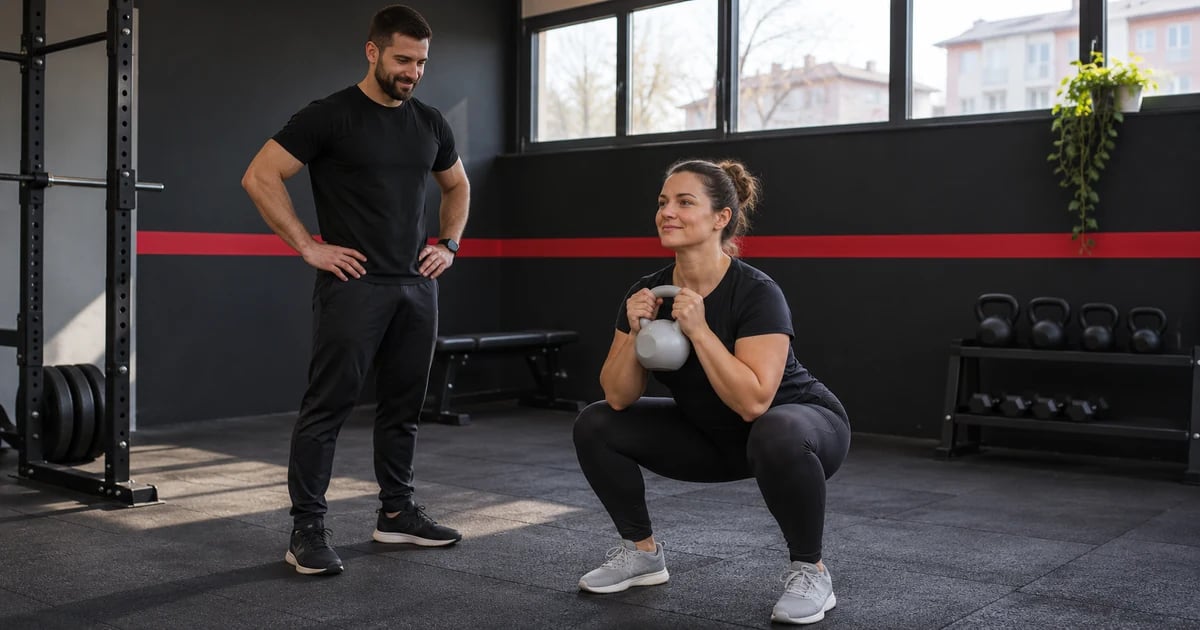
When you get back into training after a long break, start with two to three short sessions a week, light weights and the basic movements: squat, lunge, push, pull and carry. The first four weeks are for learning technique and getting your body used to work, and only in weeks five to eight do you slowly add weight and time. A slower start means fewer injuries and less quitting.
I'm Igor Koprivica, a personal and online coach from Bijeljina and founder of the X Hybrid System. Many of my clients are not beginners who have never trained. They are people who used to play football, go to the gym or run, and then work, kids and responsibilities took years. This article is for them.
The biggest mistake: starting where you left off
Your head remembers how you trained at 22. Your body does not. People who used to be active get injured most often precisely because they start too hard: the same weights, the same number of sessions, the same pace. Muscles come back quickly, but tendons and joints adapt more slowly. That is why the first weeks must be easier than you think they should be.
A good rule for the start: finish each session feeling you could have done more. If you can barely get out of bed the next day, you did too much.
Before you start
If you have high blood pressure, a heart condition, diabetes, an old injury that keeps coming back, or you take regular medication, talk to your doctor before you begin. That is not a formality. I build the plan around what your doctor says, not around it.
Everything else you need to get started is simple:
- Two to three fixed slots a week. Put them in your calendar like a meeting.
- Starting measurements. Waist, weight, a few photos and one simple test, for example how many squats to a chair you can do in 30 seconds.
- A realistic eight week goal. Not a look from a photo, but something concrete: three sessions a week without skipping, ten push-ups on a bench, 5 kilometres of brisk walking.
Weeks 1 to 4: technique and habit
The first month is for learning the movements and building the routine. A session lasts 30 to 40 minutes and looks roughly like this:
- Warm-up, 5 to 8 minutes. Easy walking or cycling, then a few mobility drills for the hips, back and shoulders.
- Basic movements, 20 to 25 minutes. Box squat, supported split squat, push-up on a bench or wall, band or dumbbell row, kettlebell deadlift with a light weight. Two sets of 8 to 12 reps.
- Carries, 5 minutes. Two dumbbells, walk tall for 20 to 30 metres, a few times.
- Cool-down. Five minutes of easy walking and breathing.
Walk between sessions. A walk around town, to work or with the kids counts. Daily movement is half the job, especially if you also want to lose a few kilos.
Weeks 5 to 8: slowly building up
Once the movements feel safe and you no longer get heavy muscle soreness after a session, we start adding. But only one thing at a time:
- a bit more weight on the main exercises,
- or a third set,
- or one short conditioning block at the end of the session,
- or a third session a week, if you have been doing two.
Add everything at once and your body will make you pay. Add one thing every one to two weeks and you progress steadily, without breaks for aches and pains.
What progress looks like over eight weeks
| Period | Focus | Sessions a week | How you feel at the end |
|---|---|---|---|
| Weeks 1 and 2 | Learning the movements, habit | 2 | I could have done a lot more |
| Weeks 3 and 4 | Solid technique, a few more reps | 2 to 3 | Pleasantly tired |
| Weeks 5 and 6 | Heavier weights, third set | 3 | Tired, but no pain |
| Weeks 7 and 8 | Conditioning block, first retests | 3 | I worked hard and recovered by the next session |
Soreness, pain and when to stop
Muscle soreness in the first weeks is normal. It is that dull, spread out ache in the muscles a day or two after training. It goes away by itself and gets smaller as your body adapts.
Sharp pain in a joint, pain that gets worse during an exercise, or pain that does not go away after a few days is not soreness. Then you stop that exercise, we swap it, and if it does not settle you see a doctor or physiotherapist. Training should not hurt. It should be hard work.
How not to quit after week three
The most critical period is not week one. Everyone gets through the first week, because motivation is high. The crisis comes around week three or four, when the early excitement fades and the mirror does not show results yet. That is when people quit most often.
That is why I build a plan for that crisis from the start. A session has to be short enough to do even in a bad week. If work gets busy or your child gets sick, you do a 20 minute short version, but you do not skip the whole week. One missed session is not a problem. The problem is when one missed session turns into three.
It also helps to track small wins: the first time you did ten push-ups on a bench, the first time the stairs did not tire you, the first week with every session done. You notice these long before any change on the scale.
What about fitness and nutrition
If you get out of breath at the smallest effort after your break, add easy cardio from week one. I explain how I set that up in my article on improving your fitness when the stairs leave you breathless.
As for food, do not start a drastic diet in the same week you start training. First bring in regular meals and protein in every meal, and save the deficit for later, once training has settled into a routine.
Let's get you back the right way
Returning after a break is something I work with all the time, in person in Bijeljina and online. I hold the Basic Pro coaching certification for kettlebell, bodyweight and functional bodybuilding, and I build the plan so your first week looks like something you can still repeat in week twenty. The first consultation is free and with no obligation. See the formats and get in touch through my page, X-Hibrid with Igor Koprivica.
FAQ
- How often should I train when coming back after a break?
- Two sessions a week for the first two weeks, then gradually up to three. Walk between sessions, because daily movement brings your fitness back faster without loading your body like a workout.
- How long does it take to get back in shape after a long break?
- Training usually starts to feel easier after three to four weeks. Visible changes in strength and shape take two to three months of regular work, depending on how long the break was.
- Is it normal to be sore everywhere after the first session?
- Muscle soreness a day or two after training is normal, especially at the start. Sharp joint pain or pain that lasts for several days is not normal, so stop and see a doctor or physiotherapist.
- Can I start training after 40?
- You can and you should. The principle is the same: an easy start, technique before weight and gradual progression. If you have a chronic condition or take medication, check with your doctor first.