Biceps or Triceps: Which Makes Arms Look Bigger?
Triceps make up about two thirds of your upper arm, so they do more for arm size than biceps. Updated 28 October 2026 with a weekly set table by level, a 4-week arm block and a simple way to see which muscle is lagging.
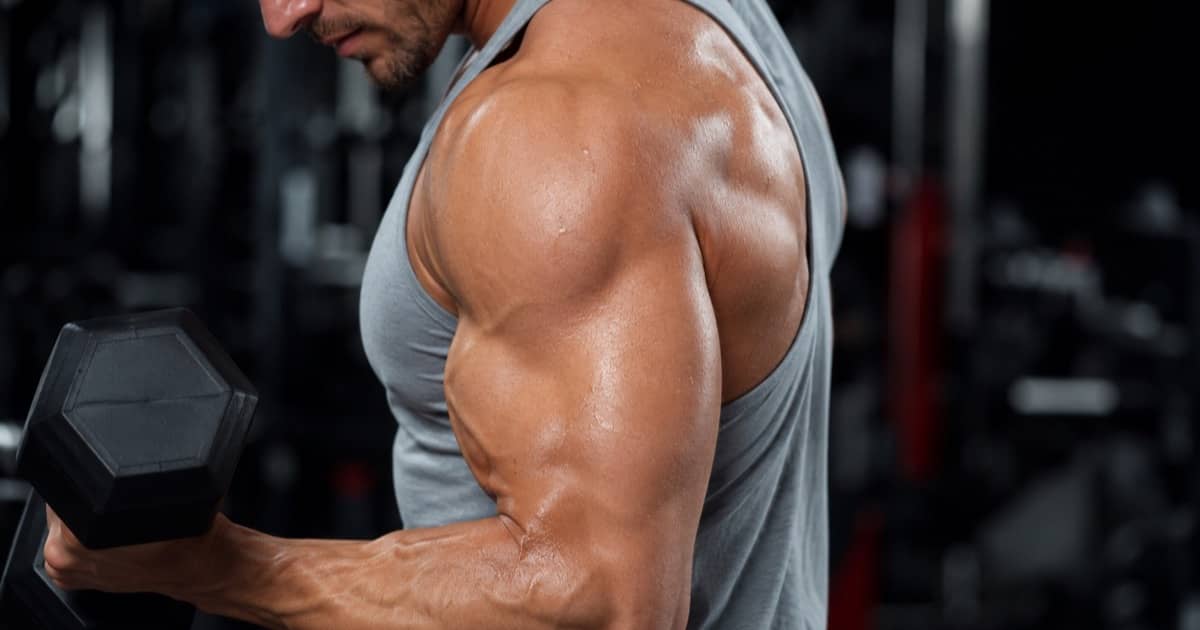
Biceps or triceps: which makes your arms look bigger?
The triceps. They make up roughly two thirds of the muscle on your upper arm and the biceps about one third, so adding size to the back of the arm changes how big your arms look faster than anything you do for the front. The best arms still come from training both: lead with triceps volume, keep biceps and brachialis work close behind, and add load every week.
Updated 20 November 2026. This version adds a plain explanation of what each muscle does, direct answers on which one is bigger, stronger and quicker to grow, and fixes for big triceps with small biceps (and the reverse). It keeps the weekly set table by training level, the ready 4-week arm block and the simple way to measure which side of your arm is lagging.
- Triceps: three heads, about two thirds of upper arm mass, visible from the side and the back.
- Biceps: two heads, about one third, responsible for the peak you see when you flex.
- The triceps long head is the biggest single piece and grows best with overhead work.
- For most lifters, 8-16 hard sets per week for each muscle, split over two sessions, is enough.
Get your free AI training and nutrition plan in 60 seconds
Difference between biceps and triceps at a glance
The biceps sit on the front of the upper arm and bend the elbow and turn the palm up; the triceps sit on the back and straighten the elbow. They are opposing muscles: when one shortens, the other lengthens. The triceps are the larger of the two, with three heads against two.
| Triceps | Biceps | |
|---|---|---|
| Location | Back of the upper arm | Front of the upper arm |
| Main job | Straighten the elbow (pushing, pressing) | Bend the elbow and rotate the palm up (pulling, curling) |
| Heads | 3 (long, lateral, medial) | 2 (long, short), plus the brachialis underneath |
| Share of upper arm muscle | About two thirds | About one third |
| Where you see it | Side and back of the arm, even relaxed | Front of the arm, mostly when flexed |
| Key movement for size | Overhead extension (long head), close-grip press | Incline curl, EZ-bar curl, hammer curl |
| Trained indirectly by | Bench press, overhead press, dips | Rows, pulldowns, chin-ups |
| Typical mistake | Only pushdowns, no overhead work | Swinging heavy curls with momentum |
Both the long head of the triceps and the long head of the biceps cross the shoulder joint as well as the elbow. That is why arm position matters: overhead work stretches the triceps long head, and curls with the arm behind the body, like the incline curl, stretch the biceps long head.
Are triceps bigger than biceps?
Yes. The triceps are the bigger muscle, making up roughly two thirds of the muscle on your upper arm against about one third for the biceps. That holds for almost everyone, trained or not, because the triceps have three heads that wrap the back and outer side of the arm, while the biceps are a two-headed muscle on the front.
What percentage of your arm is tricep?
About two thirds of the upper arm muscle, so somewhere around 65%, is triceps. The exact split varies from person to person and with how it is measured, but the ratio is consistently close to 2:1 in favour of the triceps. The forearm is a separate story: it is mostly wrist and finger flexors and extensors, plus the brachioradialis, which helps bend the elbow.
| Muscle | Approximate share of upper arm muscle | Largest part |
|---|---|---|
| Triceps | About two thirds | Long head |
| Biceps (with brachialis underneath) | About one third | Biceps short and long heads together, brachialis adds width |
Why the triceps carry more of the visual size
The name gives it away: three heads against two. The triceps wrap the back and outer side of the upper arm, so when they grow, the arm gets wider from almost every angle. In a t-shirt it is the triceps that fill the sleeve, not the biceps peak.
The biceps sit on the front and mostly add height when you flex. That is the part people look at in the mirror, which is why so many lifters curl a lot and press very little. What I see with clients is the same pattern over and over: decent biceps, a flat line down the back of the arm, and an arm that looks small from the side.
The long head of the triceps is the largest of the three. It crosses the shoulder joint, so it works at its longest stretch when your arm is overhead. That is the reason overhead extensions matter so much for size, while pushdowns mostly hit the lateral and medial heads. For a deeper look at each head, read which tricep head makes arms look bigger.
Do triceps make your biceps look bigger?
Yes, indirectly. Bigger triceps push out the back of the arm, so when you flex, the whole arm looks thicker from the side and the biceps peak sits on a fuller base instead of a thin one. They do not change the biceps itself, but they change the frame it sits in, which is what people see.
What do big triceps look like?
- A horseshoe on the back of the arm. The long head and lateral head form a U shape that shows even when the arm is relaxed.
- A thick arm from the side. With the arm hanging, the back of the arm bulges out instead of running straight down from the armpit to the elbow.
- A full area near the armpit. That is the long head, and it is the part that stays flat without overhead work.
- Visible separation when lean. At lower body fat you can see the line between the lateral and long heads.
The biceps still finish the arm
A big triceps with a flat biceps looks unbalanced, and so does the reverse. The biceps give the rounded peak, and the brachialis, which sits under the biceps, pushes it up and adds width from the side. Hammer curls and reverse curls train the brachialis directly. So the goal is balance with a lean toward triceps, not triceps only.
Are triceps stronger than biceps?
In the gym, yes: you will move far more weight on triceps lifts than on curls, partly because the triceps are the larger muscle. A close-grip bench press usually goes well over double a strict barbell curl, though the chest and front delts help on the press.
In lab tests of pure elbow strength, the gap is much smaller. Bending and straightening the elbow come out fairly close, and which side wins depends on the elbow angle and the person. One reason is that elbow flexion is not just the biceps: the brachialis and brachioradialis pull too. So the triceps are the bigger muscle, but the elbow flexors as a group hold their own.
- Typical gym picture: close-grip bench, dips and extensions use clearly heavier loads than curls.
- Isolated testing: flexion and extension strength are much closer, with large individual differences.
- What it means for training: triceps tolerate heavy compound pressing well; biceps respond best to controlled curls and heavy pulls.
Do triceps grow faster than biceps?
Neither muscle reliably grows faster in percentage terms; both respond well to the same basics of enough hard sets and steady progression. Because the triceps are about twice as big, the same percentage gain adds more total size to the arm, which is why triceps growth shows up more on the tape and in a sleeve.
Are triceps harder to grow than biceps?
Many lifters find triceps harder to grow, but it is usually a training problem, not a muscle problem. The common reasons:
- No overhead work. Pushdowns alone leave the long head, the biggest part, under-trained.
- Less mind-muscle feel. You can see and squeeze your biceps in the mirror. The triceps are behind you, so people push sets less hard.
- Elbow discomfort. Heavy skull crushers or deep dips bother some elbows, so people back off triceps work entirely instead of swapping exercises.
- Volume skewed to curls. Count your weekly sets. Many arm days are two thirds curls.
Biceps feel easier to grow because they pump quickly and you get instant visual feedback. Train both at the set ranges below for 8-12 weeks and compare tape and log numbers before you decide one is lagging.
How to tell which muscle is lagging
The mirror lies a little, because it mostly shows you the front of the arm. Use three checks before changing your program.
- Side view, relaxed. Stand side-on to a mirror with the arm hanging. If the arm looks thin from this angle, the triceps are behind.
- Back view. A trained triceps shows a horseshoe shape even relaxed. A flat line usually means the long head gets no overhead work.
- Training log. If your curl has climbed for months while close-grip bench and dips barely moved, the triceps are the weak link. If pressing climbs and curls are stuck, it is the biceps. Compare 8-12 weeks, not one session.
What an arm measurement really tells you
A tape measure gives you a trend, not a verdict on one muscle. It cannot separate biceps from triceps, and it also picks up fat and water. Still, measured the same way every time, it is the most honest progress check you have.
- Measure before training, arm relaxed and hanging, at the thickest point of the upper arm. Tape level and snug, not pressing into the skin.
- Then flex at 90 degrees and measure the largest point again.
- Same time of day, both arms, every 4 weeks. Write down all four numbers.
If the relaxed number grows while the flexed number barely moves, the back of the arm is doing the growing, which is usually the triceps. If only the flexed number moves, the biceps peak is improving. Arms grow slowly, so half a centimetre in a month of consistent work is real progress. Body weight changes affect the tape too, so read it next to your scale trend.
Big triceps, small biceps (or big biceps, small triceps)
An imbalance between the front and back of the arm is almost always a volume and exercise-choice issue, and you fix it by shifting sets toward the lagging side for 8-12 weeks while keeping the strong side on maintenance. Maintenance for most lifters is around a third to half of their usual weekly sets, as long as those sets stay hard.
| Situation | What it looks like | Likely cause | Fix |
|---|---|---|---|
| Big triceps, small biceps | Thick arm from the side, little peak when flexed | Lots of pressing, few direct curls, rows done with heavy body English | Biceps at the top of the range for your level, incline curls and EZ-bar curls first, hammer curls for the brachialis |
| Big biceps, small triceps | Good peak, flat back of the arm, arm looks thin relaxed | Curl-heavy arm days, pushdowns only, no overhead work | Triceps first in every session, one overhead extension plus close-grip bench, 10-14 weekly sets for intermediates |
Big triceps with small biceps is the less common problem and the one that looks better in a t-shirt, since the triceps carry most of the size. Big biceps with small triceps is what I see far more often, and it is the one that makes arms look small despite years of curling.
What makes your arms look bigger besides biceps and triceps
After the triceps, the biggest visual factors are your body fat level, the brachialis, your side delts and your forearms. All of them change how big the arm reads from a normal distance.
- Body fat. A lean arm with visible shape often looks bigger than a softer arm with the same tape measurement, because the outline of each muscle shows.
- Brachialis. It sits under the biceps and pushes it up and outward, adding width from the side. Hammer and reverse curls train it.
- Side delts. The outer shoulder sits right above the triceps lateral head, so developed delts make the top of the arm look fuller where the sleeve sits.
- Forearms. In short sleeves the forearm is the part of the arm people actually see. Hammer curls and heavy pulling build it without extra sessions.
How many sets per week for biceps and triceps
Arms recover fast and respond well to frequency. Count only hard sets, meaning sets that finish 1-3 reps short of failure. Warm-ups do not count.
| Level | Triceps hard sets per week | Biceps hard sets per week | Sessions | Reps |
|---|---|---|---|---|
| Beginner (under 1 year) | 6-8 | 4-6 | 2 | 8-15 |
| Intermediate (1-3 years) | 10-14 | 8-12 | 2 | 6-15 |
| Advanced (3+ years) | 14-18 | 12-16 | 2-3 | 6-20 |
These are starting points, not laws. Your presses already train the triceps and your rows and pulldowns train the biceps, so a beginner running a solid full body program needs very little direct arm work. If your elbows ache or your numbers stop moving, drop back a few sets before you add more. The full logic behind these ranges is in how many sets and reps build muscle.
Your back training feeds your biceps more than most people realise. Heavy rows and chin-ups load the biceps hard, which is one more reason to train the back properly. The guides to back width vs thickness training and the best back exercises for width and thickness show which pulls give you the most carryover.
A 4-week arm block you can start this week
Run this on top of your normal push and pull days. Arms get two short slots a week, triceps first. Use a weight that leaves 2 reps in reserve in week 1, then add reps or load each week.
| Week | Session A (push day) | Session B (pull day) | Effort |
|---|---|---|---|
| 1 | Close-grip bench 3x8, overhead cable extension 3x12, hammer curl 2x12 | EZ-bar curl 3x10, incline dumbbell curl 2x12, rope pushdown 3x12 | 2-3 reps in reserve |
| 2 | Same exercises, add 1 rep per set or 2.5 kg on close-grip bench | Same exercises, add 1 rep per set | 2 reps in reserve |
| 3 | Add a 4th set of overhead extension | Add a 3rd set of incline curl | 1-2 reps in reserve |
| 4 | Back to 3 sets each, keep the week 3 loads | Back to week 1 set count, keep the loads | 2-3 reps in reserve, easier week |
That gives an intermediate lifter about 11-13 direct triceps sets and 9-11 biceps sets in the hardest week, plus whatever the presses and rows add. After week 4, measure your arms, then start the next block with slightly heavier loads. If you are new to the gym, run the arm work inside the 12-week beginner full body program instead and keep it to 2-3 sets per muscle.
If your biceps are the side that lags, swap the order on Session B so both curls come before the pushdown, and move the hammer curl from Session A to the start of Session B. Keep the triceps sets but take them 2-3 reps short of failure while the biceps get your best effort.
Best exercises for each muscle
- Close-grip bench press: the heavy triceps lift. Keep elbows close to the ribs, not flared.
- Overhead cable or dumbbell extension: the long head builder. Go deep into the stretch.
- Rope or bar pushdown: easy to progress, good finisher for the lateral head.
- Incline dumbbell curl: loads the biceps long head at a long stretch.
- EZ-bar curl: the heavy staple for overall biceps size.
- Hammer curl: brachialis and forearm, adds width from the side.
A movement-by-movement breakdown is in best biceps and triceps exercises for bigger arms.
Mistakes that keep arms small
Curling everything, pressing nothing
Endless curls train the smaller third of the arm. Flip the order and put triceps first for a few months.
Pushdowns as the only triceps exercise
Without overhead work the long head stays under-trained. One overhead extension per session is enough to fix it.
Flared elbows on close-grip work and dips
Flaring shifts the load to the shoulders and stresses the elbow. Keep the elbows tracking close to the body.
Momentum instead of tension
Swinging a heavy curl moves the bar, not the muscle. A lighter weight with a controlled lowering phase builds more.
Same weights for months
No change, no reason to grow. Add a rep or a small plate somewhere almost every week, following progressive overload.
Tracking the block without guesswork
The block above only works if you know what you lifted last week. In Trainera you log every set, see last session's numbers next to today's, record arm measurements next to your training, and pick exercises from a library of 1,700+ with video demos. If you would rather have a plan built for you, the AI fitness coach page shows how TRAI, Trainera's AI assistant, puts together a multi-week program you or your coach can edit. TRAI always tells you it is an AI. And when you want a person to check your elbows on close-grip bench, you can find a coach by specialty and location on the trainers marketplace inside the same app.
What to do on your next arm day
Start with an overhead triceps extension, add a close-grip press, then finish with incline curls and hammer curls. Count your hard sets for the week, aim for the range that matches your level in the table, and measure in four weeks. If the relaxed measurement goes up, you are training the part of the arm that actually fills a sleeve.
Related reading
Frequently Asked Questions
Keep Reading
Get your free AI training and nutrition plan in 60 seconds
1,800+ exercises, wearables and progress tracking, free with no card needed. AI food scanning comes with Premium. Train solo or with a certified coach.