Pre-Workout Meal Timing: How Long Before You Train
Should you eat right before training or hours ahead? Here is the simple timing framework: a full meal 1 to 3 hours out, or a light snack 30 to 60 minutes before, plus what to eat at each point.
Get your free AI training and nutrition plan in 60 seconds
The Short Answer: 1 to 3 Hours for a Meal, 30 to 60 Minutes for a Snack
Eat a full balanced meal 1 to 3 hours before training, or if you are short on time, a smaller carb-focused snack 30 to 60 minutes before. Both work. The right window depends on how much you are eating, because bigger meals need more time to digest before you train hard.
Get the timing roughly right and you walk into the gym with energy and no stomach discomfort. Get it wrong and you either feel flat and weak or heavy and nauseous. The good news is the rules are simple once you understand why timing matters.
Why Pre-Workout Timing Matters
Your body needs available fuel to perform. Carbohydrates you eat before training top up blood sugar and muscle glycogen, the energy your muscles burn during hard sets and sprints. Protein eaten beforehand keeps amino acids circulating so your muscles are primed to repair and grow.
Timing matters because digestion takes time and resources. Eat a large meal too close to training and blood flow is busy in your gut instead of your muscles, which feels heavy and can cause cramping. Eat nothing for many hours and you may feel weak and lightheaded. The window is about giving food time to become usable energy without sitting like a brick.
The 1 to 3 Hour Window: A Full Meal
This is the ideal setup for most people. A balanced meal one to three hours out gives you steady energy and time to digest. Aim for a solid serving of carbohydrates, a moderate amount of protein, and keep fat and fiber moderate so digestion is not too slow.
Examples that work well 1 to 3 hours before:
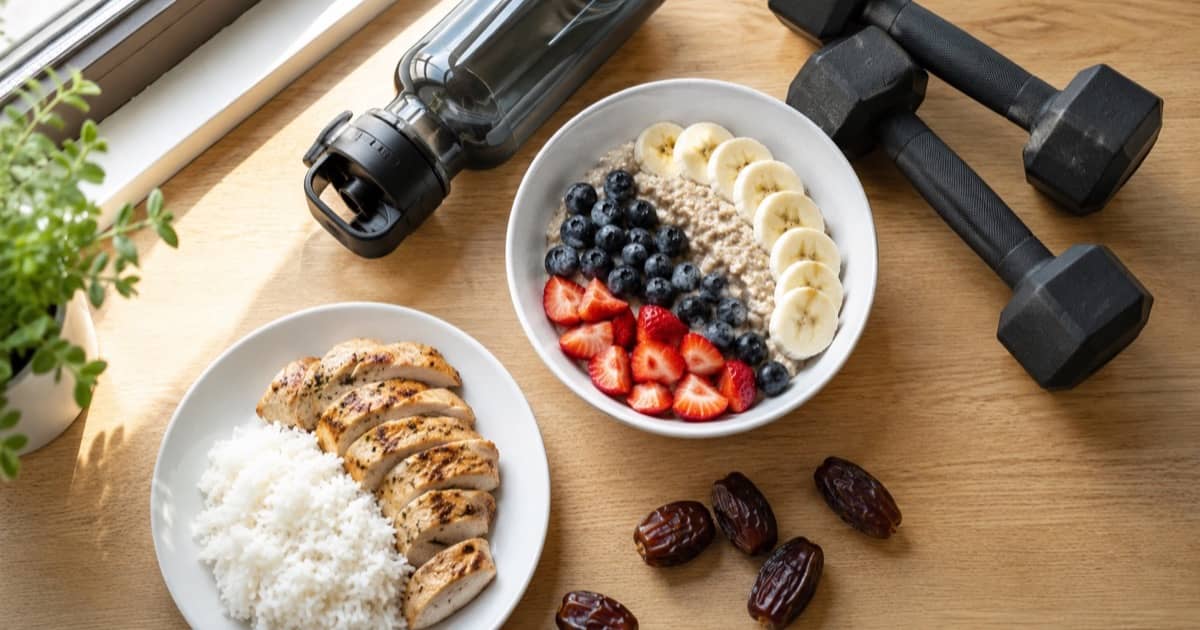
- Chicken or fish with rice and some vegetables
- Oats with fruit and a scoop of protein
- Eggs with toast and a banana
- Greek yogurt with granola and berries
The 30 to 60 Minute Window: A Light Snack
When training is close, go smaller and lean on fast-digesting carbs with a little protein. You want quick energy without a full stomach. Keep fat and fiber low here, since they slow digestion and are the usual cause of a heavy, sloshing feeling mid-workout.
Good 30 to 60 minute options:
- A banana with a little honey
- A rice cake with jam, or a piece of fruit
- A small protein shake with a banana
- A handful of dates
Training Fasted or Early in the Morning
If you train first thing and cannot stomach a meal, you have options. Many people perform fine doing light to moderate sessions fasted. For harder morning training, even a small amount of fast carbs (a banana, a few dates, or a sip of a carb drink) 15 to 30 minutes before noticeably improves energy and strength.
If you regularly train fasted, pay extra attention to your post-workout meal so you still hit your daily protein and calorie targets. Timing around the workout matters less than your total daily intake, which is the real driver of results.
What to Eat: Carbs Yes, Fat and Fiber Less
Across every timing window, the priorities are the same. Carbohydrates are the star of a pre-workout meal because they are the fastest, cleanest fuel. A moderate amount of protein supports your muscles. Fat and high-fiber foods are fine earlier in the day but should be kept lighter as training gets closer, because they digest slowly and can cause discomfort.
This is also where tracking helps. If you are not sure whether you are eating enough carbs to fuel training or enough total protein across the day, the diet tracker on Trainera.fit lets you log meals and see your macros, so your pre-workout nutrition fits into a daily plan that actually adds up.
Pre-Workout Examples by Schedule
- Train at 6 PM, eat lunch at 1 PM: have a small carb snack around 5 PM
- Train at noon: a full breakfast at 9 to 10 AM covers you
- Train at 6 AM: a banana or a few dates at 5:40 AM, then a proper breakfast after
- Train at 8 PM after dinner: a moderate dinner at 6 PM is your pre-workout meal
Hydration and Caffeine Timing
Food is only half of it. Start your session well hydrated by drinking water steadily in the hours before, not chugging it at the last minute. If you use caffeine or a pre-workout supplement, it peaks around 30 to 60 minutes after you take it, so time it to hit during your session rather than after.
How Much Should You Eat Before Training?
Timing and portion size go together: the more you eat, the longer you need before training. A rough guide that works for most people is to scale carbohydrates to your bodyweight and how close you are to the session. A larger meal eaten 2 to 3 hours out might contain a generous portion of carbs and a solid serving of protein, while a snack 45 minutes out should be small and easy to digest, just enough to top off energy.
You do not need to weigh everything. The simple test is how you feel in the gym: walk in slightly hungry but energized, not stuffed and not starving. If you feel heavy and sluggish, you ate too much too close. If you fade halfway through, you needed more carbs or a snack nearer to the session. Adjust from there.
Pre-Workout for Fat Loss vs Muscle Gain
Your goal changes the details slightly, but not the core timing. If you are cutting, you still benefit from carbs before training to keep your strength up, you just fit them into your daily calorie budget rather than adding them on top. Training hard preserves muscle in a deficit, and being properly fueled lets you train hard. If you are building muscle in a surplus, a slightly larger pre-workout meal supports heavier sessions and gives you energy to push more volume.
In both cases the principle from the data holds: the single pre-workout meal matters far less than your total daily protein and calories. Time it to perform well, but win the day first.
Common Pre-Workout Timing Mistakes
A Big, Greasy Meal Right Before
A large high-fat meal eaten 20 minutes before training is the classic recipe for cramping and sluggishness. Either eat it earlier or go smaller and lighter.
Training Hard on Empty
Skipping food for many hours before a heavy session usually means weaker lifts and earlier fatigue. Even a small carb snack rescues the workout.
Obsessing Over Timing, Ignoring Daily Totals
Perfect pre-workout timing means little if your overall daily protein and calories are off. Nail your daily numbers first, then use timing as the polish.
Make Pre-Workout Nutrition Part of the Plan
The simple framework: a full meal 1 to 3 hours out, a light carb snack 30 to 60 minutes out, keep fat and fiber lower as you get closer, stay hydrated, and let your daily totals do the heavy lifting. For the specific foods that fuel training best, see our guide to the best pre-workout foods.
If you would rather have your nutrition and training mapped out for you, Trainera.fit connects you with certified trainers who build your plan around your schedule and give you the tracker to stay on target meal after meal.
Related reading
Frequently Asked Questions
How long before a workout should I eat?
What should I eat right before a workout?
Should I work out on an empty stomach?
Does pre-workout meal timing really matter for results?
Keep Reading
Put this into practice with Trainera
Get your free AI training and nutrition plan in 60 seconds
1800+ exercises, wearables and progress tracking, free with no card needed. AI food scanning comes with Premium. Train solo or with a certified coach.