Vegan Bodybuilding: Build Muscle on a Plant-Based Diet
You can absolutely build muscle on a plant-based diet. Here is how to hit protein, cover key nutrients, and structure a high-protein vegan day.
Get your free AI training and nutrition plan in 60 seconds
TL;DR
Yes, you can build serious muscle on a plant-based diet. Muscle growth is driven by total protein, a small calorie surplus, and progressive training, none of which require animal products. Plant proteins are just as usable when you eat enough total protein and enough variety across the day.
- Aim for roughly 1.6 to 2.2 g of protein per kg of bodyweight from a mix of legumes, soy, seitan, grains and vegan powders.
- Watch a short list of nutrients: B12 (supplement it), iron, omega-3 (algae oil), zinc, iodine and creatine.
- Structure beats willpower: a repeatable high-protein day plus a shopping list makes the diet almost automatic.
This article is general education, not medical or dietary advice. If you have a health condition or want blood work interpreted, talk to a doctor or registered dietitian.
Can you actually build muscle vegan?
Yes. The three things that grow muscle are a modest calorie surplus, enough daily protein, and progressive resistance training. None of those depend on meat, eggs or dairy. Plenty of strength athletes and physique competitors train and compete on fully plant-based diets, and controlled studies comparing plant versus animal protein show similar muscle and strength gains when total protein is matched.
The old worry was protein "quality," the idea that plant proteins are incomplete. In practice this is a non-issue once you eat enough total protein and a normal variety of foods across the day. Your body maintains an amino acid pool, so you do not need to engineer a perfect amino acid profile at every single meal.
There is one honest caveat. Plant proteins are, on average, slightly less anabolic gram for gram than whey or eggs, mostly because they are a little lower in the amino acid leucine and are digested a bit less completely. The practical fix is simple and well supported: eat a little more total protein (the upper end of the range below), lean on leucine-rich sources like soy and pea, and keep training hard. Do that and the small difference on paper disappears in the mirror.
How to hit your protein on plants
Protein is the one number vegans have to be a little more deliberate about, because plant foods usually carry more carbs and fiber per gram of protein. A practical target for building muscle is around 1.6 to 2.2 g per kg of bodyweight. For an 80 kg lifter that is roughly 130 to 175 g per day. If you are new to plant-based eating, start at the higher end, since a touch more total protein comfortably covers the small digestibility gap.
Two habits make this easy. First, anchor every meal around a dedicated protein source (soy, seitan, legumes or a powder) rather than hoping vegetables add up. Second, use one to two scoops of a vegan protein powder to close the gap on busy days. Fiber can make hitting high protein feel filling fast, so blended smoothies, tofu, tempeh and seitan (which are lower in fiber per gram of protein) are your friends.
Distribution helps too. Spreading protein across three to five feedings of roughly 30 to 50 g each gives your muscles a repeated growth signal through the day and is easier on digestion than two giant meals. It also stops the classic mistake of a low-protein breakfast that leaves you scrambling to hit your target by bedtime. A protein-forward first meal sets the tone for the whole day.
Best vegan protein sources
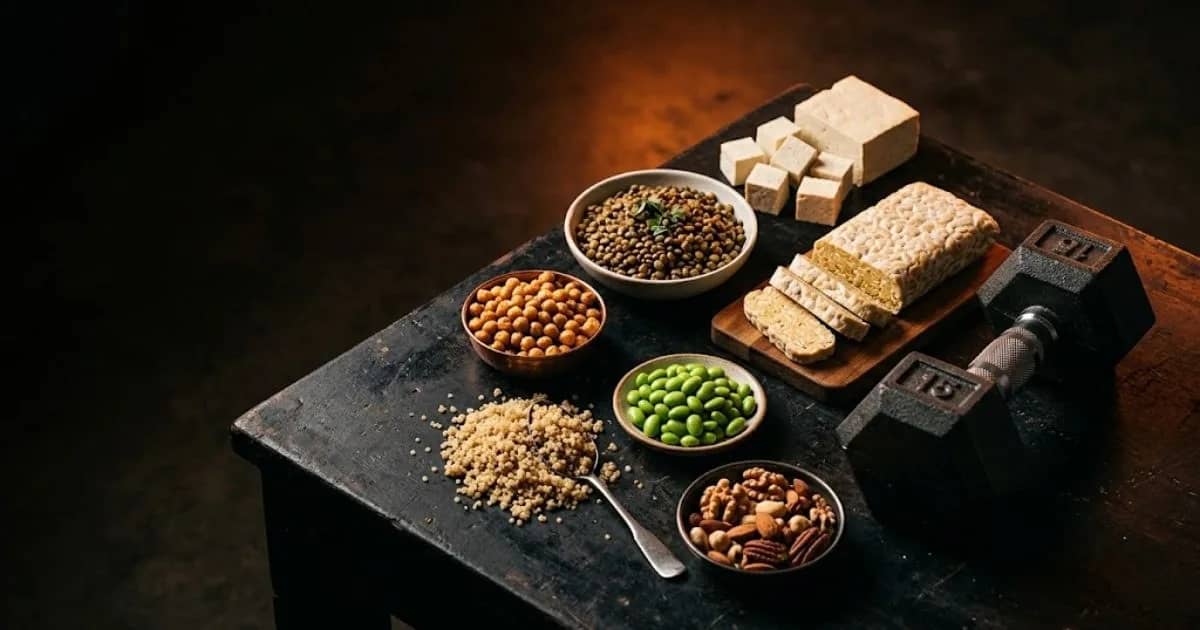
Some plant foods are genuinely protein-dense; others are "protein-ish" but mostly carbs. Knowing the difference is half the battle. The table below shows approximate protein per typical serving so you can build meals around the heavy hitters.
| Food | Protein (approx.) | Note |
|---|---|---|
| Seitan (100 g) | ~25 g | Very high protein, low in lysine, so pair with legumes. |
| Tempeh (100 g) | ~19 g | Fermented soy, complete protein, easy to digest. |
| Firm tofu (100 g) | ~12 to 15 g | Complete protein, low fiber, very versatile. |
| Vegan protein powder (1 scoop) | ~20 to 25 g | Soy or pea plus rice blends are complete and cheap per gram. |
| Lentils, cooked (1 cup) | ~18 g | Great iron and fiber, cheap staple. |
| Chickpeas, cooked (1 cup) | ~15 g | Versatile base for bowls, curries and hummus. |
| Edamame (1 cup) | ~17 g | Complete soy protein, great high-protein snack. |
| Black beans, cooked (1 cup) | ~15 g | Good iron, pairs well with rice. |
| Seitan-based mock meats | ~15 to 25 g | Convenient, check labels for salt and fat. |
| Quinoa, cooked (1 cup) | ~8 g | Complete protein grain, mostly carbs. |
Combining proteins and amino acids
Grains tend to be lower in the amino acid lysine, while legumes tend to be lower in methionine. Classic pairings like rice and beans, or hummus and pita, complement each other so the combined meal covers all essential amino acids. This is why traditional cuisines pair them naturally.
The modern understanding is that you do not need to combine complementary proteins in the same meal. As long as you eat a variety of protein sources over the whole day and hit your total target, your amino acid needs are covered. Soy, quinoa, tempeh and most protein powders are already complete on their own, which makes life even simpler.
If you want a rule of thumb rather than a food-science lecture, here it is: build most meals from a legume plus a grain, add a soy or seitan source when you can, and use a soy-or-blend protein powder to top up. That pattern naturally rounds out your amino acids without any calculation. The people who struggle are usually not eating too few complete proteins, they are simply eating too little protein overall.
Key nutrients to watch on a vegan diet
A well-run vegan diet is healthy, but a few nutrients need attention because they are scarce or less absorbable from plants. The good news is that this is a short list, and every item on it has a cheap, simple solution.
- Vitamin B12: not reliably found in plant foods. Supplement it, no exceptions. This is the one non-negotiable.
- Iron: plant (non-heme) iron absorbs less efficiently. Eat lentils, tofu and greens with a source of vitamin C to boost absorption, and avoid coffee or tea right at the meal.
- Omega-3 (EPA and DHA): flax and chia give you the ALA form, but conversion is limited. An algae-oil supplement is the direct vegan source.
- Creatine: found almost entirely in animal foods, so vegans usually start with lower muscle stores. Supplementing 3 to 5 g of creatine monohydrate per day tends to help vegans noticeably.
- Zinc, iodine, calcium and vitamin D: achievable with fortified foods, iodized salt or sea vegetables, and sensible supplementation where needed.
A sample high-protein vegan day
Here is what roughly 150 g of protein at around 2,600 calories can look like for an 80 kg lifter in a lean bulk. Adjust portions to your own calorie and macro targets.
- Breakfast: tofu scramble with spinach, plus oats blended with a scoop of vegan protein and berries. (~40 g protein)
- Lunch: tempeh and quinoa bowl with black beans, avocado and a lemon-tahini dressing. (~38 g protein)
- Snack: soy yogurt with a scoop of protein and mixed nuts, or edamame. (~30 g protein)
- Dinner: seitan stir-fry with lentils, broccoli and rice, cooked in a little olive oil. (~42 g protein)
Add fruit, olive or algae oil, and extra rice or potatoes to hit your calorie target. Around your workout, a protein shake with a banana is a simple, effective option.
Notice how each meal carries 30 g or more of protein and leans on soy, seitan or legumes rather than snacky sides. That is the whole trick. Once you have two or three days like this that you actually enjoy, you can rotate them for weeks and let progress take care of itself. Cooking a big batch of lentils, tofu or seitan on the weekend turns hitting protein into reheating, not cooking from scratch every night.
Common mistakes vegan lifters make
Most plant-based lifters who stall are not doing anything exotic wrong. A handful of predictable mistakes account for the majority of stuck progress. Catch these and you remove nearly every reason a vegan bulk fails to build muscle.
- Under-eating protein without realizing it. Vegetables and grains feel like a lot of food but deliver little protein, so people overestimate their intake. Track it for a week to see the real number.
- Too much fiber, too little appetite. Whole-food vegan diets are filling, which is great for fat loss but works against a surplus. Use smoothies, tofu, seitan and some refined carbs like white rice to fit more calories in.
- Skipping B12 or creatine. These two supplements do a lot of quiet work. Missing B12 is a health issue, and skipping creatine leaves easy strength and size gains on the table.
- Not eating enough overall. No amount of clever food pairing builds muscle in a calorie deficit. If the scale is not slowly moving up, add calories.
Supplements worth considering
Most of your results come from food and training, but a short supplement stack fills the common gaps on a plant-based diet. A sensible baseline is B12, an algae-oil omega-3, vitamin D if your sun exposure is low, and creatine monohydrate for training. A vegan protein powder is a convenience, not a requirement, but it makes hitting daily protein far easier. Everything else (fancy pre-workouts, exotic blends) is optional.
Let Trainera build the plan for you
The hardest part of vegan bodybuilding is not willpower, it is hitting protein and macros every day without spending your evenings in a spreadsheet. That is exactly what Trainera automates. Its AI meal plans respect a vegan diet and your allergens, drawing from a library of 1,100+ meals with dietary tags, and it calculates your calories and macros using Mifflin-St Jeor and TDEE. You can track intake by snapping a photo of your meal, scanning barcodes, and watching your macro graphs, then generate a shopping list so the fridge always has what you need. Pair that with AI training plans and 1800+ exercises with video, and the whole plant-based build runs on autopilot.
Start free on Trainera and get a vegan-friendly plan built around your protein target today.
Related reading
Frequently Asked Questions
Can you really build muscle on a vegan diet?
How much protein do vegans need to build muscle?
What nutrients should vegan lifters supplement?
Do I have to combine proteins at every meal?
Keep Reading
Put this into practice with Trainera
Get your free AI training and nutrition plan in 60 seconds
1800+ exercises, wearables and progress tracking, free with no card needed. AI food scanning comes with Premium. Train solo or with a certified coach.