Best Chest Exercises for Size and Strength
Build a bigger, stronger chest with the most effective exercises backed by science. From bench press variations to cable work, this guide covers everything you need for chest development.
Get your free AI training and nutrition plan in 60 seconds
Why Chest Training Deserves Your Full Attention
The chest is one of the most visible muscle groups on your physique and one of the most satisfying to develop. A well-built chest signals strength, athleticism, and dedication. But many lifters fall into the trap of doing the same flat bench press week after week, wondering why their chest development plateaus.
Effective chest training requires understanding the muscle's anatomy and hitting it from multiple angles. The pectoralis major has two distinct heads - the clavicular (upper) and sternal (lower) - and each responds best to different movement angles. A complete chest program targets both heads with compound and isolation movements across various rep ranges.
The 8 Most Effective Chest Exercises
1. Barbell Bench Press
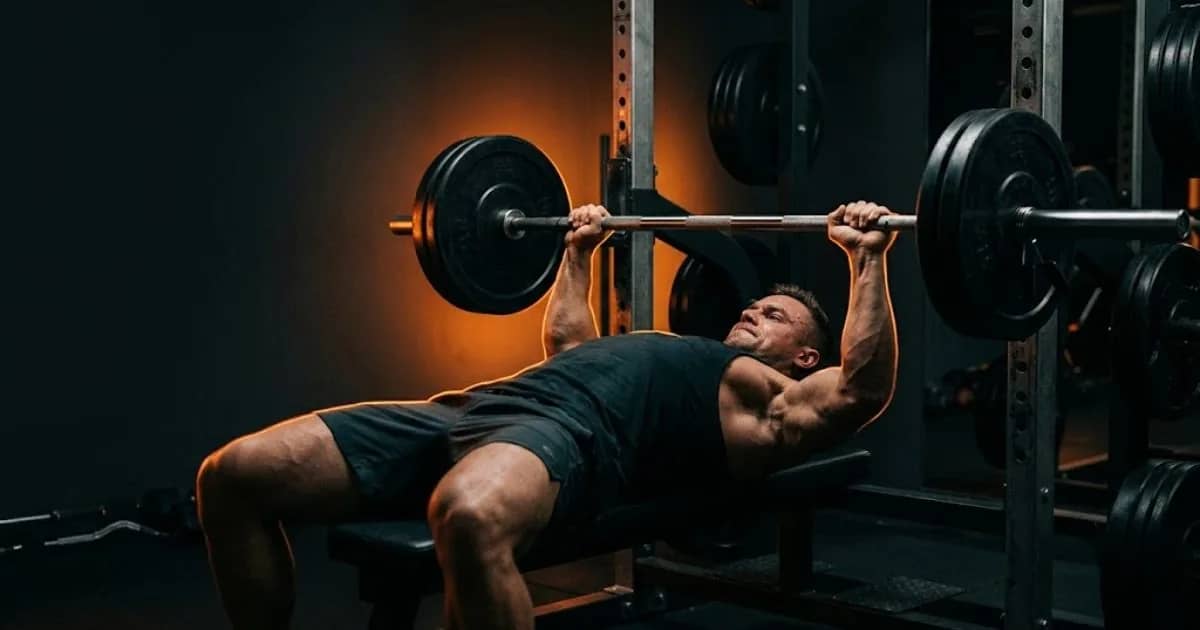
The bench press remains the king of chest exercises for good reason. It allows the heaviest loading of any chest movement, recruits the entire pectoral complex, and builds raw pressing strength that transfers to athletics and daily life. Use a grip slightly wider than shoulder-width, lower the bar to your lower chest with control, and press explosively to lockout.
Key technique points:
- Retract and depress your shoulder blades before unracking
- Maintain a slight arch in your upper back - this protects your shoulders and increases chest activation
- Touch the bar to your chest on every rep - partial reps reduce effectiveness by 30-40%
- Drive your feet into the floor for a stable base
2. Incline Dumbbell Press
The incline press shifts emphasis to the upper chest (clavicular head), which is often underdeveloped in most lifters. Set the bench to 30-45 degrees - anything steeper shifts the load to the anterior deltoids. Dumbbells allow a greater range of motion than a barbell and force each arm to work independently, correcting imbalances.
3. Dips (Chest-Focused)
Dips are the most underrated chest exercise. When performed with a forward lean and wider grip, dips hammer the lower chest and inner chest fibers. They also build tremendous tricep strength, which supports all pressing movements. If bodyweight dips are too easy, add weight with a dip belt or hold a dumbbell between your feet.
4. Cable Flyes
Cable flyes provide constant tension throughout the entire range of motion - something dumbbells cannot do. The peak contraction at the top of a cable fly activates the inner chest fibers that presses miss. Use a slight bend in your elbows and focus on squeezing your chest at the top rather than moving heavy weight.
5. Dumbbell Flyes
Dumbbell flyes stretch the chest at the bottom of the movement, creating mechanical tension that stimulates growth. Lower the dumbbells until you feel a deep stretch in your chest, then squeeze them back up in an arc motion. Keep the weight moderate - this is a stretch and squeeze exercise, not a heavy lift.
6. Push-Ups (Weighted or Banded)
Do not dismiss push-ups as a beginner exercise. With added resistance from a weight plate on your back or resistance bands, push-ups become an effective chest builder. The scapular freedom in push-ups (your shoulder blades can move freely, unlike bench press) actually creates a more complete chest contraction.
7. Landmine Press
The landmine press is a hybrid between a press and a fly that is exceptionally shoulder-friendly. The arcing bar path matches the natural movement of your shoulder joint, making it ideal for lifters with shoulder issues who struggle with flat pressing.
8. Machine Chest Press
Machine presses are excellent for high-rep finishers when your stabilizers are fatigued. They allow you to push close to failure safely without a spotter. Use machines at the end of your chest workout for 2-3 sets of 12-15 reps to maximize metabolic stress and pump.
Programming Your Chest Training
Optimal Training Volume
Research suggests 12-20 working sets per week for the chest produces optimal growth for most intermediate lifters. Beginners can grow on 8-12 sets. Spread this volume across 2 sessions per week for best results - for example, a heavy day (4-6 reps) and a hypertrophy day (8-12 reps).
Sample Chest Workout
- Barbell Bench Press: 4 x 5-6 (heavy compound)
- Incline Dumbbell Press: 3 x 8-10 (upper chest focus)
- Chest Dips: 3 x 8-12 (lower chest + triceps)
- Cable Flyes: 3 x 12-15 (isolation finisher)
Progressive overload is essential - add weight or reps each week. If you are not tracking your lifts, you are guessing. Logging every set and rep in Trainera.fit gives you a clear picture of your week-over-week progression and shows you exactly when it is time to increase the load.
Common Chest Training Mistakes
1. Ego Lifting on Bench Press
Using weight you cannot control through a full range of motion is the fastest way to injure your shoulders and stall your chest development. A controlled 80 kg bench press with full ROM builds more chest than a bounced 100 kg partial rep.
2. Neglecting the Upper Chest
Most lifters do too much flat pressing and not enough incline work. If your upper chest is lagging, start your workout with incline movements when you are freshest and strongest. The order of exercises significantly impacts which muscles develop fastest.
3. Skipping the Stretch and Squeeze
Flyes and cables exist for a reason - they create the stretch and contraction that compounds alone cannot fully achieve. Include at least one isolation movement in every chest session to maximize muscle fiber recruitment.
Build Your Chest with a Structured Plan
Random chest workouts produce random results. A periodized program that systematically increases volume and intensity over weeks is what separates lifters who plateau from those who keep growing. A certified trainer on Trainera.fit can design a chest specialization program based on your weak points and training history.
Track every bench press, every incline set, and every fly in your Trainera.fit workout log. When you can see your strength curve over months, you will know exactly which exercises and rep ranges drive your best chest growth - and your trainer can adjust your program in real-time based on the data.
Related reading
Frequently Asked Questions
How many times per week should I train chest?
Why is my chest not growing despite training it regularly?
Is bench press enough to build a big chest?
Should I use dumbbells or barbells for chest press?
Keep Reading
Put this into practice with Trainera
Get your free AI training and nutrition plan in 60 seconds
1800+ exercises, wearables and progress tracking, free with no card needed. AI food scanning comes with Premium. Train solo or with a certified coach.