8 Best Leg Exercises for Stronger Legs
Leg training is the foundation of every serious fitness program. Learn which exercises to do, how many sets to perform, and how to avoid the most common mistakes for maximum results.
Get your free AI training and nutrition plan in 60 seconds
Why Is Leg Training So Important?
The best leg exercises are the back squat, Romanian deadlift, Bulgarian split squat, leg press and walking lunges, supported by leg curls, leg extensions and calf raises. Together they cover every major muscle in your lower body.
Your legs make up nearly half the muscle mass of your entire body. The quads, hamstrings, glutes and calves together form your largest muscle group, which is exactly why leg training has a far bigger payoff than most lifters realize. Heavy leg training stimulates the release of growth hormone and testosterone, speeds up your metabolism and builds functional strength that carries over to every other sport and everyday life.
Despite all of that, leg day is still the most commonly skipped session in the gym. In this guide you will learn exactly which muscles to target, which exercises deliver the best results, and how to put together a complete plan that works.
Leg Anatomy: The Muscles You Need to Know
For your training to be effective, you need to understand what you are actually training:
- Quadriceps - four muscles on the front of the thigh, primarily responsible for extending the knee.
- Hamstrings - the muscles on the back of the thigh, in charge of knee flexion and hip extension.
- Glutes - the largest muscle in the body; crucial for strength, posture and aesthetics.
- Calves (gastrocnemius and soleus) - the lower leg muscles that stabilize the ankle and drive propulsion.
- Adductors and abductors - the inner and outer thigh; stabilizers that are frequently neglected.
A complete leg workout has to include exercises that adequately stimulate all of these groups.
The Best Leg Exercises
1. Back Squat
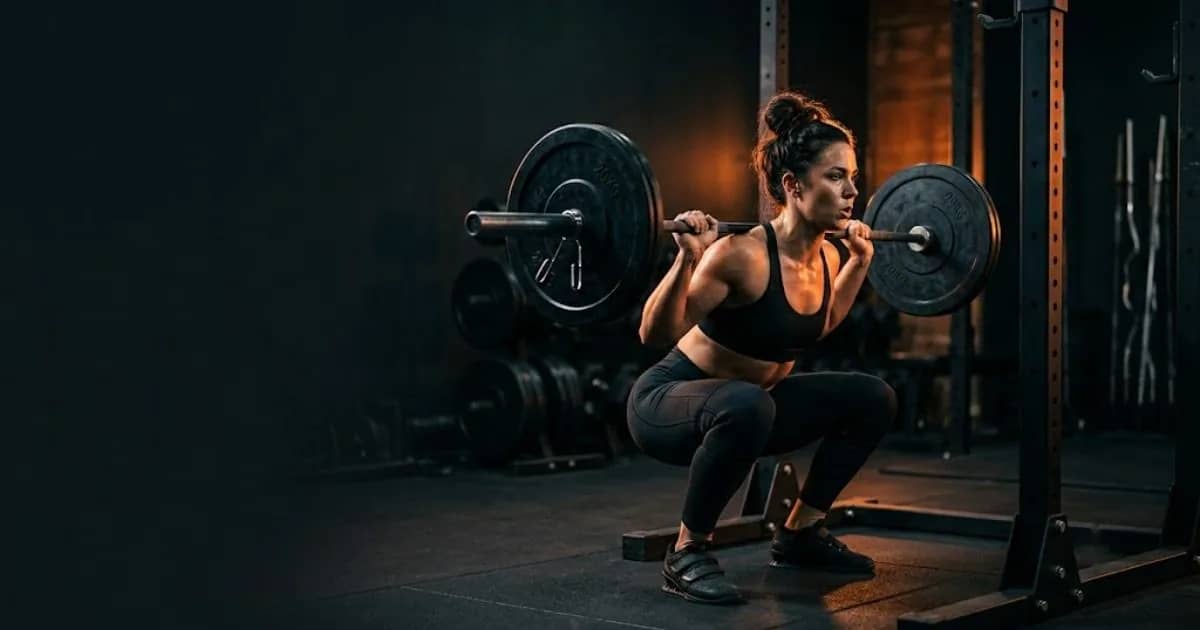
The squat is the king of all leg exercises. It activates the quads, glutes, hamstrings and the stabilizing muscles of the trunk all at once. Technique is everything: feet shoulder-width apart, knees tracking over the toes, back flat, eyes forward. Descend until your thighs are parallel to the floor or deeper.
2. Romanian Deadlift (RDL)
This is the number one exercise for the hamstrings and glutes. Unlike the conventional deadlift, the RDL keeps the knees slightly bent and emphasizes the eccentric stretch of the hamstrings. Keep the bar close to your body, push your hips back and feel a deep stretch along the back of your thighs.
3. Leg Press
An excellent accessory exercise that lets you load the quads without stressing the spine. A high foot placement engages more glutes and hamstrings, while a low placement emphasizes the quads. Never lock your knees out at the top of the movement.
4. Walking Lunges
Walking lunges are a functional exercise that trains each leg individually, correcting muscle imbalances along the way. They hit the quads, glutes and hamstrings while demanding serious stability and coordination. Perform them with dumbbells in your hands or a bar on your back.
5. Bulgarian Split Squat
One of the hardest and most effective unilateral exercises. The rear leg rests on a bench while the front leg does all the work. It is outstanding for the glutes and quads, and it stretches the hip flexors of the trailing leg at the same time. Many advanced athletes prefer this exercise even over the squat.
6. Leg Curl
An isolation exercise that directly targets the hamstrings. It can be performed lying, seated or standing. Focus on a full range of motion and a controlled eccentric (lowering) phase.
7. Leg Extension
Isolates the quads in the final phase of knee extension. Useful as a finisher at the end of a workout, but it should not be a primary choice because it stresses the patellar tendon when overused.
8. Calf Raises
Calves are notoriously resistant to training - they need high reps (15-25) and a full range of motion. Do standing calf raises for the gastrocnemius and seated calf raises for the soleus.
Sample Complete Leg Workout
Here is a workout structure that covers every muscle group, suitable for intermediate lifters:
- Back squat - 4 sets x 6-8 reps (heavier load)
- Romanian deadlift - 3 sets x 8-10 reps
- Bulgarian split squat - 3 sets x 10 reps per leg
- Leg press - 3 sets x 12 reps
- Leg curl - 3 sets x 12-15 reps
- Leg extension - 2 sets x 15 reps
- Standing calf raises - 4 sets x 20 reps
Rest between sets: 2-3 minutes for compound lifts, 60-90 seconds for isolation work. Total session length: 60-75 minutes. If you are wondering how a session like this fits into a full training week, our push pull legs split guide shows you exactly where leg day belongs.
Tracking Progression: The Key to Long-Term Progress
The most common reason legs refuse to grow is a lack of progressive overload. Put simply - you need to write down what you do. If you do not know what you squatted last time, you have nothing to build on.
That is exactly where the Trainera.fit workout logger comes in, letting you record sets, reps and weight for every exercise. Over time you can watch your progress curve and see precisely when you are ready to increase the load. Progression becomes systematic instead of random.
The Most Common Leg Training Mistakes
Mistake 1: Skipping Leg Day
The classic. Every gym is full of people with a developed upper body and thin legs. Legs are harder to train, slower to recover and mentally more demanding. But that is exactly why they matter most. If you skip leg day, you also miss out on the hormonal response that benefits your entire body.
Mistake 2: Squatting Too Shallow
A partial squat - stopping at 90 degrees or higher - dramatically reduces glute and hamstring activation. Research consistently shows that deep squats (below parallel) produce more muscle growth and do not increase knee injury risk in healthy people. Work on ankle and hip mobility if depth is your limiting factor.
Mistake 3: Neglecting the Hamstrings
Most programs contain too many quad exercises and too few for the hamstrings. That imbalance raises injury risk, especially in sports involving sprinting and jumping. Every leg workout should include at least two direct hamstring exercises - typically the RDL and the leg curl.
Mistake 4: Going Too Light
Your legs are used to daily loading from walking and standing. They need to be challenged with heavy weights to grow. If you can hold a comfortable conversation during a set of squats, you are probably not lifting heavy enough.
Mistake 5: Sacrificing Technique for Weight
Ego lifting is dangerous, especially on the squat and RDL. It is far better to work with a lighter load and perfect technique than to risk a spine or knee injury. Technique always comes before weight.
Recovery and Training Frequency
Legs are a huge muscle group and need 48-72 hours of recovery between intense sessions. For most lifters, one to two leg workouts per week is the sweet spot. Advanced lifters can introduce a split (for example a quad day and a hamstring/glute day) to fit in more volume.
Nutrition plays a crucial role: make sure you get adequate protein (1.6-2.2 g per kg of body weight) and enough carbohydrates for energy and recovery. Seven to nine hours of sleep per night is irreplaceable.
A Personalized Plan: The Faster Route to Results
Every body is different - different proportions, mobility, training history and goals. What works for one person may not work for another. If you are serious about leg training and want a structured plan built around you, the Trainera.fit trainer marketplace gives you access to certified fitness coaches who can create a personalized program, track your progress and give you real-time feedback - all in one place.
Building Legs That Carry Your Whole Body
Leg training is not just about aesthetics - it is the foundation of athletic performance, knee and spine health, and total-body strength. By combining compound movements like the squat and RDL, unilateral exercises like the Bulgarian split squat, and isolation work for the finishing touches, you can build legs that are as functional as they are impressive.
Stay consistent, track your progression, never skip leg day and learn from your mistakes. The results will follow.
Related reading
Frequently Asked Questions
How many times per week should I train legs?
Are squats bad for your knees?
What are the best exercises for glutes?
Why aren't my legs growing despite regular training?
Keep Reading
Put this into practice with Trainera
Get your free AI training and nutrition plan in 60 seconds
1800+ exercises, wearables and progress tracking, free with no card needed. AI food scanning comes with Premium. Train solo or with a certified coach.