Best Glute Exercises for Bigger, Stronger Glutes
A practical guide to the best glute exercises, glute anatomy, and a sample glute workout you can do at home or the gym to build bigger, stronger glutes.
Get your free AI training and nutrition plan in 60 seconds
TL;DR
If you want bigger, stronger glutes, you need a handful of proven movements trained with progression, not endless random circuits. The best glute exercises are the hip thrust, squat, Romanian deadlift, lunge, cable or band kickback, and the glute bridge. Train them 2 to 3 times per week, add load or reps over time, and eat enough protein.
- The hip thrust is the single best glute-focused lift for most people.
- Squats and Romanian deadlifts build overall size and strength through a big range of motion.
- Progression (more weight, reps, or sets over weeks) is what actually grows glutes, not the number of exercises.
Glute anatomy basics
Your glutes are made of three muscles. The gluteus maximus is the large, powerful muscle that shapes most of your backside and drives hip extension (straightening your hip, like standing up or thrusting). The gluteus medius and gluteus minimus sit higher and to the side, and they stabilize your pelvis and move your leg out to the side (abduction). To build a full, round shape you want to train all three, which means combining heavy hip extension (thrusts, squats, deadlifts) with abduction work (band walks, side-lying raises, cable abductions).
Understanding this matters because many people only squat and wonder why their glutes lag. Squats are great, but adding direct hip thrusts and abduction work targets the glutes far more completely.
The best glute exercises
Here are the core movements, ranked by how much glute-building value they deliver for most trainees.
| Exercise | Main glute focus | Sets x reps |
|---|---|---|
| Barbell hip thrust | Gluteus maximus (peak contraction) | 3 to 4 x 8 to 12 |
| Back or goblet squat | Glutes and quads (deep stretch) | 3 to 4 x 6 to 10 |
| Romanian deadlift (RDL) | Glutes and hamstrings (stretch) | 3 x 8 to 12 |
| Bulgarian split squat | Glutes per leg, stability | 3 x 8 to 12 each |
| Walking or reverse lunge | Glutes and quads, single leg | 3 x 10 to 12 each |
| Cable or band kickback | Gluteus maximus (isolation) | 3 x 12 to 15 each |
| Glute bridge | Gluteus maximus (beginner friendly) | 3 x 12 to 20 |
| Banded hip abduction | Gluteus medius and minimus | 3 x 15 to 20 |
Hip thrust
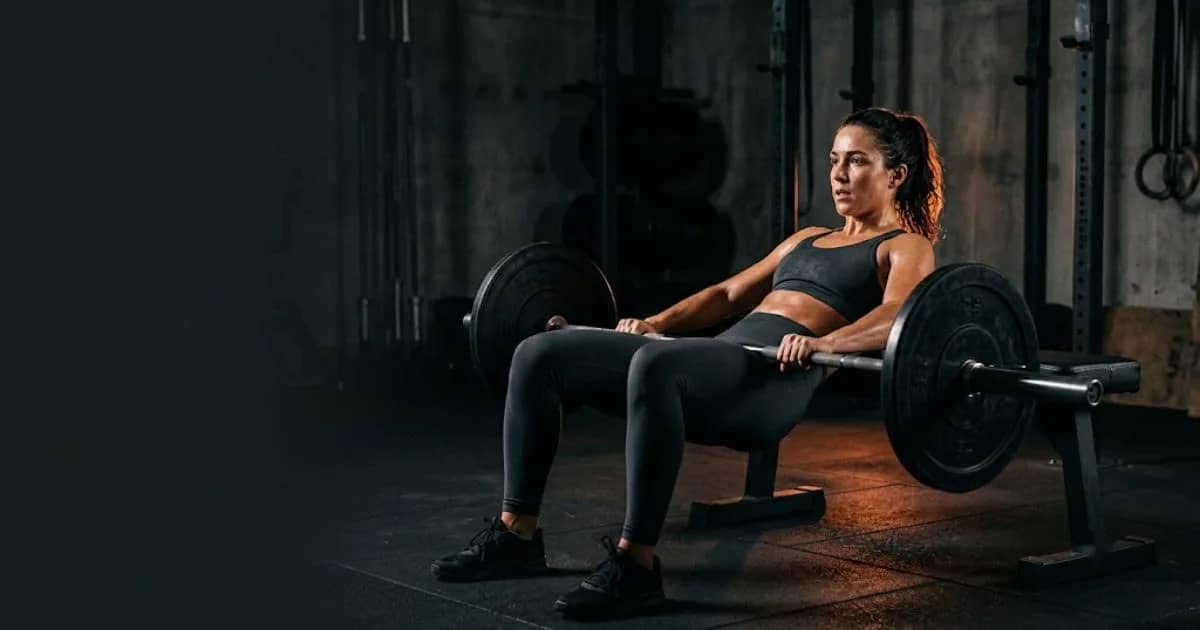
The hip thrust loads the glutes hardest at full hip extension, exactly where the gluteus maximus is strongest. Sit with your upper back on a bench, a barbell or dumbbell across your hips, and drive through your heels until your torso is parallel to the floor. Squeeze hard at the top for a second, then lower under control. This is usually the best single lift for building glutes.
Squat
Squats build size and strength across your whole lower body. Going below parallel increases glute involvement. If a barbell is not available, a goblet squat with a dumbbell or kettlebell works well and is easy to learn.
Romanian deadlift
The RDL stretches the glutes and hamstrings under load, which is a powerful growth stimulus. Keep a slight knee bend, push your hips back, and feel the stretch down the back of your legs before driving your hips forward.
Lunges and split squats
Single-leg work like walking lunges and Bulgarian split squats fixes side-to-side imbalances and hits the glutes through a long range. They also demand less spinal load than heavy barbell lifts.
Kickbacks and bridges
Cable kickbacks, band kickbacks, and glute bridges are great finishers or beginner starting points. They isolate the glutes with less fatigue elsewhere, so you can add volume without wrecking your recovery.
A sample glute workout
Here is a balanced session you can run 2 to 3 times per week, resting at least a day between sessions:
- Barbell or dumbbell hip thrust: 4 sets of 8 to 12
- Goblet or back squat: 3 sets of 8
- Romanian deadlift: 3 sets of 10
- Bulgarian split squat: 3 sets of 10 each leg
- Cable or band kickback: 3 sets of 15 each leg
- Banded hip abduction: 3 sets of 20
Beginners can drop to the first three exercises and add the rest as they build confidence and recovery.
How to build glutes: progression
Muscle grows when you gradually ask it to do more. This is called progressive overload. Each week, aim to add a little weight, one or two reps, or an extra set to your key lifts while keeping good form. Track your workouts so you actually know your numbers instead of guessing. Pair training with enough protein (roughly 1.6 to 2.2 grams per kilogram of bodyweight per day for many people) and enough overall calories to support growth. This is general guidance, not medical advice, so adjust for your own situation.
Common mistakes to avoid
- Only squatting. Add direct hip thrusts and abduction work to fully develop the glutes.
- Half reps. Use a full range and squeeze at the top of thrusts and bridges.
- No progression. Doing the same weights forever stalls growth. Add load or reps over time.
- Skipping recovery. Glutes grow between sessions, so sleep, eat, and do not train them daily.
- Ignoring the mind-muscle connection. If you feel every rep in your lower back or quads, slow down and reposition.
Home vs gym options
You do not need a full gym to build glutes. At home, resistance bands, a pair of dumbbells, and a sturdy chair or couch cover most of these movements: banded bridges, single-leg hip thrusts off a couch, band kickbacks, split squats, and RDLs with dumbbells. The trade-off is that once bodyweight and light bands get easy, progression slows, so you will eventually want heavier loads. A gym gives you barbells, cable machines, and hip thrust benches that make heavy loading and progression much easier.
Train smarter with Trainera
Trainera makes glute training simple whether you are at home or the gym. You get a video exercise library of 1800+ movements so you can see the exact form for hip thrusts, RDLs, and kickbacks, AI-built plans that target your glutes and your available equipment, live workout logging with personal records, and progression tracking so you always know when to add weight. You can also dial in nutrition with AI meal plans and macro tracking to make sure you are eating enough to grow.
Start free on Trainera and build a glute plan that actually progresses.
Related reading
Frequently Asked Questions
What is the single best glute exercise?
How often should I train glutes to build them?
Can I build bigger glutes at home without a gym?
How long does it take to see bigger glutes?
Keep Reading
Put this into practice with Trainera
Get your free AI training and nutrition plan in 60 seconds
1800+ exercises, wearables and progress tracking, free with no card needed. AI food scanning comes with Premium. Train solo or with a certified coach.