What to Eat After a Workout: The Recovery Meal Guide
What you eat after training shapes how well you recover and grow. Here is exactly how much protein and carbs you need, when the timing actually matters, and simple meals that get it right.
Get your free AI training and nutrition plan in 60 seconds
Why the Post-Workout Meal Matters
Training is the stimulus; food is what turns that stimulus into actual muscle and recovery. When you train, you create micro-damage in muscle fibres and burn through stored carbohydrate (glycogen). The meal you eat afterward gives your body the raw materials - protein to repair and build, carbs to refuel - so the next session is not sabotaged by poor recovery.
The good news: the post-workout meal is simpler than the supplement industry wants you to believe. You do not need exotic powders or a stopwatch. You need adequate protein, enough carbs, and consistency.
The Protein Question: How Much and Why
Protein is the non-negotiable part of any post-workout meal. Resistance training raises muscle protein synthesis for up to 24 to 48 hours, and feeding your body quality protein during that window maximises repair and growth.
The practical target is 20 to 40g of high-quality protein after training. For most people, 0.4g per kg of bodyweight per meal is a solid number - so an 80 kg person aims for roughly 30 to 35g. Going far beyond 40g in one sitting does not add much extra muscle-building benefit; you are better off spreading protein across the day.
Best Protein Sources After Training
- Whey protein shake - fast, convenient, digests quickly
- Chicken, turkey, or lean beef - complete protein, very satiating
- Eggs - high quality and versatile
- Greek yogurt or cottage cheese - protein plus a slower-digesting fraction
- Tofu, tempeh, lentils, or a plant blend - for plant-based eaters, combine sources to cover all amino acids
Carbs: The Half Everyone Forgets
Protein gets the attention, but carbohydrates are what refill the glycogen you burned during training. Glycogen is your muscles' primary fuel for hard sets and sprints. Skip carbs entirely and your next workout can feel flat and weak, especially if you train hard or twice a day.
Aim for roughly 0.5 to 1g of carbs per kg of bodyweight in your post-workout meal, scaled to how hard and how long you trained. A heavy leg day or a long endurance session needs more; a short upper-body session needs less.
Good Post-Workout Carb Sources
- Rice, potatoes, or sweet potatoes
- Oats or whole-grain bread
- Fruit such as bananas or berries
- Pasta for a bigger refuel after long sessions
The Truth About the "Anabolic Window"
You have probably heard you must eat within 30 minutes of training or "lose your gains." This is largely a myth for most people. Research shows the anabolic window is far wider than once believed - more like several hours on either side of your session.
What actually matters is your total daily protein and calorie intake, not the stopwatch. If you ate a protein-rich meal 2 hours before training, you have plenty of amino acids circulating, and eating 2 hours after is perfectly fine. The 30-minute rush only matters in specific cases: training fasted, or doing two hard sessions in the same day. And your pre-workout meal matters just as much as your post-workout one.
Tracking your daily totals is what keeps this on the rails. Tools like the diet tracker on Trainera.fit let you log your meals and see whether you are actually hitting your protein and calorie targets across the whole day, which matters far more than any single post-workout meal.
Simple Post-Workout Meal Ideas
You do not need to overthink it. Each of these hits solid protein and carbs:
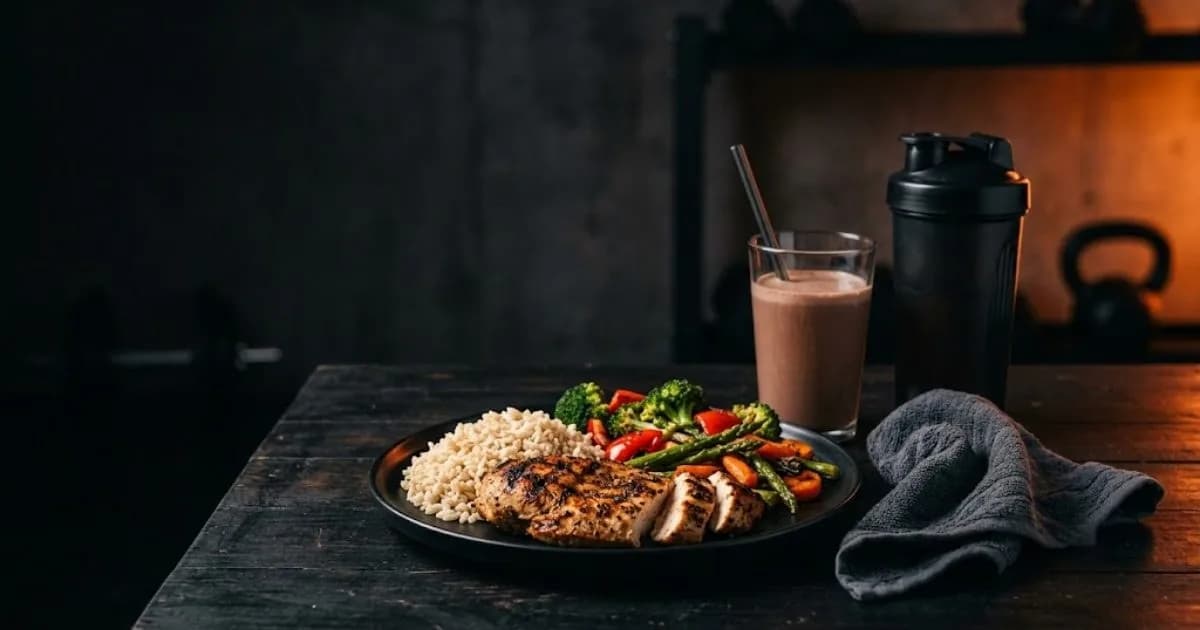
- Chicken breast + rice + vegetables - the classic for a reason
- Whey shake + a banana - fast and convenient when you are short on time
- Greek yogurt + oats + berries + honey - great if you trained in the morning
- Salmon + sweet potato - protein, carbs, and healthy fats
- Eggs + whole-grain toast + avocado - simple and filling
- Tofu stir-fry + rice - solid plant-based option
What About Hydration and Electrolytes?
You lose water and electrolytes (especially sodium) through sweat, and rehydrating is part of recovery. Drink water with your post-workout meal, and after long or sweaty sessions, a pinch of salt on your food or an electrolyte drink helps you rehydrate faster than plain water alone.
Common Post-Workout Nutrition Mistakes
Skipping the Meal Entirely
Training hard and then not eating for 5 hours blunts recovery, especially if your earlier meals were small. You do not need to sprint to the kitchen, but do not skip the meal.
All Protein, No Carbs
Many lifters chug a protein shake and call it done. Without carbs to refill glycogen, performance in your next session can suffer - particularly with high-volume or endurance training.
Treating It as a Cheat Meal
"I earned it" turns a 400-calorie recovery meal into a 1,200-calorie binge. A single intense session burns 300 to 500 calories; it is easy to erase a deficit or blow past a surplus with one oversized "post-workout" meal. Refuel sensibly, do not feast.
Obsessing Over Timing While Ignoring Daily Totals
Nailing the 30-minute window but missing your daily protein target by 50g is backwards. Hit your daily numbers first; timing is the polish, not the foundation.
Make Recovery Part of the Plan
Your post-workout meal is one piece of a bigger picture: total daily protein, enough calories for your goal, sleep, and consistent training. If you want all of that structured for you, Trainera.fit connects you with certified trainers who build your nutrition and training around your goals, and gives you the diet and workout tracker to stay on target day after day.
The short version: get 20 to 40g of protein and some carbs in within a few hours of training, drink water, do not stress the stopwatch, and let your consistent daily intake do the heavy lifting.
Related reading
Frequently Asked Questions
What should I eat right after a workout?
Do I really need to eat within 30 minutes of working out?
How much protein do I need after a workout?
Should I eat carbs after a workout if I want to lose fat?
Keep Reading
Put this into practice with Trainera
Get your free AI training and nutrition plan in 60 seconds
1800+ exercises, photo-AI food logging, wearables and progress tracking - free, no card needed. Train solo or with a certified coach.
Or find a personal trainer near you