Best Pre-Workout Foods and When to Eat Them
The best pre-workout foods are easy-to-digest carbohydrates with a little protein, timed 1 to 3 hours before exercise. Learn exactly what to eat, when to eat it, and how to fuel your body for any goal.
Get your free AI training and nutrition plan in 60 seconds
Quick answer: the best pre-workout foods and timing
The best pre-workout foods are easy-to-digest carbohydrates paired with a small amount of protein, eaten 1 to 3 hours before training for a full meal or 30 to 60 minutes before exercise for a light snack. Carbohydrates are your muscles' primary energy source during hard effort, so topping them up beforehand directly improves how long and how hard you can train. Keep fat and fiber low in this window so your food does not sit heavy while you move.
- Banana with a tablespoon of peanut butter
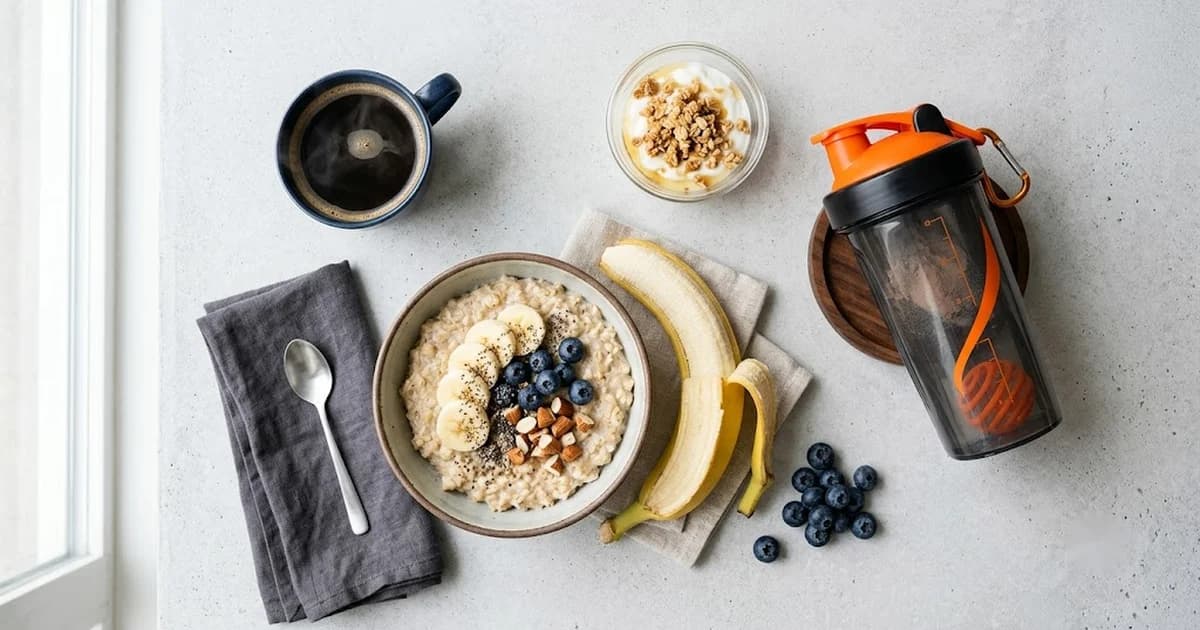
- Oatmeal with berries and a spoon of Greek yogurt
- Greek yogurt with honey and granola
- White rice with grilled chicken breast
- Whole-grain toast with a boiled egg
- A smoothie with banana, oats, and milk
- Rice cakes with jam and a small handful of nuts
Why what you eat before exercise actually matters
When you train hard, your muscles burn through glycogen - the stored form of carbohydrate in your liver and muscle tissue. Starting a session with depleted glycogen is like trying to drive a car with almost no fuel: you can move, but not at full power. Eating the right foods before exercise tops up those stores, keeps your blood sugar steady, and gives your body a reliable energy source from the first rep or stride to the last.
Protein matters too, particularly before strength and resistance sessions. A small serving of protein before you train can reduce muscle breakdown during the workout and support the repair process that begins immediately after. You do not need a large amount - 15 to 25 grams is plenty - and it should never come at the expense of the carbohydrates that provide the actual fuel your body needs to perform.
Fat and fiber are valuable nutrients in your overall diet, but they slow gastric emptying, which means they stay in your stomach longer. High-fat or very high-fiber meals eaten close to training can cause that heavy, sluggish feeling that makes a hard session feel twice as hard. The goal is to fuel the body efficiently, not to eat a nutritionally complete meal minutes before you work.
Timing: what to eat depending on how long you have
The right pre-workout food changes depending on how much time sits between your meal and your session. More time allows larger portions and more variety. Less time demands smaller, simpler choices. Use these windows as a practical guide and adjust based on how your own digestion responds.
2 to 3 hours before training
This is the ideal window for a full, balanced meal. Include a solid carbohydrate base - rice, potatoes, pasta, or oats - a lean protein source like chicken, eggs, cottage cheese, or yogurt, and a moderate portion of vegetables. At this distance from training, your body has time to digest fully and convert the food into available energy, so you arrive at your workout fueled and comfortable rather than stuffed or empty.
A good example: a medium bowl of white rice with grilled chicken breast and a simple vegetable side. Another solid option is a plate of pasta with a lean tomato-based sauce. Both provide carbohydrates for sustained energy and enough protein to support muscle work, without loading up on high fat ingredients that slow things down.
1 to 2 hours before
Go lighter and more carb-focused. A bowl of oatmeal with fruit and a spoon of yogurt, whole-grain toast with an egg, or a small smoothie with banana, oats, and milk all work well here. Cut back on fat and fiber so digestion moves faster. Whole grain options are fine at this distance because you still have enough time to process them before exercise begins.
30 to 60 minutes before exercise
Keep it small and fast. Choose foods that are almost entirely carbohydrate-based: a banana, a handful of dates, plain rice cakes, or a small glass of fruit juice. These digest quickly and provide an immediate energy source without leaving a heavy load in your stomach when you start moving. If even a snack feels like too much this close to training, a piece of fruit or a few sips of a sports drink is enough to raise blood sugar slightly without causing discomfort.
The general pattern is consistent across all goals: the closer you get to your workout, the smaller and simpler the food should be, leaning heavily on quick carbohydrates. Everyone digests at a slightly different pace, so treat these windows as starting points and refine them over time based on how you feel during sessions.
Carbs versus protein: getting the balance right
Carbohydrate is the clear priority when you eat before a workout. Your muscles rely on glycogen and circulating blood sugar to power intense sets, intervals, and long efforts. Eating enough carbs beforehand means you start with full tanks rather than running on fumes from the opening minutes.
Protein supports the session without being the main event. For strength training in particular, having some protein available before you lift can reduce the muscle breakdown that occurs during heavy work. For cardio or endurance sessions, the carbohydrate is even more dominant and protein can be minimal.
Fat is not the enemy in your wider diet, but in the immediate pre-workout window it slows everything down. A high-fat meal takes significantly longer to leave the stomach than a carb-based one, which is why a greasy burger two hours before a hard run feels very different from oatmeal with fruit. The simple rule: carbs first, a little protein, go easy on fat and fiber close to training.
Training fasted: when it helps and when it hurts
Fasted training - exercising without eating first, usually in the morning - works perfectly well for easy or short sessions. Light cardio, mobility work, or a low-intensity 30-minute session can go smoothly on an empty stomach, and some people simply feel less sluggish without food beforehand.
For hard, long, or strength-focused workouts, eating something first tends to improve both energy and output. If you consistently fade halfway through a session, lose focus, or feel weaker than usual, hunger and low blood sugar are likely contributors. Those are honest signals from your body that it needs fuel before exercise, not after.
If you prefer fasted sessions for practical or personal reasons, make your post-workout meal a real priority - rich in both carbohydrates to replenish glycogen and protein to support recovery. There is no universal right answer, so test both approaches and let your actual training quality guide the decision.
What to avoid before training
Some foods actively work against you in the hour or two before a session. Knowing what to skip is just as useful as knowing what to eat, because the wrong choice can leave you feeling heavy, crampy, or flat when you need to be sharp and energized.
- Greasy or fried foods: slow to digest, sit heavy in the stomach, and provide no performance benefit.
- Very high-fiber meals: large servings of raw vegetables, beans, or bran can cause bloating and discomfort during exercise.
- High-fat meals: creamy sauces, lots of cheese, or nut-butter overload delay gastric emptying and blunt energy availability.
- Very spicy food: can trigger acid reflux or an upset stomach during intense effort, especially running.
- New or untested foods: a hard training day is never the time to experiment. Stick with foods your stomach already handles well.
The overriding principle is familiarity. Even a nutritionally perfect food can derail a session if your digestive system has never encountered it close to exercise. Build your pre-workout habits around a small rotation of proven options, and save new foods for rest days or post-workout meals.
Hydration and caffeine: the other two levers
Food is only part of the pre-workout picture. Starting a session even mildly dehydrated measurably reduces strength, endurance, and focus. Drink water consistently through the day and have one to two glasses in the hour before training. For longer or sweatier sessions, an electrolyte drink or a pinch of salt in your water can help you hold your pace through the whole session rather than fading toward the end.
Caffeine is one of the most consistently supported performance tools available. A coffee, black tea, or caffeine-containing pre-workout drink consumed 30 to 60 minutes before exercise can improve focus, reduce perceived effort, and extend endurance. Keep the dose moderate - one to two cups of coffee is enough for most people - and avoid caffeine within six hours of bedtime so it does not disrupt your sleep and undermine recovery. Skip it entirely if it regularly upsets your stomach or makes you jittery.
Adjusting your pre-workout food by goal
The same core principles apply across goals, but the emphasis shifts a little depending on what you are training for.
Building muscle and strength
Prioritize a solid carbohydrate base with a meaningful protein portion, eaten 1 to 2 hours before training. Oats with yogurt and fruit, rice with chicken, or a smoothie with banana, oats, and milk all work well. The carbs fuel heavy sets and the protein provides the amino acids your muscles can use during and after the session.
Endurance and cardio
Lean even more heavily on carbohydrates since longer sessions deplete glycogen stores quickly. A larger portion of oatmeal, a banana with toast, or a bowl of pasta the night before plus a small snack in the morning both provide the sustained energy needed to hold pace over distance. Avoid high-fat meals before long runs or rides.
Fat loss
Keep the pre-workout meal relatively modest in calories but still carb-focused so you have genuine energy to train hard. A light snack - banana, a small bowl of oatmeal, or yogurt with fruit - supports performance without adding a large calorie surplus. Hard training done well burns more total energy than sluggish training done in a fasted state.
Early morning sessions
If time is short before a morning workout, a fast-digesting snack like a banana, a few dates, or a small smoothie is enough for most sessions. For very early training where eating first is not realistic, a fasted session followed by a substantial post-workout breakfast covering both carbohydrates and protein is a sensible alternative.
Building the habit: consistency beats perfection
The best pre-workout meal is ultimately the one you eat consistently and that sits well with you. Start with the simple examples in this guide, pay attention to how each one feels during training, and adjust the timing, portion, and composition until you find a pattern that reliably delivers energy and comfort. Small repeatable choices made week after week outperform a theoretically perfect plan you can only follow occasionally.
If you want to connect your meal timing directly to your training and recovery data, Trainera.fit lets you log both nutrition and workouts in one place, so you can spot the patterns between what you ate and how you performed. Tracking your pre-workout meals for even one week can reveal whether your timing, portions, or food choices are supporting your sessions or holding them back.
For those who want a more structured approach, Trainera also offers AI-generated meal and training plans built around your specific goals, schedule, and preferences - so your pre-workout nutrition fits into a complete strategy rather than existing in isolation. Consistent fueling, tracked and refined over time, is one of the most straightforward ways to improve training quality without changing a single thing about the workouts themselves.
Frequently Asked Questions
What is the best food to eat before a workout?
How long before a workout should I eat?
Should I prioritize carbs or protein before exercise?
Is it okay to train on an empty stomach?
Keep Reading
Put this into practice with Trainera
Get your free AI training and nutrition plan in 60 seconds
1800+ exercises, photo-AI food logging, wearables and progress tracking - free, no card needed. Train solo or with a certified coach.