High-Protein Meal Prep: How to Plan a Full Week
A practical guide to prepping a high-protein week, with protein targets, portion sizes and ready-to-cook meal examples.
Get your free AI training and nutrition plan in 60 seconds
High-Protein Meal Prep in One Weekend
Quick answer
Aim for roughly 1.6 to 2.2 grams of protein per kilogram of bodyweight per day if you train, then split it across three or four meals of 30 to 40 grams each. Cook proteins, carbs and vegetables in bulk once or twice a week and portion them into containers so hitting the target is automatic.
Set Your Daily Protein Target
The International Society of Sports Nutrition places the useful range for active people at about 1.4 to 2.0 grams per kilogram per day, with strength athletes toward the top. A 75 kg person training regularly lands near 120 to 150 grams. See ISSN for the position stand.
Divide that number by your number of meals. Four meals at 35 grams gives 140 grams. Distributing protein across the day, rather than piling it into dinner, supports muscle repair more evenly.
Know Your Portions
These cooked portions each deliver roughly 30 to 40 grams of protein:
- 150 g cooked chicken breast, about 45 g protein
- 150 g cooked lean beef or turkey, about 40 g
- 200 g cooked salmon, about 40 g
- 250 g plain Greek yogurt, about 25 g
- 200 g firm tofu, about 30 g
- 3 large eggs plus 100 g cottage cheese, about 30 g
- 150 g cooked lentils plus 40 g rice, about 20 g plant protein
A Repeatable Cook-Once System
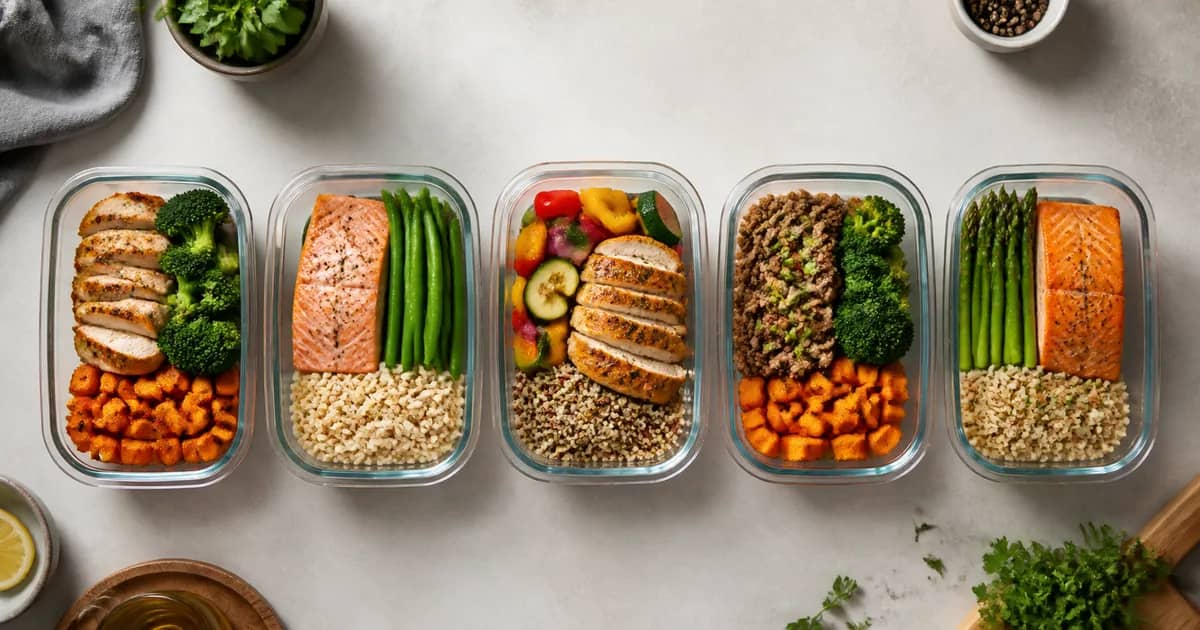
Pick two proteins, two carbs and two vegetables per week. Roast or pan-cook the proteins, boil or bake the carbs, and steam or roast the vegetables on trays. Mix and match to avoid boredom.
- Proteins: chicken thighs and a batch of baked salmon or a tofu tray
- Carbs: rice or potatoes plus oats for breakfasts
- Vegetables: roasted mixed peppers and a big bowl of steamed broccoli
Season in batches. Half your chicken can go Mediterranean and half can go with soy and ginger, so five containers do not taste identical.
A Sample High-Protein Day
- Breakfast: 80 g oats, 250 g Greek yogurt, berries, around 30 g protein
- Lunch: 150 g chicken, rice, roasted peppers, around 45 g protein
- Snack: cottage cheese with fruit or a whey shake, around 25 g
- Dinner: 200 g salmon, potatoes, broccoli, around 40 g protein
That is roughly 140 grams of protein across the day for a person around 75 kg.
Storage and Food Safety
Cool cooked food quickly, refrigerate within two hours and eat prepped meals within three to four days, or freeze portions for later. The NHS advises reheating food until it is steaming hot throughout and reheating only once.
Make It Stick
Keep two or three go-to meals rather than chasing variety every week. Buy the same reliable staples, prep on a fixed day and you remove the daily decision that derails most plans.
Building a Balanced Plate, Not Just Protein
Protein is the anchor, but a good prep still needs carbohydrate for energy, some healthy fat and plenty of vegetables for fibre and micronutrients. A useful visual is to fill roughly a quarter of the container with protein, a quarter with a starchy carbohydrate and half with vegetables, adjusting the carbs up or down depending on your goal and activity. This keeps meals filling and nutritionally complete rather than dry chicken and rice on repeat.
Fat is easy to forget when chasing protein. A drizzle of olive oil, half an avocado or a handful of nuts adds satiety and helps you absorb fat-soluble vitamins. It also makes the food taste far better, which is what keeps you eating the prep instead of ordering takeout.
Flavour Ideas So You Do Not Get Bored
The fastest way to abandon meal prep is monotony. Cook a plain protein base, then split it and season each half differently. A few reliable directions:
- Mediterranean: lemon, garlic, oregano and olive oil
- Asian-inspired: soy sauce, ginger, sesame and a little honey
- Mexican-inspired: cumin, paprika, lime and chilli
- Herby: mustard, dill and black pepper
Keep sauces on the side rather than mixed in, so containers do not go soggy by day three. A squeeze of fresh lemon or a spoon of yogurt when you reheat can make a three-day-old meal taste fresh.
Sample Shopping List for a High-Protein Week
A focused list makes the whole system run smoothly. For one person aiming at around 140 grams of protein a day, a week might look like this, adjusted to your appetite and budget:
- Around 1 kg chicken breast or thighs
- 500 g salmon or a large block of tofu
- 500 g lean mince or turkey
- A dozen eggs and a tub of Greek yogurt
- Cottage cheese, milk and a bag of oats
- Rice, potatoes and wholegrain bread
- Frozen and fresh vegetables, plus fruit for snacks
Scale the quantities up for more people or higher targets. Keeping the list roughly the same each week turns shopping into a five-minute job rather than a decision every time.
Prep for Weight Loss vs Muscle Gain
The same containers serve both goals with small tweaks. For fat loss, keep the protein portion generous, fill the rest with plenty of vegetables and keep carbohydrate and fat moderate to hold a calorie deficit. For muscle gain, keep protein the same but add larger carbohydrate portions and a little extra fat to reach a slight surplus. You do not need separate recipes, just different portion sizes on the same base ingredients, which is what makes a single prep session flexible for whatever your goal is that month.
If you want your protein target, meals and progress tracked in one place instead of a spreadsheet, Trainera builds the plan and adjusts it as your goals change.
Frequently Asked Questions
How much protein should I eat per day?
How many grams of protein per meal?
How long does meal prep last in the fridge?
Can I hit high protein on a plant-based diet?
Do I need a protein shake?
Keep Reading
Put this into practice with Trainera
Get your free AI training and nutrition plan in 60 seconds
1800+ exercises, wearables and progress tracking, free with no card needed. AI food scanning comes with Premium. Train solo or with a certified coach.