AI Personal Trainer Apps Explained: What They Can and Cannot Do
AI personal trainer apps promise custom workouts and nutrition without the hourly coaching bill. This is an honest look at what they actually deliver and where they fall short.
Get your free AI training and nutrition plan in 60 seconds
What an AI personal trainer app really is
An AI personal trainer app is software that builds your training and nutrition, then adjusts both based on the data you log. Instead of a person writing your program, an algorithm generates it from your goal, experience, available equipment and schedule. As you train and record results, the app recalculates what comes next.
The honest version is this: these apps are very good at the parts of coaching that are logic and consistency, and weaker at the parts that need eyes, hands and human judgment. Knowing which is which helps you decide whether one fits your situation.
What it can do: personalized programming
The core strength is generating a structured plan tailored to you. You enter your goal, such as building muscle or losing fat, your training days, your equipment and your experience level. The app returns a full program with exercise selection, sets, reps and rest periods that match those inputs.
This is genuinely useful because most people fail not from lack of effort but from lack of structure. A generic plan from the internet ignores your schedule and gear. A generated plan respects both, and it can be rebuilt in seconds if your circumstances change.
Adapting around your life
Good apps let you swap exercises you dislike or cannot perform, shorten a session when time is tight, or shift training days. Because the plan is generated rather than fixed, these changes do not break it. That flexibility is hard to get from a static PDF program that assumes you never miss a day.
This matters more than it sounds. Most people abandon a program the first week it stops fitting their real life. A plan that reshapes itself around a busy week, a travel trip or a home gym with limited equipment keeps you training instead of quitting, and consistency over months is what actually drives results.
What it can do: automatic progression
Progression is where these tools earn their place. After each session the app reads your logged weights, reps and effort, then decides the next step. Hit your targets cleanly and it adds load or volume. Grind through them and it holds steady. Miss badly and it backs off to let you recover.
A good coach does exactly this, but only when they see your numbers. An app does it every single session, without forgetting last week or letting a plateau drift for a month. Consistent, unemotional application of progression rules is something software does reliably well.
There is a caveat worth naming. The app only knows what you tell it, so if you log sloppy sets as clean ones, or overstate how easy a weight felt, it will push you into loads you are not ready for. Progression is only as smart as the data behind it, which makes honest logging the price of admission.
What it can do: nutrition targets and tracking
Most AI trainer apps also handle nutrition. From your body data, activity and goal they set daily calorie and protein targets, and often carbohydrate and fat ranges too. Some generate full meal suggestions built around those numbers and your food preferences.
Paired with food logging, this closes the loop between effort in the gym and results in the mirror. The app can see when your intake does not match your goal and flag it. For general body composition goals this is a solid, practical system.
Tracking that feeds the plan
Workout logs, body measurements, progress photos and wearable data all feed back into the engine. Connected wearables can share steps, heart rate and sleep, giving the app a fuller picture of recovery and daily activity. The more honest data you give it, the better its future decisions become.
What it cannot do: fix your form
Here is the biggest limit. An AI app cannot watch you squat and tell you your knees are caving or your back is rounding. Video form checks exist, but they are not the same as a coach standing beside you, cueing you rep by rep and adjusting in real time.
For technical lifts this matters. If your technique is poor, an app will happily add weight to a movement you are doing wrong, which is how small faults become injuries. Beginners on heavy compound lifts should get eyes on their form somewhere, even if the programming comes from an app.
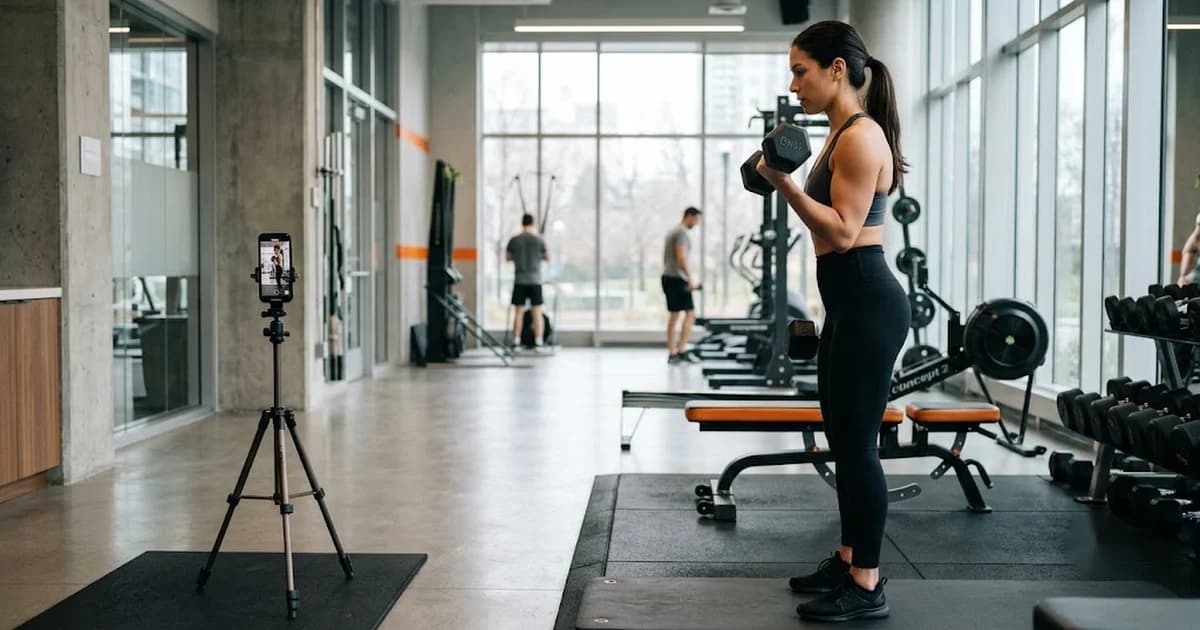
The practical workaround is to film your own sets and compare them against demo videos, or to book an occasional in-person session purely for technique. Treat the app as your programmer and let a human or your own honest camera handle the movement quality, at least until the pattern is grooved.
What it cannot do: rehab injuries or replace a physio
An AI trainer is not a medical professional. It cannot diagnose pain, distinguish soreness from a real problem, or design safe rehab for an injury. If something hurts in a way that is sharp, persistent or worsening, that is a job for a physiotherapist or doctor, not an algorithm.
Good apps let you flag injuries and will avoid loading that area, but avoidance is not treatment. Do not expect software to rehabilitate a torn muscle or an angry joint.
The sensible sequence is simple. When real pain shows up, pause that movement, see a qualified professional, and only return to the app once someone trained tells you it is safe. The software can then help you ease back toward your old loads gradually, but the recovery call belongs to a human, not an algorithm.
What it cannot do: be the human in your corner
Some people train because a coach they respect is waiting to see their numbers. That social accountability is powerful, and an app notification is not the same thing. Software can remind and encourage, but it cannot truly care, and it cannot read the discouragement in your voice on a bad week.
If you are the kind of person who needs someone in your corner to keep going, an app alone may not hold you. That is not a flaw in the technology; it is simply a human need that software does not meet.
Who it suits, and how Trainera does it
An AI personal trainer app suits self-motivated beginners and intermediates who train alone, want real structure and progression, and do not want to pay for weekly human coaching. It also suits busy people whose schedules change often, since the plan adapts instead of breaking.
Trainera is an all-in-one platform that puts this into practice: it generates training and nutrition plans, tracks your workouts, macros and progress, and connects to wearables so recovery data informs the plan. The same engine also powers human trainers and gyms through white-label apps, so you can start solo and add a real coach later without switching tools. If you want structure without the weekly coaching bill, it is worth trying, then adding a human wherever you hit the limits above.
The realistic bottom line
Treat an AI personal trainer app as an excellent programming and tracking assistant, not a full replacement for every role a coach plays. Let it own the logic: planning, progression, nutrition targets and honest tracking. Bring a human in for form, injuries and accountability when those matter to you. Used that way, the technology earns its place instead of overpromising.
Frequently Asked Questions
Can an AI personal trainer app replace a human coach?
How does auto-progression actually work in these apps?
Are AI-generated nutrition plans safe to follow?
What can an AI trainer app not do?
Who benefits most from an AI personal trainer app?
Keep Reading
Put this into practice with Trainera
Get your free AI training and nutrition plan in 60 seconds
1800+ exercises, photo-AI food logging, wearables and progress tracking - free, no card needed. Train solo or with a certified coach.