Meal Prep for Fitness: How to Plan and Prepare Meals for Better Results
Meal prepping is the secret weapon behind every successful fitness transformation. Learn step-by-step how to plan, cook, and store your meals for the week to hit your nutrition goals consistently.
Get your free AI training and nutrition plan in 60 seconds
Why Meal Prep Is Essential for Fitness Success
Nutrition accounts for a significant portion of your fitness results - whether your goal is building muscle, losing fat, or improving performance. Meal prepping eliminates the daily guesswork of "what should I eat?" and ensures you consistently hit your macronutrient and calorie targets.
Studies show that people who plan and prepare their meals in advance are significantly more likely to maintain a healthy diet and reach their fitness goals. Meal prep removes the temptation of fast food, reduces decision fatigue, and saves both time and money throughout the week.
Getting Started: Calculate Your Nutrition Targets
Step 1: Determine Your Daily Calories
Before you start prepping, you need to know how much to eat. Use these general guidelines based on your primary goal:
- Fat loss: Bodyweight (kg) x 22-26 calories
- Maintenance: Bodyweight (kg) x 28-32 calories
- Muscle gain: Bodyweight (kg) x 34-40 calories
Step 2: Set Your Macronutrient Split
Once you have your calorie target, distribute it across macronutrients:
- Protein: 1.6-2.2 g per kg of bodyweight (essential for muscle repair and growth)
- Fat: 0.8-1.2 g per kg of bodyweight (supports hormones and nutrient absorption)
- Carbohydrates: Fill remaining calories (fuel for training and recovery)
The Complete Meal Prep Process
Step 1: Plan Your Menu (Sunday Morning)
Choose 2-3 protein sources, 2-3 carb sources, and 3-4 vegetables for the week. Simplicity is key - you do not need different meals every day. Here is a sample weekly rotation:
- Proteins: Chicken breast, ground turkey, salmon
- Carbs: Jasmine rice, sweet potatoes, whole wheat pasta
- Vegetables: Broccoli, bell peppers, spinach, zucchini
- Healthy fats: Olive oil, avocado, almonds
Step 2: Shop Smart (Sunday Midday)
Create a precise shopping list based on your menu. Buy in bulk where possible - large packs of chicken breast, bags of rice, and frozen vegetables are cost-effective and prep-friendly. Stick to the perimeter of the grocery store where fresh food is typically located.
Step 3: Batch Cook (Sunday Afternoon)
Dedicate 2-3 hours to cooking all your food for the week. Use these time-saving strategies:
- Cook rice and potatoes simultaneously in separate pots
- Bake chicken and salmon on sheet pans in the oven
- Steam or roast vegetables in large batches
- Season each protein differently to add variety
- Use a slow cooker or instant pot for hands-off cooking
Step 4: Portion and Store
Divide food into individual meal containers. Use a food scale for accuracy - eyeballing portions is the most common reason people fail to hit their targets. Label containers with the meal name and macros if helpful.
Sample Meal Prep Menu: Fat Loss (1,800 Calories)
Meal 1: Breakfast
- 150 g egg whites + 2 whole eggs (scrambled)
- 1 slice whole grain toast
- 100 g mixed berries
- Calories: 350 | P: 30g | C: 28g | F: 12g
Meal 2: Lunch
- 150 g grilled chicken breast
- 150 g jasmine rice (cooked weight)
- 150 g steamed broccoli
- 1 tsp olive oil
- Calories: 480 | P: 42g | C: 48g | F: 10g
Meal 3: Post-Workout Snack
- 1 scoop whey protein
- 1 medium banana
- 20 g almonds
- Calories: 320 | P: 28g | C: 30g | F: 12g
Meal 4: Dinner
- 150 g baked salmon
- 200 g sweet potato
- Mixed green salad with lemon dressing
- Calories: 520 | P: 38g | C: 42g | F: 18g
Meal 5: Evening Snack
- 200 g Greek yogurt (0% fat)
- 1 tbsp honey
- Calories: 130 | P: 20g | C: 15g | F: 0g
Daily Total: ~1,800 cal | P: 158g | C: 163g | F: 52g
Meal Prep Tips for Long-Term Success
Keep It Simple
You do not need Instagram-worthy meals. Focus on hitting your macros with foods you actually enjoy. Three rotating menus is enough to prevent boredom.
Invest in Quality Containers
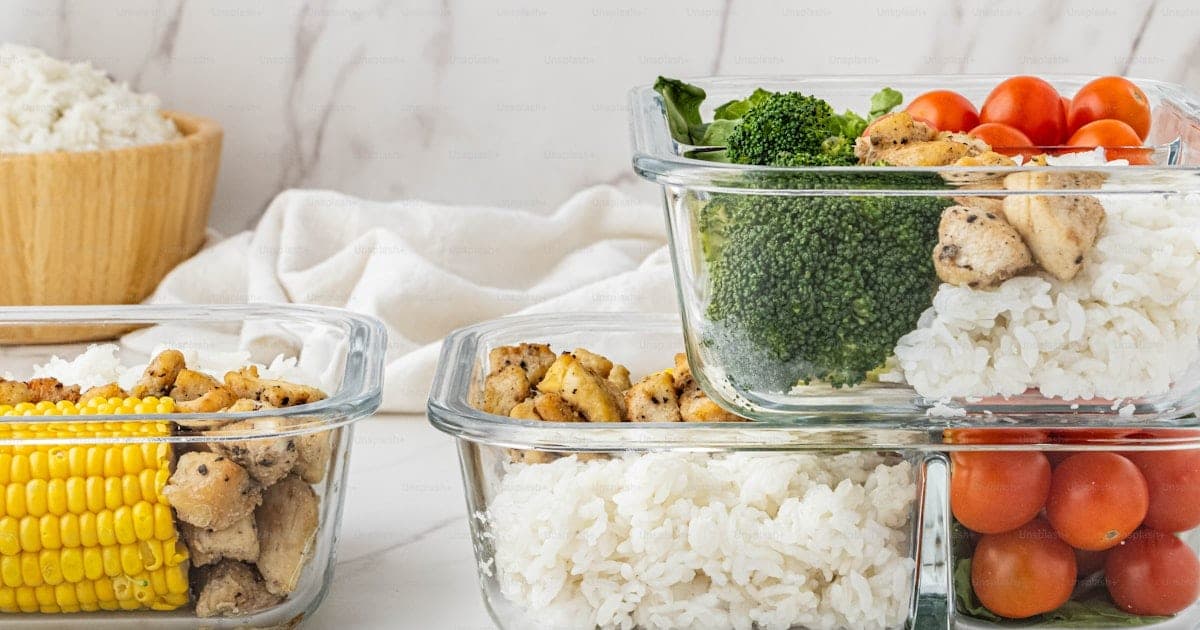
Glass containers with snap-lock lids are the best investment. They are microwave-safe, do not stain, and keep food fresh longer than plastic alternatives.
Freeze for Freshness
Prep meals for the first 3-4 days in the fridge and freeze the rest. Thaw overnight in the fridge for meals later in the week. This prevents food from going stale by Thursday.
Add Variety with Sauces and Spices
The same chicken and rice can taste completely different with teriyaki sauce versus cajun seasoning versus salsa verde. Keep a selection of low-calorie sauces and seasonings to rotate flavors daily.
Track Your Nutrition with Trainera.fit
Meal prepping becomes even more powerful when combined with proper tracking. Trainera.fit features a built-in diet tracker where you can log your meals, monitor your macros, and track water intake - all in one place. Your personal trainer can review your nutrition logs and adjust your plan as needed to ensure you are on track.
Whether you need help calculating your targets or want a completely customized nutrition plan, Trainera.fit connects you with certified trainers and nutritionists who can create a meal plan tailored to your body, your goals, and your lifestyle.
Related reading
- High-Protein Meal Plan (With Sample Day)
- Free AI Meal Plan Generator: Calories & Macros
- Nutrition for Your Fitness Goals: What Actually Matters
- Best Pre-Workout Foods to Fuel Your Training
- How to Calculate Macros for Any Fitness Goal
- Best Post-Workout Meals: Protein, Carbs and Timing
- Best Pre-Workout Foods and When to Eat Them
Frequently Asked Questions
How long do meal prepped foods last in the fridge?
How much time does meal prepping take per week?
Can I meal prep if I have dietary restrictions?
Do I need a food scale for meal prep?
Keep Reading
Put this into practice with Trainera
Get your free AI training and nutrition plan in 60 seconds
1800+ exercises, photo-AI food logging, wearables and progress tracking - free, no card needed. Train solo or with a certified coach.
Or find a personal trainer near you