High-Protein Vegetarian Diet: Sources, Targets and a Sample Day
A practical guide to hitting your protein needs on a vegetarian diet, with the best sources, evidence-based daily targets and a sample day.
Get your free AI training and nutrition plan in 60 seconds
Getting Enough Protein Without Meat
Quick answer
You can easily meet your protein needs on a vegetarian diet by combining dairy, eggs, legumes, soy, and whole grains across the day. Most active people do well on about 1.4 to 2.0 grams of protein per kilogram of body weight, spread over three to four meals.
How Much Protein Do You Actually Need?
The general population reference intake is around 0.8 grams per kilogram of body weight per day, but people who train regularly need more. The International Society of Sports Nutrition recommends 1.4 to 2.0 grams per kilogram daily to support muscle repair and growth. If you weigh 70 kilograms, that is roughly 98 to 140 grams per day.
Spreading protein across meals matters. Aim for 25 to 40 grams per meal so you regularly hit the leucine threshold that triggers muscle protein synthesis. Vegetarians can reach this with slightly larger portions, since some plant proteins are less concentrated than meat.
The Best Vegetarian Protein Sources
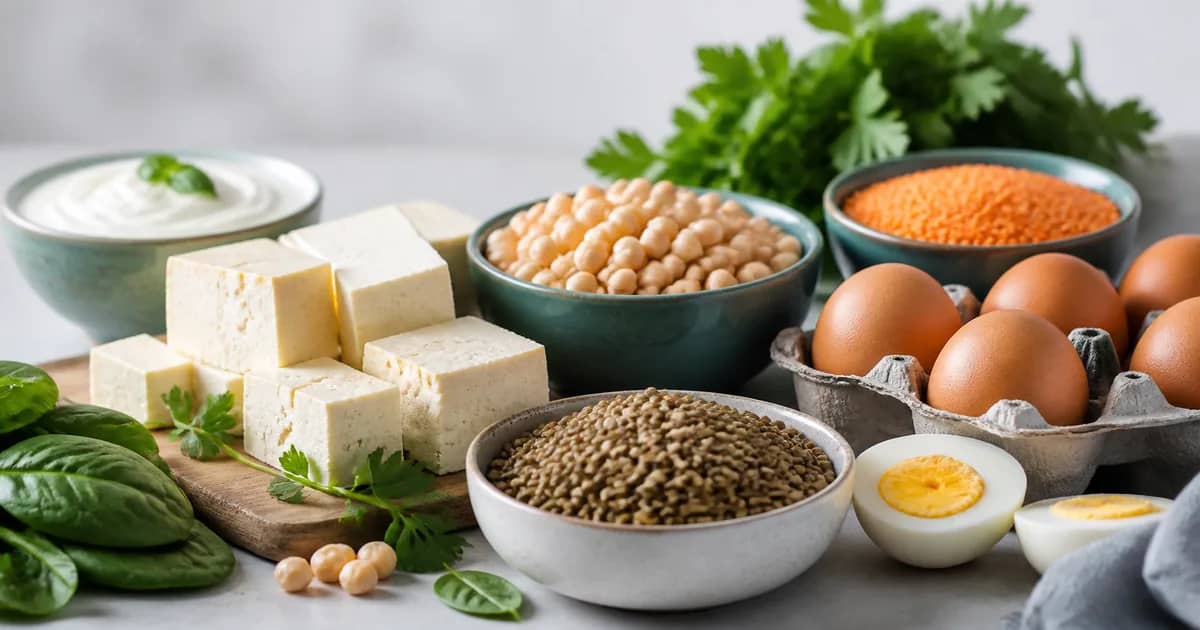
- Greek yogurt: about 10 grams per 100 grams
- Eggs: about 6 grams each
- Cottage cheese: about 11 grams per 100 grams
- Lentils: about 9 grams per 100 grams cooked
- Chickpeas: about 8 grams per 100 grams cooked
- Tofu: about 8 grams per 100 grams
- Tempeh: about 19 grams per 100 grams
- Edamame: about 11 grams per 100 grams
- Seitan: about 24 grams per 100 grams
Soy foods such as tofu, tempeh and edamame are complete proteins, meaning they contain all nine essential amino acids in useful amounts. Dairy and eggs are also complete.
Combining Plant Proteins
Some plant foods are lower in specific amino acids. Grains are low in lysine, while legumes are low in methionine. You do not need to combine them in the same meal, as the NHS notes that eating a variety of protein foods across the day covers your amino acid needs. Classic pairings like beans with rice or hummus with wholegrain bread simply make this easy.
A Sample High-Protein Vegetarian Day
This example provides roughly 130 grams of protein.
- Breakfast: two eggs, 200 grams Greek yogurt with berries and oats (about 35 grams)
- Lunch: lentil and chickpea bowl with quinoa and feta (about 35 grams)
- Snack: cottage cheese with nuts (about 20 grams)
- Dinner: tofu or tempeh stir-fry with edamame and brown rice (about 40 grams)
Practical Tips
- Keep frozen edamame and canned legumes on hand for fast protein
- Add a scoop of soy or pea protein to smoothies if you fall short
- Batch-cook lentils and tofu at the start of the week
- Read labels: tempeh and seitan pack far more protein than most vegetables
The World Health Organization and EFSA both support well-planned vegetarian diets as adequate for adults when energy intake is sufficient. Consistency beats perfection, so focus on hitting your daily target most days.
Protein Quality and Digestibility
Protein quality depends on the amino acid profile and how well the body digests it. Animal-free eaters sometimes worry that plant proteins are inferior, but the practical gap is small once total protein is adequate. Soy, dairy and eggs score highly on digestibility, while legumes and grains sit a little lower. Eating a variety across the day, and slightly larger portions of plant sources, closes the difference. If you eat mostly whole plant foods, aiming toward the upper end of the range, around 1.6 to 2.0 grams per kilogram, is a sensible buffer.
Leucine is the amino acid that most strongly triggers muscle protein synthesis. Dairy, soy and eggs are rich in it, which is why they anchor many high-protein vegetarian meals. Adding a portion of one of these to a legume-based dish reliably lifts the meal's quality.
Timing and Distribution
Total daily protein matters most, but distribution helps you use it. Research summarised by the International Society of Sports Nutrition suggests spreading intake into three to four meals of 0.4 to 0.55 grams per kilogram each. For a 70 kilogram person that is roughly 28 to 38 grams per meal. A protein-containing snack before bed, such as Greek yogurt or cottage cheese, can support overnight recovery.
Building Balanced Meals
A simple template keeps every meal on target: a protein anchor, a fibre-rich carbohydrate, plenty of vegetables and a source of healthy fat. For example, tofu as the anchor, brown rice as the carbohydrate, stir-fried vegetables, and a drizzle of sesame oil. Swapping the anchor between soy, dairy, eggs and legumes keeps meals varied and covers your amino acid needs without any calculation.
Shopping List and Budget Tips
A high-protein vegetarian diet does not have to be expensive. Dried lentils, chickpeas and beans are among the cheapest protein sources available and store for months. Eggs, milk and plain yogurt offer excellent protein per unit of cost. Frozen edamame, canned beans and tofu keep well and cook fast on busy days. When you buy protein powder, plain soy or pea isolate is usually cheaper per serving than flavoured blends. Building your shopping list around these staples keeps both your protein and your budget on track, and cooking in batches at the weekend removes the friction that makes people skip protein during the week.
The Takeaway
Hitting your protein needs without meat is straightforward once you know the numbers and the sources. Set a daily target based on your body weight, anchor each meal with a strong protein source, and vary between soy, dairy, eggs and legumes across the day. Do that consistently and you will have everything you need for muscle, recovery and health.
If you want your protein targets, meals and training tracked automatically, a coaching app like Trainera can build your plan and log your progress in one place.
Frequently Asked Questions
Can you build muscle on a vegetarian diet?
Is soy protein as good as animal protein?
Do I need protein powder?
How much protein per meal is best?
Are beans and rice a complete protein?
Keep Reading
Put this into practice with Trainera
Get your free AI training and nutrition plan in 60 seconds
1800+ exercises, wearables and progress tracking, free with no card needed. AI food scanning comes with Premium. Train solo or with a certified coach.