12 High-Protein Snacks With Rough Macros
A quick reference list of twelve high-protein snacks with rough macros, so you can top up protein between meals without overthinking it.
Get your free AI training and nutrition plan in 60 seconds
Twelve High-Protein Snacks You Can Actually Grab
Quick answer
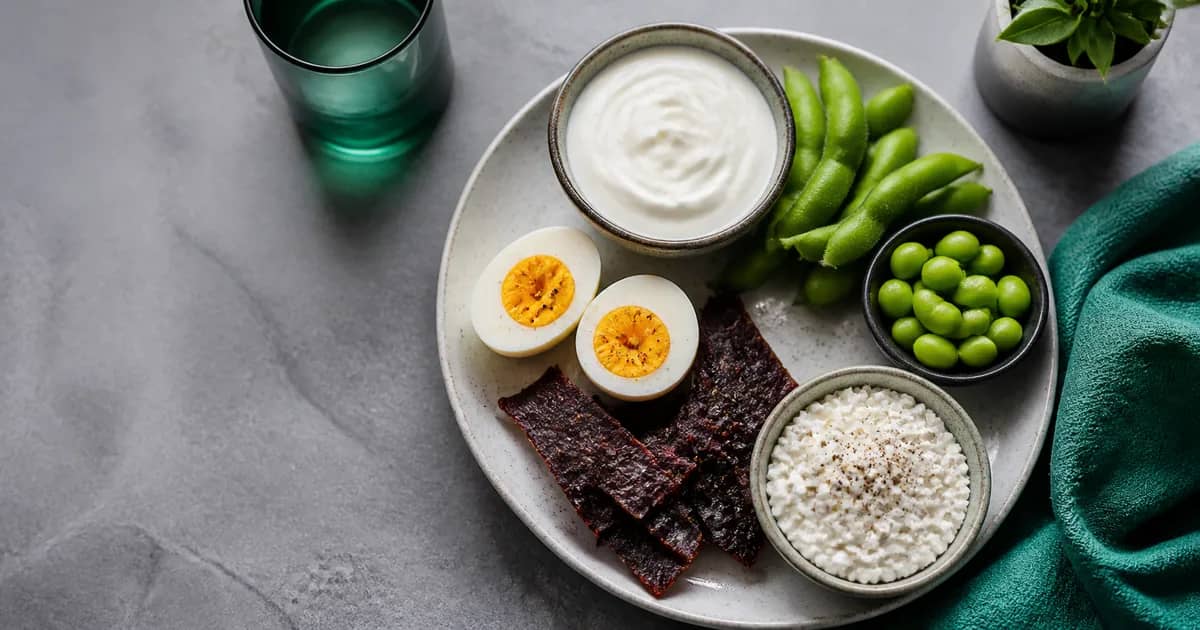
A good high-protein snack lands 15 to 25 grams of protein for a reasonable calorie cost. Greek yogurt, cottage cheese, boiled eggs, tuna, edamame, jerky and a whey shake all fit that brief and take almost no effort to prepare.
Why Protein Snacks Help
Spreading protein across the day supports muscle repair and helps you feel full, which makes overeating later less likely. Protein is the most satiating macronutrient, so a protein-forward snack tends to hold hunger better than crackers or sweets. Use these to fill the gaps between meals, not to replace them.
The 12 Snacks and Their Rough Macros
Numbers are approximate and vary by brand and portion.
- Greek yogurt, 200 g plain: around 20 g protein, 120 kcal
- Cottage cheese, 150 g: around 18 g protein, 130 kcal
- Two boiled eggs: around 12 g protein, 140 kcal
- Canned tuna, one small tin: around 20 g protein, 100 kcal
- Whey protein shake in water: around 24 g protein, 120 kcal
- Edamame, 150 g cooked: around 17 g protein, 190 kcal
- Beef or turkey jerky, 30 g: around 15 g protein, 90 kcal
- Roasted chickpeas, 100 g: around 15 g protein, 160 kcal
- Tuna or chicken with a rice cake: around 18 g protein, 150 kcal
- Skyr or high-protein quark, 150 g: around 17 g protein, 100 kcal
- A palmful of almonds plus a string cheese: around 14 g protein, 250 kcal
- Protein bar, a lower-sugar option: around 18 g protein, 200 kcal
Snacks Under 150 Calories
If you are managing intake, lean on the lighter options: plain Greek yogurt, cottage cheese, boiled eggs, a whey shake in water, canned tuna and skyr all clear 15 grams of protein while staying light on calories.
Plant-Based Protein Snacks
Edamame, roasted chickpeas, roasted soy nuts, soy yogurt and a scoop of plant protein all work well. Pair a legume with a seed or grain across the day for a complete amino acid profile. The Academy of Nutrition and Dietetics notes that varied plant proteins easily cover needs.
Building a Snack That Keeps You Full
Add fibre or a little fat to a protein base and the snack holds longer. Greek yogurt with berries, apple with a slice of cheese, or tuna on wholegrain crackers each pair protein with fibre for steadier energy. The NHS recommends prioritising these whole-food combinations over ultra-processed snacks.
Keep It Simple
You do not need a different snack every day. Pick three or four that you enjoy and keep them stocked, so the healthy option is also the easy one when hunger hits.
Timing Your Snacks Around Training
A protein snack roughly an hour or two before training gives you something in the tank without a heavy stomach, and one after helps you hit your daily target if your next meal is far off. Around a workout, pairing protein with a quick carbohydrate, such as yogurt with fruit, is a smart combination that supports both energy and recovery. Outside of training, snacks mostly exist to keep hunger steady and stop you arriving at dinner ravenous.
If you sit at a desk all day, keep a shelf-stable option in your bag, such as jerky, a protein bar or a small tin of tuna, so a busy afternoon does not turn into a vending-machine decision.
Snacks to Approach With Care
Not everything marketed as high protein is a great choice. Some protein bars and cookies carry as much sugar and as many calories as a chocolate bar, so read the label and check the protein-to-calorie ratio. Flavoured protein yogurts can hide a lot of added sugar compared with plain versions you sweeten yourself with fruit.
Portion size matters too. Nuts and cheese are protein-rich but calorie-dense, so a handful is a snack while half a bag is a meal's worth of calories. None of these foods are off limits, they just reward a quick glance at the numbers.
Quick Combinations You Can Build
Beyond single foods, a few two-ingredient pairings punch above their weight for protein and staying power. These take under a minute to assemble:
- Greek yogurt with a spoon of nut butter and a drizzle of honey
- Apple slices with cottage cheese or a wedge of cheese
- Wholegrain crackers topped with tinned mackerel or sardines
- A boiled egg with a small handful of edamame
- Rice cakes with cottage cheese and sliced tomato
Each pairing combines protein with either fibre or a little healthy fat, which is exactly what keeps a snack satisfying rather than leaving you hungry again in twenty minutes.
Snacks for Busy Days and Travel
The snacks that fail are the ones that need a fridge you do not have or prep you never do. For busy days, lean on shelf-stable options that survive a bag or a desk drawer, such as jerky, roasted chickpeas, a protein bar, a small tin of tuna or a single-serve protein powder you mix with water. Keeping a couple of these on hand means a skipped lunch or a delayed dinner does not blow your protein target for the day. Planning for the messy days, not just the perfect ones, is what makes a nutrition routine actually stick over months.
If you want your snacks counted toward a daily protein target automatically, with meals and progress in one place, Trainera builds the plan around your goal.
Frequently Asked Questions
What is a good high-protein snack?
How much protein should a snack have?
What are low-calorie high-protein snacks?
What are good plant-based protein snacks?
Are protein bars a good snack?
Keep Reading
Put this into practice with Trainera
Get your free AI training and nutrition plan in 60 seconds
1800+ exercises, wearables and progress tracking, free with no card needed. AI food scanning comes with Premium. Train solo or with a certified coach.