Carb Cycling Explained: High and Low Days for Better Results
Carb cycling matches carbohydrate intake to your training. Here is how high and low days work and how to set one up.
Get your free AI training and nutrition plan in 60 seconds
Carb cycling explained
Quick answer
Carb cycling means eating more carbohydrate on hard training days and less on rest or light days, while keeping protein steady. The idea is to fuel demanding workouts and trim calories when you need less energy. It can help committed lifters and athletes, but it is an optional refinement, not a requirement for progress.
What carb cycling is
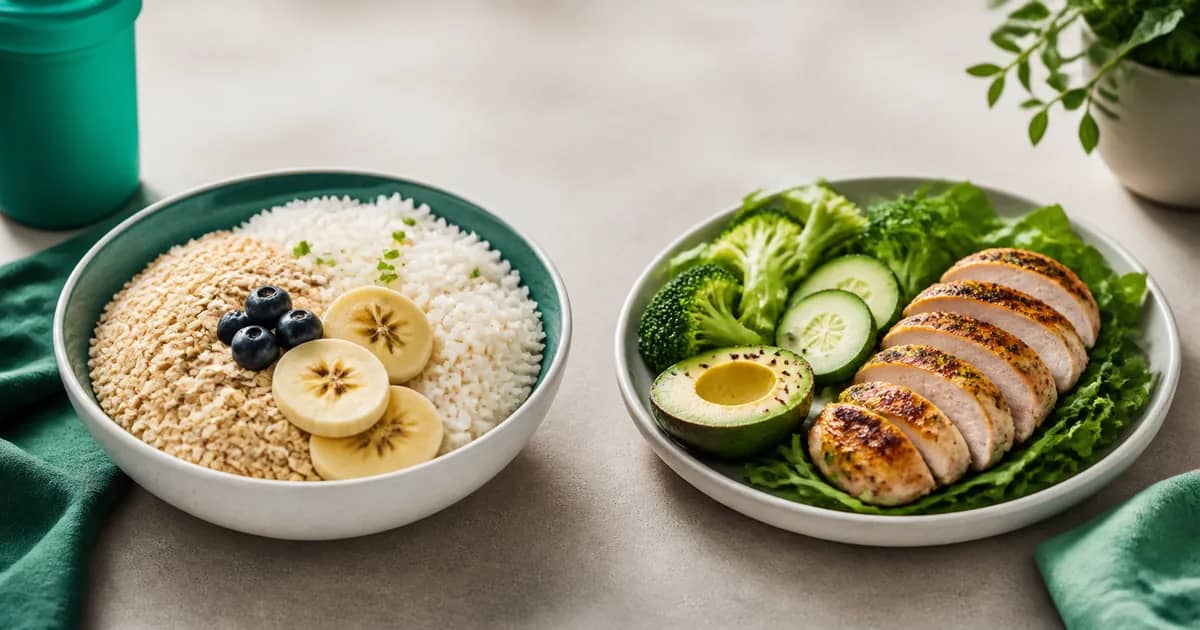
Carb cycling is a way of varying your carbohydrate intake across the week to match your training demands. On high-carb days you eat more carbohydrate to fuel intense sessions and support recovery. On low-carb days, usually rest or light days, you eat less carbohydrate and often a bit more fat, which lowers total calories without touching protein.
Protein stays roughly the same every day to protect muscle. Only carbohydrate, and to a lesser extent fat, move up and down. This is why carb cycling is really a structured way of managing calories and energy, not a separate metabolic trick.
Who benefits
Carb cycling suits people who already train seriously and track their food. It can help:
- Lifters trying to lose fat while keeping strength and muscle
- Athletes with clearly hard and easy days in their week
- People who feel sluggish on a flat low-carb diet but still want a deficit
Beginners usually do not need it. If you are new to training, a consistent diet with enough protein and a sensible calorie target will drive most of your progress. Carb cycling is a fine-tuning tool for when the basics are already in place.
How to set it up
Start by setting your protein at a steady daily target, commonly around 1.6 to 2.2 grams per kilogram of body weight, a range supported by the International Society of Sports Nutrition for active people. Then align carbohydrate with training:
- High-carb days on your hardest training sessions, with carbohydrate as your largest energy source
- Low-carb days on rest or light days, cutting carbohydrate and adding a little fat
- Keep vegetables and fiber high on every day for digestion and fullness
- Adjust weekly based on your energy, performance, and the mirror or scale trend
A simple weekly pattern might be three high days matching your main workouts and four lower days around them, but there is no magic split. Match it to your own schedule.
Does it beat a steady diet
Evidence that carb cycling beats a steady diet with the same weekly calories and protein is limited. The main benefit is practical, putting more of your fuel where you need it and cutting calories where you do not. For fat loss, total weekly calories and protein still decide most of the outcome, as reviews of nutrition research consistently show.
Choosing your carbohydrate sources
What kind of carbohydrate you eat matters as much as when. On high days, lean on quality sources such as oats, rice, potatoes, whole grains, fruit, and beans, which provide steady energy along with fiber and micronutrients. Sugary drinks and sweets can fit around hard training for some athletes, but they should not be the backbone of your high days. On low days, the smaller amount of carbohydrate you do eat is best spent on vegetables and a little fruit, keeping fiber high while calories stay down.
This focus on food quality is what separates a useful carb cycling plan from a gimmick. If your high days are built on nutrient-poor processed food, you lose the digestive and health benefits that whole carbohydrates bring. Treat the high day as an opportunity to fuel well, not as a cheat day, and the whole approach works more smoothly.
A sample week
Imagine you train hard on Monday, Wednesday, and Friday and rest or do light activity on the other days. A simple layout puts high-carb intake on those three training days, giving your body plenty of fuel to push heavy sessions and recover. The four remaining days run lower in carbohydrate with a little more fat, trimming weekly calories for fat loss while protein stays constant throughout. Nothing here is fixed. If your hard days move, your carbohydrate moves with them.
Track how you feel and perform for a couple of weeks and adjust. If strength drops or you feel flat in the gym, your high days may need more carbohydrate. If fat loss stalls, your low days or overall calories may need a small trim. Carb cycling rewards this kind of steady, honest adjustment over rigid rules.
Mistakes to avoid
The most common error is overcomplicating things. People sometimes weigh every gram of carbohydrate across three different day types while ignoring the fact that their weekly calories are simply too high. If the basics are not in place, no amount of clever cycling will save the plan. Start by setting sensible weekly calories and a steady protein target, then layer carb cycling on top only if you want the extra structure. Another mistake is letting low days become so restrictive that you feel drained and end up bingeing later, which wipes out the calorie savings and more. Keep low days moderate rather than extreme. Finally, do not confuse carb cycling with carb avoidance. The point is to time carbohydrate around training, not to fear it. Carbohydrate is your main training fuel and a valuable source of fiber and nutrients, so even your lowest days should still include vegetables and some fruit. Treated as a simple scheduling tool rather than a strict rulebook, carb cycling can make a good diet feel a little smarter without adding stress.
Whether you cycle carbs or keep them steady, consistency and enough protein win. If you want your training and daily nutrition planned together and tracked, Trainera builds plans around your goals and follows your progress over time.
Frequently Asked Questions
What is carb cycling in simple terms?
Does carb cycling burn more fat than a normal diet?
How much protein should I eat while carb cycling?
Do beginners need carb cycling?
How do I plan high and low days?
Keep Reading
Put this into practice with Trainera
Get your free AI training and nutrition plan in 60 seconds
1800+ exercises, wearables and progress tracking, free with no card needed. AI food scanning comes with Premium. Train solo or with a certified coach.