How Many Calories in a Banana, Egg, Apple and Watermelon?
A medium banana has about 105 calories, a large boiled egg about 78, a small apple about 72 and a cup of watermelon about 45. Here are portion tables from official food data, plus a simple way to calculate calories for any food.
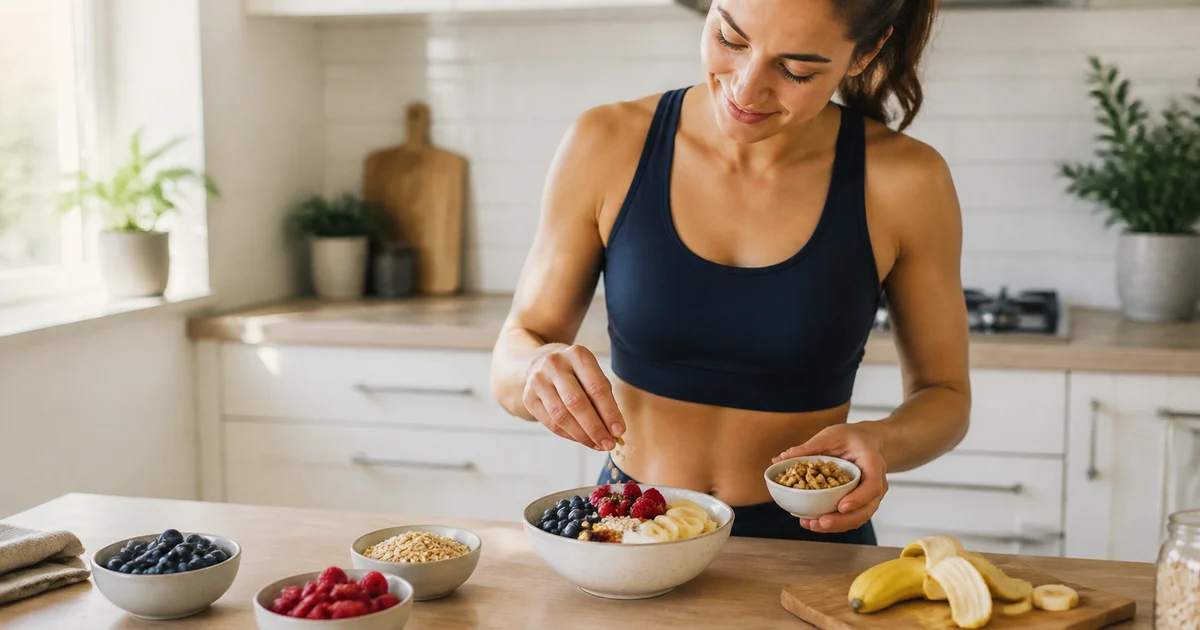
How many calories in a banana depends mostly on size: a medium banana (about 118 g peeled) has about 105 calories, an extra small one about 72 and an extra large one about 135. A large boiled egg has about 78 calories, a small apple about 72 and a cup of diced watermelon about 45.
These figures come from official food composition data, mainly Health Canada's Nutrient Value of Some Common Foods and the FDA raw fruits nutrition poster. Below you'll find a portion table for each food, the reason apps and websites disagree, and a simple way to work out calories for anything on your plate.
Quick portion table: banana, egg, apple and watermelon
If you only need one number per food, use this table. All weights are the part you actually eat: no peel, no shell, no core, no rind.
| Food | Portion | Edible weight | Calories |
|---|---|---|---|
| Banana | 1 medium | 118 g | 105 |
| Egg, hard-boiled | 1 large | 50 g | 78 |
| Egg, fried | 1 large | about 46 g | about 87 |
| Apple with skin | 1 small (7 cm across) | 138 g | 72 |
| Apple with skin | 1 large | 242 g | 130 |
| Watermelon, diced | 1 cup | about 150 g | about 45 |
| Watermelon, diced | 2 cups | 280 g | 80 |
Get your free AI training and nutrition plan in 60 seconds
How many calories in a banana? Sizes from extra small to extra large
A medium banana has about 105 calories, and the full range runs from about 72 to 135 depending on size. Banana flesh carries roughly 89 calories per 100 g, so size is the only thing that really moves the number.
| Size | Length | Peeled weight | Calories | Carbs |
|---|---|---|---|---|
| Extra small | under 15 cm (6 in) | 81 g | 72 | about 19 g |
| Small | 15 to 18 cm (6 to 7 in) | 101 g | 90 | about 23 g |
| Medium | 18 to 20 cm (7 to 8 in) | 118 g | 105 | 27 g |
| Large | 20 to 23 cm (8 to 9 in) | 136 g | 121 | about 31 g |
| Extra large | over 23 cm (9 in) | 152 g | 135 | about 35 g |
A few things worth knowing before you log it:
- Weigh it peeled. If you put the whole banana on the scale, the peel inflates the weight and you'll overcount.
- Ripeness barely matters. A spotty banana tastes sweeter because starch turns into sugar as it ripens, but total calories stay about the same.
- No scale? Log it as medium (105). If it's clearly long, use large (121). Being off by 15 calories on a banana won't change your week.
So how many calories are in a banana you eat before a workout? Usually around 105, with about 27 g of carbohydrate and almost no fat, which is why it's such a common pre-training snack.
How many calories are in an egg, boiled vs fried?
A large hard-boiled egg has about 78 calories, and a large fried egg has about 87 once a little cooking fat is counted. The egg itself hardly changes when you cook it; the difference comes from what goes into the pan.
| Preparation | Portion | Weight | Calories |
|---|---|---|---|
| Hard-boiled | 1 large | 50 g | 78 |
| Poached | 1 large | 50 g | 74 |
| Fried | 2 large | 92 g | 173 (about 87 each) |
| Scrambled | made with 2 eggs | 124 g | 189 (about 95 per egg) |
| Egg white, cooked | 1 large | 33 g | 16 |
| Egg yolk, cooked | 1 large | 17 g | 59 |
Source: Health Canada, eggs and egg dishes. Notice that most of the calories sit in the yolk, while the white is almost pure protein.
So how many calories does an egg have when you cook it at home? Mostly it depends on the fat. A tablespoon of oil adds roughly 120 calories and a tablespoon of butter about 100. Two eggs are about 155 calories boiled, but fry them in a full tablespoon of oil, eat everything in the pan, and you're near 275. A non-stick pan and a teaspoon of oil (about 40 calories) keeps it much closer to the boiled number.
Egg size matters too. Without the shell, an egg gives you about 1.5 calories per gram, so a bigger egg scales up from there. Sizes are also defined differently by country: a "large" egg in the EU or UK is heavier than a US "large", so it can easily come to 85 calories or more before cooking.
How many calories are in an apple?
A small apple (about 7 cm across) has about 72 calories, a medium one roughly 95 and a large one about 130. Apples with skin come in at around 52 calories per 100 g, so weight tells you more than variety.
| Size | Weight | Calories | Fibre |
|---|---|---|---|
| Small (7 cm across) | 138 g | 72 | 2.6 g |
| Medium | about 180 g | about 95 | about 3.5 g |
| Large | 242 g | 130 | 5 g |
The small apple figures come from Health Canada and the large apple from the FDA poster; the medium row is calculated from the same 52 calories per 100 g. Two practical points:
- The core doesn't count. Tables use edible weight, so weigh what's left after you cut out the core, or simply log the apple by size.
- Juice is a different food. Half a cup (125 mL) of apple juice has about 59 calories but almost none of the fibre, and it doesn't fill you up the way a whole apple does.
How many calories are in a slice or cup of watermelon?
A cup of diced watermelon (about 150 g) has around 45 calories, and a wedge cut from a medium melon has about 80. Watermelon is mostly water, at roughly 30 calories per 100 g.
| Portion | Edible weight | Calories |
|---|---|---|
| Half cup of cubes (125 mL) | 80 g | 24 |
| 1 cup diced | about 150 g | about 45 |
| 2 cups diced | 280 g | 80 |
| 1 wedge (1/18 of a medium melon) | about 280 g | about 80 |
| Big summer slice | about 500 g | about 150 |
"A slice" means very different things depending on who's holding the knife. The easiest fix: weigh the slice with rind before you eat it, weigh the rind afterwards, and subtract. Multiply the difference in grams by 0.3 and you have your calories.
Why do calorie numbers for the same food vary between sources?
Sources use different portion weights, different food samples and different rounding rules. A spread of 10 to 20 percent for the same food is normal and doesn't mean anyone got it wrong.
- Different "medium". Health Canada's medium banana weighs 118 g (105 calories). The FDA poster uses a 126 g banana and lists 110 calories.
- Label rounding. US nutrition labels round calories to the nearest 5 up to 50 calories and to the nearest 10 above 50, under 21 CFR 101.9. A food with 105 calories can legitimately appear as 110.
- Label tolerance. The same regulation treats a packaged food as mislabelled if its calories are more than 20 percent above the declared value, so labels are close, not exact.
- Natural variation. Fruit varies with variety, growing conditions and ripeness. Food tables publish averages.
- Raw vs cooked, with vs without peel. Picking "fried egg" when you boiled it, or weighing a banana in its peel, adds errors bigger than any database difference.
- Cooking fat. For eggs, this is the biggest real-world error by far.
The practical answer: pick one source, use it consistently and watch your weight trend over a few weeks. If you're curious how photo-based apps handle these errors, see AI Calorie Counter Accuracy: What the Studies Show.
How do you calculate calories for any food you eat?
Weigh the edible part in grams, look up the calories per 100 g, then multiply: grams x calories per 100 g / 100. Every calorie calculator for food does exactly this behind the scenes.
- Weigh it in the state you'll match in the database. Raw with raw, cooked with cooked.
- Find calories per 100 g on the label or in a food composition table.
- Multiply. A 136 g banana: 136 x 89 / 100 = 121 calories.
- Add fats and sauces separately. Oil, butter, dressing and peanut butter are where the hidden calories live.
- Log it the same way every time so your numbers stay comparable from week to week.
| Food | Calories per 100 g |
|---|---|
| Banana, peeled | about 89 |
| Apple with skin | about 52 |
| Watermelon flesh | about 30 |
| Egg, hard-boiled | about 156 |
Here's how it adds up on a real plate: two boiled eggs (156), a medium banana (105) and a cup of watermelon (45) make a breakfast of about 306 calories. Whether that's a lot or a little depends on your daily target, which you can estimate with the TDEE calculator guide, then adjust using how many calories to eat to lose weight.
One note: if you have diabetes or another condition where carbohydrate amounts matter, carbs per portion are more useful than calories alone, and your doctor or dietitian can help you set portion sizes for fruit.
Turning this into a personal plan
Portion tables help, but they work best inside a daily target that fits your training. Trainera's free plan includes a diet tracker and one AI nutrition plan a month from TRAI, the AI coach, which builds the plan and answers questions in your language. If weighing every banana gets old, the Premium plan adds an AI food scanner that logs calories and macros from a photo, up to 20 scans a day. Plans and local prices are on the pricing page.
Frequently Asked Questions
Keep Reading
Get your free AI training and nutrition plan in 60 seconds
1,800+ exercises, wearables and progress tracking, free with no card needed. AI food scanning comes with Premium. Train solo or with a certified coach.