What Is Better to Eat Before Workout or After? A Straight Answer
Both meals help, but for most people the meal after training matters a little more, while eating before matters most for long, hard or early sessions. Here is how to time both, with protein amounts and simple food pairings.
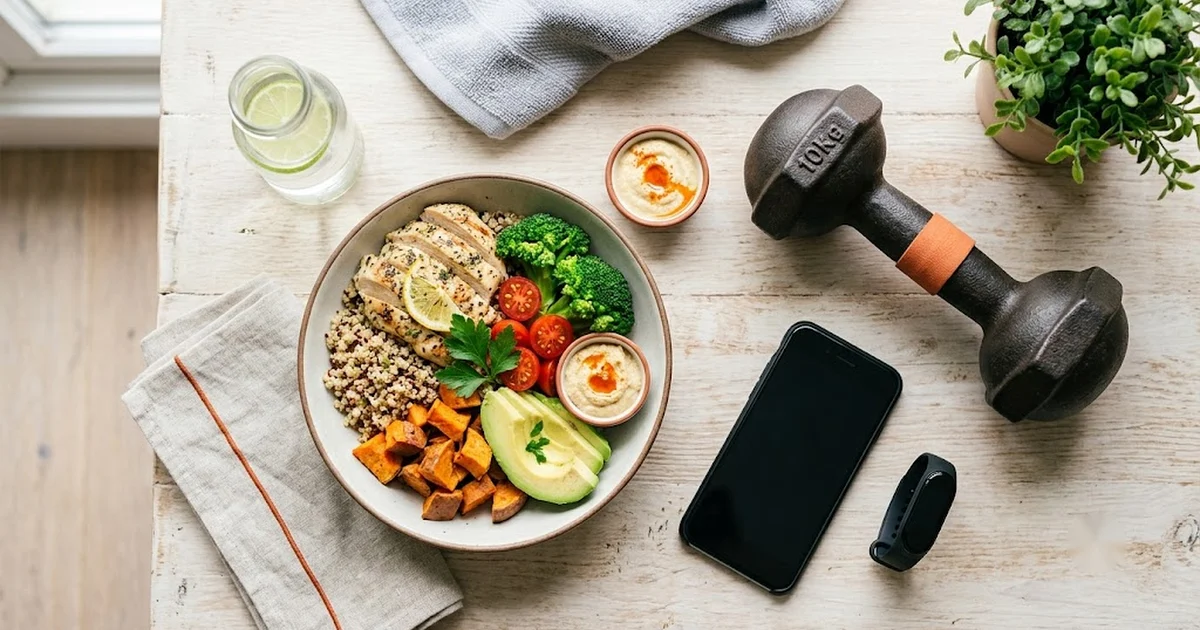
What is better to eat before workout or after? For most people, the meal after training matters a bit more, because total daily protein and recovery drive results. Eating before matters most for long, hard or early sessions. The simplest setup that works: a light carb snack before, then a meal with protein and carbs after.
Both meals do different jobs, and the research says the clock matters less than most people think. Here is how to decide, with amounts and real food you can buy anywhere.
What is better to eat before workout or after?
If you have to pick one, prioritise the meal after, unless your session is long, intense or first thing in the morning. In those cases the pre-workout meal earns its place too.
The reason is how muscle adapts. The International Society of Sports Nutrition (ISSN) position stand on nutrient timing says meeting your total daily protein intake, ideally in evenly spaced meals, should be the primary focus for people who exercise, and that high-quality protein eaten from immediately to 2 hours after training stimulates a robust rise in muscle protein synthesis. A 2013 meta-analysis on protein timing found that once other factors were controlled, eating protein around the session made no significant difference to strength or muscle size. Total protein intake was the strongest predictor of muscle growth.
So if you are wondering what's better to eat before gym or after, here is the honest order of importance:
- Total food and protein across the day. This drives most of your result.
- A protein-rich meal within a couple of hours either side of training.
- Carbohydrate before harder or longer sessions, so you can actually train well.
- Exact minutes. The least important part for almost everyone.
| Question | Eating before | Eating after |
|---|---|---|
| Main job | Fuel the session, avoid feeling flat or dizzy | Repair muscle, refill glycogen, add to daily protein |
| Key nutrients | Mostly carbohydrate, some protein | Protein plus carbohydrate |
| Timing | Meal 3 to 4 hours before, or a snack 1 to 2 hours before | Within about 2 hours after |
| Matters most when | Sessions over 60 minutes, high intensity, early mornings | Lifting for muscle, training fasted, two sessions in a day |
| Keep it low in | Fat, fibre and big portions | Nothing special, a normal balanced meal is fine |
Get your free AI training and nutrition plan in 60 seconds
Is it good to eat before you workout?
Yes, for most people it helps, especially when the session is hard or lasts more than an hour. It is not mandatory for a short, easy workout if you feel fine without it.
The Victorian government's Better Health Channel notes that a high-carbohydrate meal 3 to 4 hours before exercise is thought to help performance, that a small snack 1 to 2 hours before may also help, and that meals high in fat, protein or fibre close to training raise the risk of stomach discomfort. It also suggests roughly 500 ml of fluid in the 2 to 4 hours before you start.
When does eating before training matter most?
It matters most when your session is long or intense, when you train early after an overnight fast, or when your last meal was many hours ago.
- Long or hard sessions. Anything over about 60 minutes, intervals, heavy leg days, long runs or rides. ISSN even recommends about 30 to 60 g of carbohydrate per hour during high-intensity bouts longer than 60 minutes, which shows how much fuel these sessions use.
- Early morning training. A banana or a slice of toast 30 to 60 minutes before can make the first sets feel far less sluggish.
- A long gap since your last meal. Training at 6 pm on a lunch you ate at noon often feels flat. A snack around 4 pm fixes it.
- You feel lightheaded, shaky or sick training on empty. That is your body telling you to eat something first.
For exact windows by meal size, see our guide to pre-workout meal timing. If coffee is your pre-workout, read caffeine before a workout for dose and timing.
When does eating after training matter most?
The post-workout meal matters most when you lift to build muscle, when you trained without eating beforehand, or when you train again later the same day. In those cases, get protein and carbs in within about 2 hours.
- How much protein: ISSN puts the useful dose at 20 to 40 g of high-quality protein (about 0.25 to 0.40 g per kg of body weight) per meal, repeated every 3 to 4 hours. For a 70 kg person that is roughly 18 to 28 g.
- If you trained fasted: the same position stand notes that the size and timing of your pre-exercise meal affects how much the post-workout meal is needed. Ate a solid meal 1 to 2 hours before? No rush. Trained on an empty stomach? Eat sooner.
- Two sessions close together: with less than 4 hours to recover, ISSN suggests aggressive carb refuelling of about 1.2 g per kg per hour, or 0.8 g/kg/h of carbs with 0.2 to 0.4 g/kg/h of protein. If you train once a day, you do not need this.
- Fluids: drink normally after training, more if you sweated heavily or trained in heat.
For full meal ideas, see the best post-workout meal.
What if you can only eat once around your workout?
Pick the slot that suits your day and make it a proper meal with protein and carbs. Training in the morning, eat after. Training in the afternoon or evening, a meal 2 to 3 hours before plus your normal dinner after covers both sides.
One decent meal within about 2 hours of the session, on either side, is enough for most people. What you want to avoid is a long fasted stretch on both sides, such as training at 7 am with no breakfast and not eating again until 1 pm.
- Morning trainer who cannot face food early: train fasted if it feels fine, then eat breakfast with 25 to 40 g of protein soon after.
- Lunchtime trainer: a solid breakfast, then lunch straight after the session.
- Evening trainer: a late lunch or snack 2 to 3 hours before, dinner after.
Does the answer change for weight loss and for muscle gain?
For weight loss, timing barely matters and total calories decide the outcome. For muscle gain, timing matters a little, but total protein and consistent training matter far more.
Weight loss
Training fasted burns more fat during the session, but that does not seem to mean more fat lost over weeks. In a 2014 trial, 20 young women on a calorie deficit did 1 hour of steady cardio 3 days a week for 4 weeks, either fasted or after a 250 kcal shake. Both groups lost weight and fat mass, with no significant difference between them. It was a small study, but the practical message holds: choose whichever lets you train well and stay within your calories. If a small snack before stops you raiding the kitchen after, eat it.
Muscle gain
Hit your daily protein first. Sports nutrition guidance for people lifting to build muscle commonly lands around 1.4 to 2.0 g of protein per kg of body weight per day, split across 3 to 5 meals of 20 to 40 g. Make one of those meals fall within a couple of hours of training, eat enough total calories to grow, and you have covered timing.
When to check with a doctor
If you have diabetes, especially if you use insulin or other medication that lowers blood sugar, talk to your doctor before training fasted, because low blood sugar during exercise is a real risk. The same goes if you regularly feel faint or dizzy during workouts even after eating.
What to eat before workout and after: simple pairings
Keep it light and carb-focused before, and make the meal after a normal plate built around protein. These pairings work for the most common training times.
| When you train | Before | After |
|---|---|---|
| 6 to 7 am | Banana or toast with honey 30 to 60 minutes before, or nothing if you feel fine | 3 eggs on toast, or 200 g Greek yogurt with oats and berries |
| Midday | Breakfast 3 to 4 hours before: oats, milk, fruit | Chicken or tuna wrap with salad and a piece of fruit |
| 5 to 7 pm | Snack 1 to 2 hours before: yogurt with granola, or rice cakes with jam | Dinner: chicken, salmon or tofu with rice or potatoes and vegetables |
| Late evening | Normal dinner 2 to 3 hours before | Protein shake or a bowl of cottage cheese, then bed |
| Long run or ride (90+ minutes) | Carb-heavy meal 3 to 4 hours before: rice, pasta or bread, low in fat and fibre | Chocolate milk or a shake right away, then a full meal |
Rough protein reference: 3 large eggs give about 18 g, 200 g of plain Greek yogurt about 20 g, 150 g of cooked chicken breast over 40 g, and a scoop of whey usually 20 to 25 g (check your label). If dairy does not agree with you, see our guide to dairy-free protein shakes.
How do you turn this into your own plan?
Write down when you train this week, place a carb-based snack before and a protein-rich meal after each session, and check that your daily protein adds up. Log it for two weeks and you will quickly see whether you train better fed or fasted.
Trainera's free plan, on web, iOS and Android, includes workout logging, a diet tracker, and 1 AI training plan plus 1 AI nutrition plan a month, with no card needed. TRAI, the AI fitness coach, builds a nutrition plan alongside your workout plan and answers questions like this one in your language. If you would rather have a person review your meals, you can find a personal trainer by specialty and location in the trainers marketplace.
Frequently Asked Questions
Keep Reading
Get your free AI training and nutrition plan in 60 seconds
1,800+ exercises, wearables and progress tracking, free with no card needed. AI food scanning comes with Premium. Train solo or with a certified coach.