Understanding Macros for Weight Loss: A Simple Starting Guide
Get your free AI training and nutrition plan in 60 seconds
What protein, carbs, and fat do for weight loss, why total calories still matter most while macro split affects hunger and muscle retention, a simple way to set macros, and common mistakes.
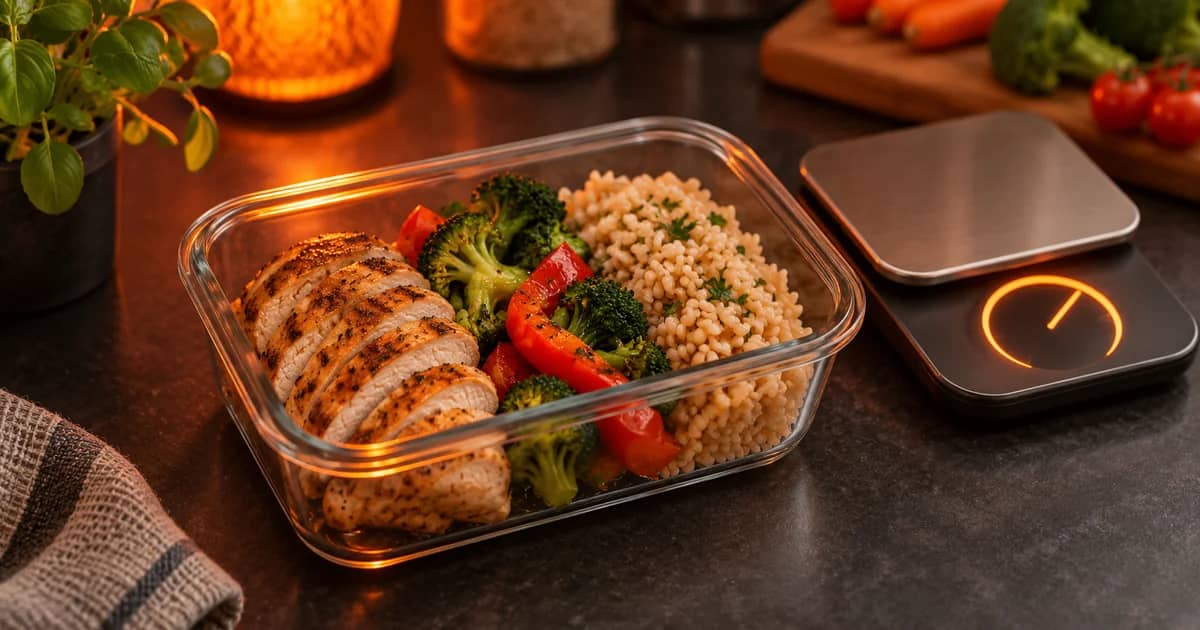
What Are Macros and Why Do They Matter for Weight Loss?
Macros, short for macronutrients, are the three nutrients that provide calories: protein, carbohydrates, and fat. For weight loss, total calorie intake relative to what your body burns is still the main factor that determines whether you lose, maintain, or gain weight, but how those calories are split between the three macros affects how hungry you feel, how easy the plan is to stick to, and how much muscle you keep while losing fat. This general, illustrative guide is not a substitute for individualized medical or nutrition advice, and anyone with a specific health condition should speak with a registered dietitian or doctor before making significant dietary changes.
Get your free AI training and nutrition plan in 60 seconds
The Role of Each Macronutrient
- Protein: generally the most filling of the three macros for most people per calorie, and adequate protein intake helps preserve muscle mass while in a calorie deficit, which matters for both body composition and long-term metabolic health. It's also used by the body to repair and build tissue, including muscle recovering from training.
- Carbohydrates: the body's preferred quick energy source, particularly for higher-intensity exercise, and they also support training performance and recovery by replenishing the glycogen stores muscles use during exercise.
- Fat: necessary for hormone production and the absorption of certain vitamins, and it contributes to satiety and the palatability of meals, which can affect how sustainable a diet feels over weeks and months rather than just in the short term.
Why Total Calories Still Matter Most
A calorie deficit, eating less than you burn, is what actually drives weight loss, regardless of exactly how those calories are split between protein, carbs, and fat. Where the macro split matters is in the details underneath that deficit: a higher-protein approach tends to support more muscle retention and can improve satiety, which makes the deficit easier to sustain over time; very low-carbohydrate or very low-fat approaches work for some people and not others largely based on personal preference, hunger response, and lifestyle fit, rather than one split being inherently superior for fat loss itself. In short, macro split is mainly a tool for making the calorie deficit more sustainable and preserving muscle, not a separate lever that burns fat on its own independent of total intake.
A Simple General Approach to Setting Macros for Weight Loss
- Start with total calories: establish a reasonable calorie deficit based on your goals and current intake, rather than starting with macros first, since the deficit is what ultimately drives the result.
- Prioritize adequate protein first: set your protein target before splitting the rest, since it has the strongest link to muscle retention and appetite control during a deficit. Many general guidelines for people trying to lose fat while preserving muscle suggest a relatively higher protein intake than someone not trying to lose weight, though the right number varies by individual, activity level, and body composition goals.
- Set a fat intake that supports hormone health: fat shouldn't be cut to extremely low levels for extended periods, since it plays a role in hormone production; a moderate amount is generally a safer default than cutting it drastically just to free up more calories for other macros.
- Fill the remaining calories with carbohydrates: once protein and fat are set, the remaining calorie allowance in your deficit generally goes to carbohydrates, which can be adjusted up or down based on activity level, training demands, and personal preference for how those remaining calories feel.
- Adjust based on how it feels and performs in practice: hunger levels, energy, training performance, sleep quality, and how sustainable the plan feels over several weeks are all useful signals for fine-tuning the split, more so than chasing an exact "ideal" ratio pulled from somewhere online.
Common Macro Mistakes
- Cutting protein too aggressively: because protein is the least calorie-dense way to feel full and the main lever for preserving muscle in a deficit, cutting it hardest to "save calories" often backfires by increasing hunger and accelerating muscle loss alongside fat loss.
- Cutting fat to very low levels for a long time: extremely low fat intake sustained for extended periods can interfere with hormone production and isn't necessary for weight loss, since the deficit is driven by total calories, not by eliminating one macro entirely.
- Chasing a "perfect" ratio instead of consistency: spending more energy trying to hit an exact macro percentage than on sticking to the plan day to day tends to be counterproductive; a reasonable, sustainable split followed consistently beats a precise split followed inconsistently for a week before being abandoned.
- Ignoring total calories while focusing only on macros: it's possible to hit a specific macro split and still not be in a deficit if total calorie intake isn't tracked or estimated reasonably well, since macros are a subdivision of total calories, not a replacement for tracking them.
- Making large changes all at once: dropping calories and dramatically shifting macros simultaneously makes it hard to tell what's actually causing hunger, low energy, or poor training performance; adjusting one variable at a time makes problem-solving easier.
Tracking meals and macros in an app over a few weeks is a practical way to see what your actual intake looks like before making adjustments, rather than guessing. This article is general, illustrative guidance, not personalized medical or dietary advice: consult a registered dietitian or doctor for a plan suited to your specific health situation.
Different Macro Approaches Can Work for Different People
Within a given calorie deficit, there's a range of macro splits that can work depending on personal preference and lifestyle. Some people do well with a relatively higher-carbohydrate, moderate-fat approach, especially if they train frequently at higher intensities and rely on carbohydrates for performance and recovery. Others prefer a relatively lower-carbohydrate, higher-fat approach, often because they find it easier to manage hunger or because it fits better with their food preferences and schedule. Neither approach has been shown to be reliably superior to the other for fat loss specifically when protein is adequate and total calories are matched: the more useful question for most people is which approach they can realistically sustain for weeks or months, since adherence tends to matter more than the specific ratio chosen.
Reassessing Macros Over Time
A macro split set at the start of a weight-loss phase doesn't need to stay fixed forever. As body weight changes, calorie needs generally change with it, and a split that felt sustainable at the start may need small adjustments later, particularly to the protein target if the original number was based on a higher starting body weight. Periodically reviewing how training, hunger, and energy are responding, rather than setting macros once and never revisiting them, tends to produce better long-term adherence than treating the original numbers as fixed indefinitely.
Tracking Macros Without Overcomplicating It
Precise macro tracking isn't required for everyone trying to lose weight, but for people who want more structure than general "eat less" guidance, logging meals in an app for a few weeks is a practical way to learn roughly what a day of adequate protein, moderate fat, and a reasonable calorie deficit actually looks like for their own diet and routine. Over time, many people find they need to log less rigidly as they build a working sense of portion sizes and typical meals that fit their targets, using more precise tracking again only when progress stalls or a reset feels useful.
Frequently Asked Questions
Do macros matter more than calories for weight loss?
What macro split is best for weight loss?
Why is protein emphasized so much for weight loss?
Is it bad to eat low fat when trying to lose weight?
How do I start tracking macros for weight loss?
Keep Reading
Get your free AI training and nutrition plan in 60 seconds
1,700+ exercises, wearables and progress tracking, free with no card needed. AI food scanning comes with Premium. Train solo or with a certified coach.