AI Workout App That Uses Sleep and Recovery Data: 2026 Comparison
We checked the official pages of Garmin, WHOOP, Oura, Google, Apple, Polar, Fitbod, Athlytic, Bevel and Trainera to see which apps really change your workout from sleep and recovery data, and who makes the final call.
Get your free AI training and nutrition plan in 60 secondsCreate your free plan
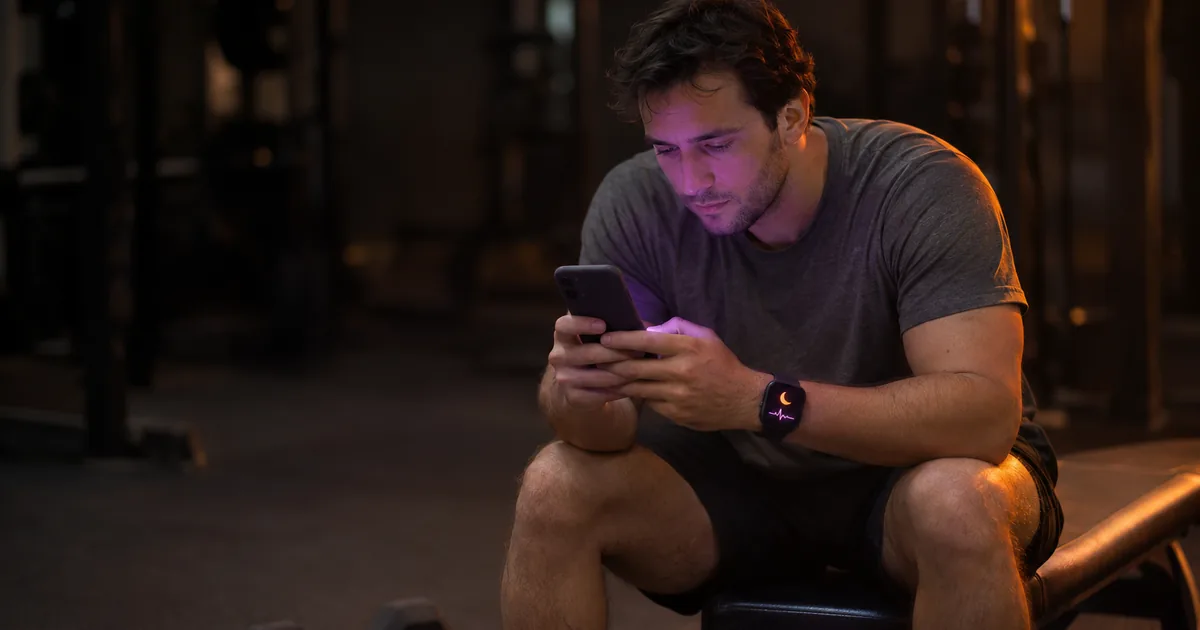
The AI workout app that uses sleep and recovery data and actually changes today's session is rarer than the marketing suggests. As of November 2026, Garmin, Polar, WHOOP, Athlytic and Google's Fitbit coach suggest workouts or targets from recovery, Trainera offers a lighter version of your planned session, and Oura and Apple mainly score your day.
The short list:
- Suggests the workout itself: Garmin Daily Suggested Workouts, Polar FitSpark, Google's Fitbit personal health coach, Athlytic.
- Sets a daily effort target: WHOOP Strain Target, Athlytic Target Exertion.
- Scores your day: Garmin Training Readiness, Oura Readiness, Apple Watch Readiness, Bevel.
- Offers a lighter version of the session you already planned: Trainera.
- Adapts to the training you log, not to your night: Fitbod.
What does an AI workout app that uses sleep and recovery data actually do?
It works at one of three levels, and only the third touches your training:
- Shows your data. Sleep, HRV and resting heart rate on a chart, and you do the interpreting. Most fitness apps that sync with smartwatches stop here.
- Scores your day. One number or label, such as Oura's 0 to 100 Readiness (see Readiness Score Explained). It says how ready you look, not what to change in your squat session.
- Changes your workout. A different session, a daily effort target or a lighter version of your plan. Ask who presses the button: you or the app.
Get your free AI training and nutrition plan in 60 seconds
Which wearable device uses AI to provide personalized coaching for sleep and recovery?
WHOOP, Oura and Google's Fitbit coach pair a wearable with a generative AI coach that talks you through your sleep and recovery. Garmin, Polar and Apple turn the same signals into scores and workout suggestions.
Garmin
Garmin's Training Readiness is a 1 to 100 score, updated through the day from last night's sleep score, recovery time, HRV status, acute load, three nights of sleep history and three days of stress history. Separately, Daily Suggested Workouts give you a run or ride for the day. The manual says they update with your training habits, recovery time and VO2 max, and you can do, dismiss or change the suggestion.
WHOOP
According to the WHOOP app listing, Recovery is built from HRV, resting heart rate, sleep and respiratory rate, and Strain Target recommends a daily exertion range on a 0 to 21 scale based on that Recovery. WHOOP Coach uses generative AI to answer questions ranging from training plans to why you feel tired. The app requires a WHOOP wearable.
Oura
Oura's Readiness Score runs from 0 to 100 and draws on nine contributors, including resting heart rate, HRV balance, body temperature and sleep, compared with your personal averages, which take up to two weeks to learn. Oura Advisor pairs Oura's algorithms with a large language model to answer questions and, from November 2026, offers plans of up to seven days for sleep or readiness. It does not build workouts and needs a Gen3 ring or later with an active membership.
Fitbit and Google
Google's personal health coach for Fitbit talks most directly about your plan. Google says workouts are personalized based on your goals, readiness and recent activity, you get weekly recommendations to review and adjust your plan, and the coach can adapt it when life gets in the way. It launched for Fitbit Premium users.
Apple Watch
watchOS 27 added Readiness, a 0 to 10 score on Apple Watch Series 12 and Ultra 4 that combines activity (including effort ratings and training load), overnight vitals such as HRV against your own baseline, and recent sleep score data. It tells you when to push and when to rest; your workouts stay the same. Workout Buddy, the AI workout feature on Apple Watch, gives spoken encouragement during a session based on your fitness history, and its page does not mention sleep or recovery data. More in Apple Watch Readiness Score.
Polar
Polar's FitSpark is the closest thing to a watch that picks your workout. It offers 2 to 4 options a day from cardio, strength and supportive categories, based on the previous night's Nightly Recharge status, your last 28 days of training, your VO2max and your training background.
Can smartwatches use AI to give personalized fitness coaching?
Yes, but mostly as suggestions and spoken feedback, not as a coach that rewrites your program. Workout Buddy talks to you mid session, Garmin and Polar suggest a daily workout, and the chat coaches from WHOOP, Oura and Google answer questions about your data. For a side by side, read Does Garmin, Whoop or Apple Watch Have an AI Coach?
Which fitness apps adapt the workout plan as I progress?
Fitbod adapts to the training you log, while Athlytic and Bevel react to Apple Watch recovery data. They are the strongest third party picks for an AI fitness app on Apple Watch, but none rewrites a whole program the way a coach would.
Fitbod
Fitbod's App Store listing says each session is custom built for your fitness level and equipment and that its AI learns from your edits. Its recovery model estimates fatigue per muscle group from the workouts you log, as its help center explains. The listing mentions Apple Health but not sleep or HRV, so treat it as a progression tool, not a sleep tool.
Athlytic
The Athlytic listing describes a fitness app that uses HRV: it reads overnight HRV and resting heart rate against your own baseline, gives a Recovery score and a daily Target Exertion range, and suggests what to do today, for how long and how hard. Its Pro Morning Check-In lets you rest for the day with one tap or keep your target.
Bevel
The Bevel listing shows Recovery, Sleep and Strain scores and a Strength Builder that generates plans. Bevel Intelligence suggests when to train and when to rest.
What apps adjust your training plan automatically in 2026?
Very few rebuild your plan on their own from sleep data. Most apps that adjust your training plan, whether sold as an AI personal trainer app or an AI driven workout app, propose a change and let you decide, which is the right call.
HRV guided training has mostly been studied in endurance athletes, and its edge over a sensible fixed plan tends to be modest. Treat these tools as a nudge on top of good programming, which How to Create a Personal Training Plan covers.
What are the leading fitness apps for integrating wearable data into training plans?
Garmin, Polar, WHOOP, Google, Apple, Oura, Athlytic, Bevel, Fitbod and Trainera are the main options, and they differ in what they read and who makes the call. Summary of their official pages as of November 2026:
| Product | Data it reads | What it changes | Who decides | Own device needed | Price model |
|---|---|---|---|---|---|
| Garmin | Sleep score, HRV status, recovery time, load, stress, VO2 max | Readiness score; daily run or ride suggestion | You: do, dismiss or change | Garmin watch | Feature of compatible watches |
| Polar FitSpark | Nightly Recharge, 28 days of training, VO2max | 2 to 4 workout options a day | You pick | Polar watch | Feature of compatible watches |
| WHOOP | HRV, resting heart rate, sleep, respiratory rate | Daily Strain Target; AI chat coach | You | WHOOP wearable | Membership |
| Oura | Nine contributors incl. HRV balance, resting heart rate, temperature, sleep | Readiness score; sleep or readiness plans; no workouts | You | Oura ring | Membership |
| Google Fitbit coach | Goals, readiness, recent activity | Personalized workouts; weekly plan review | You | Fitbit device for readiness | Premium subscription |
| Apple Watch Readiness | Activity, effort, training load, vitals incl. HRV, sleep score | Nothing; 0 to 10 score | You | Series 12 or Ultra 4 | Built in |
| Athlytic | Overnight HRV, resting heart rate, sleep | Recovery score, Target Exertion, daily suggestion | You: rest or keep target | Apple Watch | Free, Pro subscription |
| Bevel | Recovery, sleep, strain, stress | Scores; strength plans; train or rest suggestion | You | Apple Watch | Free, Pro subscription |
| Fitbod | Logged workouts, muscle recovery, Apple Health | Builds each session; learns from edits | App builds, you edit | None | Subscription |
| Trainera | Last night's sleep duration, HRV, resting heart rate via Apple Health or Health Connect | Lighter version of today's planned session | You: lighter or original | None; reads your watch data | Paid client plans |
Where Trainera fits and where it does not
Trainera fits people who train alone on a set plan and want a nudge on rough mornings. Daily Readiness is on paid Pro, Premium and Platinum plans (prices per country) for solo users with no trainer or gym connected.
Each morning it reads last night's sleep duration, HRV and resting heart rate from Apple Health (Apple Watch at night) or Health Connect on Android, and compares them only with your usual values from the last 14 to 21 days. You see the reasons in plain numbers, such as "Your heart rate variability is 38 ms, below your usual 52 ms", with no 0 to 100 score. When recovery is low, TRAI, the AI coach, suggests a lighter version of today's session: same exercises in the same order, one set fewer on exercises with three or more sets, and on a low day about 10% less weight and shorter cardio. You choose "Use lighter session" or "Keep original"; only today changes. The rules are fixed and run in the app, and health values are not sent to an AI model.
It does not suit Free plan users, clients of a trainer or gym, or WHOOP and Oura wearers (no connection). Garmin data is not used by its AI features, so Garmin owners do better with Garmin's tools.
What should you check before you pay for an AI workout coach app?
Four things matter more than the feature list.
- Which data. Sleep duration, HRV and resting heart rate are the core trio. An app that reads only steps and workouts cannot react to a short night.
- Your baseline or population norms. HRV varies widely between people, so a fixed "good" number means little. Oura uses personal averages, Apple's Vitals app sets a typical range for you, Trainera uses your own recent weeks.
- Can you say no. Garmin lets you dismiss a suggestion, Athlytic lets you keep your target, Trainera lets you keep the original session.
- Privacy. Ask whether health values go to an AI model and how long they are kept. Trainera deletes stored readiness rows after 30 days and when you disconnect the source. More in AI fitness app privacy.
When should a recovery number send you to a doctor?
When it stays off for days alongside symptoms, and urgently for chest pain, shortness of breath or fainting. A resting heart rate of 60 to 100 beats per minute is normal for most adults, and active people can sit as low as 40, says the American Heart Association. One that stays well above your usual for several days, especially with fever or unusual tiredness, means rest and a call to your doctor. The NHS says to call 999 or go to A&E for chest pain, shortness of breath or feeling faint. Adults aged 18 to 60 need 7 or more hours of sleep, per the CDC; if you often fall short despite enough time in bed, see a doctor. None of these tools is a diagnosis.
What is the best fitness watch with an AI coach that adapts my training?
There is no single best one: pick by how you train and what you already wear.
| If you... | Look at |
|---|---|
| Run or ride and want the watch to pick today's session | Garmin or Polar |
| Want a daily effort target and a chat coach | WHOOP |
| Care most about sleep and prefer a ring | Oura |
| Use Fitbit and want a coach that discusses your plan | Google's Fitbit coach |
| Own an Apple Watch and want a recovery score with a target | Athlytic or Bevel |
| Lift and want sessions that fit your equipment | Fitbod |
| Train alone on a set plan and want a lighter day you approve | Trainera (paid plan) |
| Work with a personal trainer or gym | Your coach |
Frequently Asked Questions
Keep Reading
Get your free AI training and nutrition plan in 60 seconds
1,800+ exercises, wearables and progress tracking, free with no card needed. AI food scanning comes with Premium. Train solo or with a certified coach.