Readiness Score Explained: Garmin, Oura, WHOOP, Fitbit and More
Garmin, Oura, WHOOP, Fitbit, Samsung and Apple all turn your sleep and overnight heart data into a readiness number. This guide covers what each one measures, why yours might stay low, and how to turn the number into a decision about today's workout.
Get your free AI training and nutrition plan in 60 secondsCreate your free plan
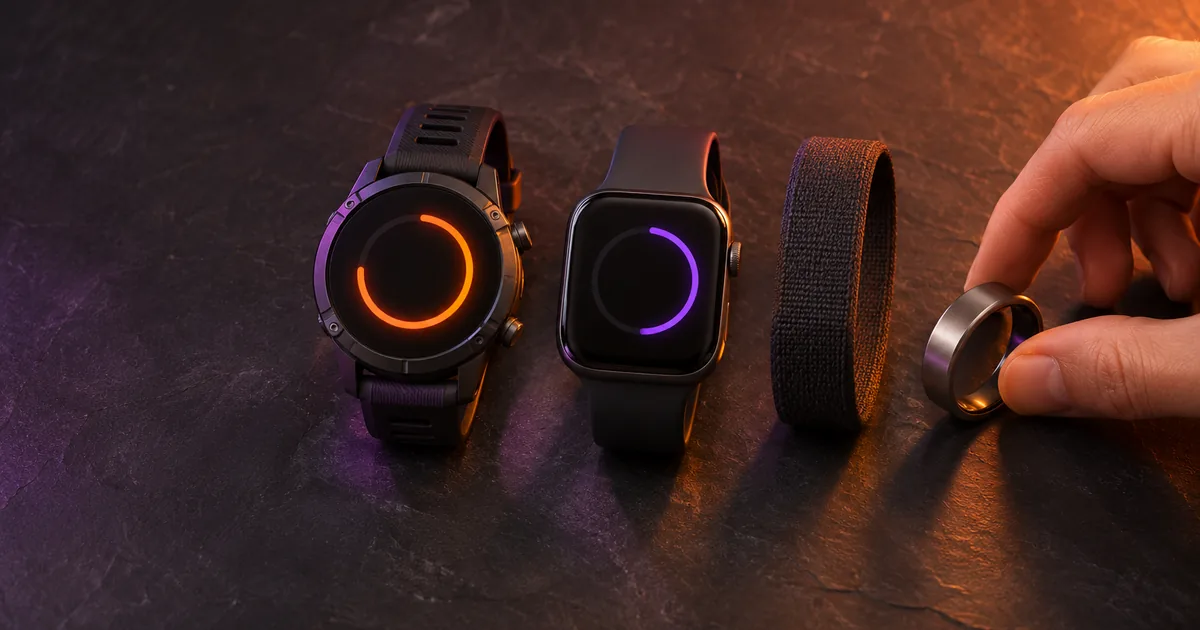
A readiness score is a daily number, usually on a 0 to 100 scale, that your watch or ring works out from last night's sleep, heart rate variability (HRV), resting heart rate and recent training load. Each input is compared with your own normal. A high score means your body seems to have handled recent stress well. A low one suggests holding back today.
Every brand gives it a different name and weights the inputs differently. Below you'll find what each company's own documentation says it measures, a side-by-side table, the usual reasons a score stays low, and the one test that matters: did the number change what you did today?
What does a readiness score mean?
A readiness score tells you how far your overnight body signals are from your personal baseline. It isn't a measure of fitness. A score of 40 doesn't mean you're unfit. It means last night looked worse than your usual night.
That's the key to reading any readiness score: the comparison is with you, not with other people. A resting heart rate of 62 might be normal for you and high for your training partner. The score only becomes meaningful once the device has learned your baseline, which takes anywhere from a few nights to a few weeks depending on the brand.
Get your free AI training and nutrition plan in 60 seconds
What is a recovery score, and is it the same thing?
A recovery score is the same idea under a different name. WHOOP calls it Recovery, Oura, Google and Apple call it Readiness, Garmin calls it Training Readiness and Samsung calls it Energy Score. All of them are built from the same four inputs.
- Sleep: duration, and on most devices also stages, timing and consistency over recent nights.
- HRV: how much the time between heartbeats varies, usually measured during sleep. Lower than your usual often points to stress, poor sleep, illness or accumulated fatigue. Our guide to what a good HRV is by age explains why your own baseline matters more than any chart.
- Resting heart rate: for most adults, a resting rate between 60 and 100 beats per minute is normal, and active people can sit as low as 40, according to the American Heart Association. For readiness, the number to watch is a rise above your own usual.
- Recent load: how hard and how much you've trained over the past days or weeks.
How each brand builds its readiness score
Each brand says roughly what goes in. None of them publishes the full formula. Everything below comes from their own help pages.
Garmin Training Readiness
Garmin describes Training Readiness as a score from 1 to 100 with a short message. It's calculated from six factors: last night's sleep score, recovery time, HRV status, acute load, sleep history over the last 3 nights and stress history over the last 3 days. According to the Garmin owner's manual, the score is recalculated throughout the day. Zones run from Poor (1 to 24) through Low, Moderate and High up to Prime (95 to 100).
What is the difference between Garmin Training Readiness and Body Battery?
Training Readiness answers "should I train hard today?" Body Battery answers "how much energy do I have left right now?" Body Battery is Garmin's estimate of your reserve energy on a 5 to 100 scale, worked out from HRV, stress, sleep quality and activity. Sleep charges it and stress and hard exercise drain it, so it moves all day long. Training Readiness also takes your training load and recovery time into account.
In practice: check Training Readiness in the morning to plan the session. Use Body Battery to see how your day is draining you. When the two disagree, trust Training Readiness for workout decisions, because it's the one that knows what you've been training. You'll find the details in Garmin's Body Battery manual page.
Oura Readiness Score explained
Oura rates Readiness from 0 to 100. On its scale, 85 and above is Optimal, 70 to 84 Good, 60 to 69 Fair and below 60 Pay Attention. Oura's Readiness Contributors page lists nine contributors: resting heart rate, HRV balance, body temperature, recovery index, sleep, sleep balance, sleep regularity, previous day activity and activity balance. The "balance" contributors use 14-day weighted averages. Oura says the app can take up to two weeks to learn your averages, and that scores below 70 suggest you may benefit from prioritising rest.
WHOOP Recovery score explained
WHOOP reports Recovery as a percentage from 0 to 100. Green (67 to 100%) means well recovered, yellow (34 to 66%) means ready for moderate strain and red (0 to 33%) means rest is likely what you need. The WHOOP developer documentation lists resting heart rate, HRV, respiratory rate, sleep duration and quality, skin temperature and blood oxygen as inputs. Unlike Garmin's score, it doesn't change during the day.
Fitbit readiness score calculation (now in Google Health)
Google's help page for the readiness score says it now uses HRV, resting heart rate and sleep. The older "activity" component has been replaced by resting heart rate. Scores of 65 and above count as High, 30 to 64 as Moderate and 29 or below as Low. You need 7 nights of wear to set a baseline, and a month of consistent wear makes it more accurate. For Premium users, Google's AI coach suggests training adjustments based on the score.
Samsung Energy Score
According to Samsung's support page, Energy Score analyses sleep quality (including deep and REM sleep), daily activity such as steps and active minutes, and HRV during sleep. Samsung says it reflects your recovery and readiness for the day ahead.
Apple Watch Readiness
On Apple Watch Series 12 and Ultra 4, the Readiness app gives a score from 0 to 10, in four bands: Recover (0 to 1), Pace Yourself (2 to 4), Ready (5 to 7) and Go For It (8 to 10). It's built from active calories, workout effort ratings, training load, overnight vitals including HRV, and your recent sleep score, all compared with your recent baseline. On other models, the building blocks are Vitals, which needs 7 nights to set your typical range, and Training Load, which compares the last 7 days of workouts with the previous 28. Our Apple Watch readiness guide goes through it in detail.
Readiness scores compared
| Brand | Name | Scale | Main inputs (per official pages) | Updates during the day? |
|---|---|---|---|---|
| Garmin | Training Readiness | 1 to 100 | Sleep score, sleep history, HRV status, recovery time, acute load, stress history | Yes |
| Garmin | Body Battery | 5 to 100 | HRV, stress, sleep quality, activity | Yes, continuously |
| Oura | Readiness | 0 to 100 | Resting heart rate, HRV balance, temperature, recovery index, sleep, sleep balance and regularity, activity | Daily |
| WHOOP | Recovery | 0 to 100% | HRV, resting heart rate, respiratory rate, sleep, skin temperature, blood oxygen | No |
| Google / Fitbit | Readiness score | 1 to 100 | HRV, resting heart rate, sleep | Daily |
| Samsung | Energy Score | Not stated on the support page | Sleep quality, daily activity, HRV during sleep | Daily |
| Apple | Readiness | 0 to 10 | Active calories, effort ratings, training load, overnight vitals including HRV, sleep score | Not stated on the support page |
Why is my readiness score always low?
A readiness score that's always low usually means your recent nights are short or irregular compared with your baseline, your training load has climbed faster than you've recovered, or the device is reading you badly. Real illness is less common, but it's the one to rule out.
- Short or irregular sleep. The CDC recommends 7 or more hours a night for adults aged 18 to 60. Several nights of 6 hours drag down sleep, HRV and resting heart rate together.
- Load creeping up. A new programme, an extra running day or heavier lifting can keep acute load high for weeks. Our guide to building a personal training plan covers how to step volume up gradually.
- Alcohol, late meals and late hard sessions. All three tend to raise overnight heart rate and lower HRV.
- Life stress, heat, travel and early illness. These affect the same signals your score depends on.
- A baseline that isn't ready yet. Scores in the first 1 to 4 weeks are less reliable.
- Fit and wear. A loose band, a ring on the wrong finger or nights you didn't wear it all reduce data quality.
Fix sleep first, then cut a week of training volume by about a third and see whether the trend recovers. If your HRV is the input that stays down, read low HRV: what it means and whether to train.
When to see a doctor: a resting heart rate that stays well above your usual for several days, or one that comes with fever or feeling unwell, is worth a call to your GP. The NHS advises calling emergency services if you have palpitations with chest pain, shortness of breath, or feeling faint or fainting. None of these scores is a diagnosis.
How much should you trust it? What research says about HRV-guided training
Trust the trend more than any single day. In HRV-guided endurance training, hard sessions happen on days when HRV is normal and easy sessions when it's low. A 2021 systematic review with meta-analysis found this approach clearly improved vagal HRV. Its edge over a fixed plan for endurance performance and aerobic fitness was small and not statistically significant. The authors concluded that if it is better for group-level fitness, the margin is small.
The practical reading: adjusting training to how you've recovered doesn't hurt, and it may help a little, mostly by stopping you from stacking hard days on bad nights. One low morning means very little. Three or four in a row while you feel flat means something. More on reading these trends is in our guide to using wearable data to improve your training.
Score vs action: a number, a suggestion or a changed workout
A readiness score only helps if it changes what you do today. Use a simple rule so the number doesn't just make you worry.
| What you see | How you feel | What to do today |
|---|---|---|
| Normal or high | Fine | Train as planned. |
| A bit low, one bad night | Fine | Train as planned, or drop one set per exercise. |
| Low, sleep or HRV clearly below usual | Tired | Same session, fewer sets and about 10% less weight. Skip the intervals. |
| Low for 3+ days | Flat or sore | Make this an easy week: about a third less volume, plus easy cardio or mobility. |
| Any score | Fever, chest pain, dizziness | Don't train. Rest and get medical advice. |
Which wearable device uses AI to provide personalized coaching for sleep and recovery?
Several now do. Oura has Oura Advisor, a large-language-model assistant that draws on your sleep, activity, readiness and stress data. Google offers a personal health coach built with Gemini for Fitbit and Pixel Watch users. WHOOP and Garmin also have AI coaching features in their apps. We compare them in does Garmin, Whoop or Apple Watch have an AI coach.
What should I look for when comparing wearables for AI coaching?
Check whether the coach explains why it's making a suggestion, and whether that suggestion actually changes your workout. A chatty summary of your night isn't enough.
- Reasons in plain values: "HRV 38 ms vs your usual 52" is more useful than a score of 61.
- Personal baseline: it should compare you with yourself and tell you when the baseline isn't ready yet.
- Action: does it change today's session, or just describe your night?
- Control: you should be able to accept or ignore the advice.
- Cost and data: which subscription it needs, and where your health data goes.
How Trainera's daily readiness differs
Trainera doesn't give you a 0 to 100 number. Each morning, "Today's readiness" says in one line whether your data looks normal, a bit low or low. It shows the reasons next to your own usual values, for example "You slept 5 h 20 min last night, less than your usual 7 h 10 min". It reads last night's sleep, HRV and resting heart rate from Apple Health or Health Connect and compares them only with your last 14 to 21 days. A raised resting heart rate never counts on its own.
When recovery is low, TRAI offers a lighter version of today's planned workout, with the same exercises in the same order. On a "bit low" day, that means one set fewer on every exercise with three or more sets. On a "low" day, it also means about 10% less weight, one round fewer of intervals and steady cardio about a fifth shorter. You tap "Use lighter session" or "Keep original", and only today's session changes. The rules are fixed and calculated in the app. Your health values aren't sent to an AI model.
The limits: it's only on the paid Pro, Premium and Platinum plans (see pricing) for people training on their own, not for clients of a trainer or gym. WHOOP and Oura don't connect, and Garmin data isn't used by the AI features. More in how TRAI reads your sleep, HRV and resting heart rate. It's general wellness guidance, not medical advice.
Frequently Asked Questions
Keep Reading
Get your free AI training and nutrition plan in 60 seconds
1,800+ exercises, wearables and progress tracking, free with no card needed. AI food scanning comes with Premium. Train solo or with a certified coach.