Workout After Bad Sleep: What to Do by Hours Slept
Slept badly? Here is what to do with today's session after 7, 6, 5, under 5 or zero hours of sleep, with the research behind each threshold and the signs that mean rest.
Get your free AI training and nutrition plan in 60 secondsCreate your free plan
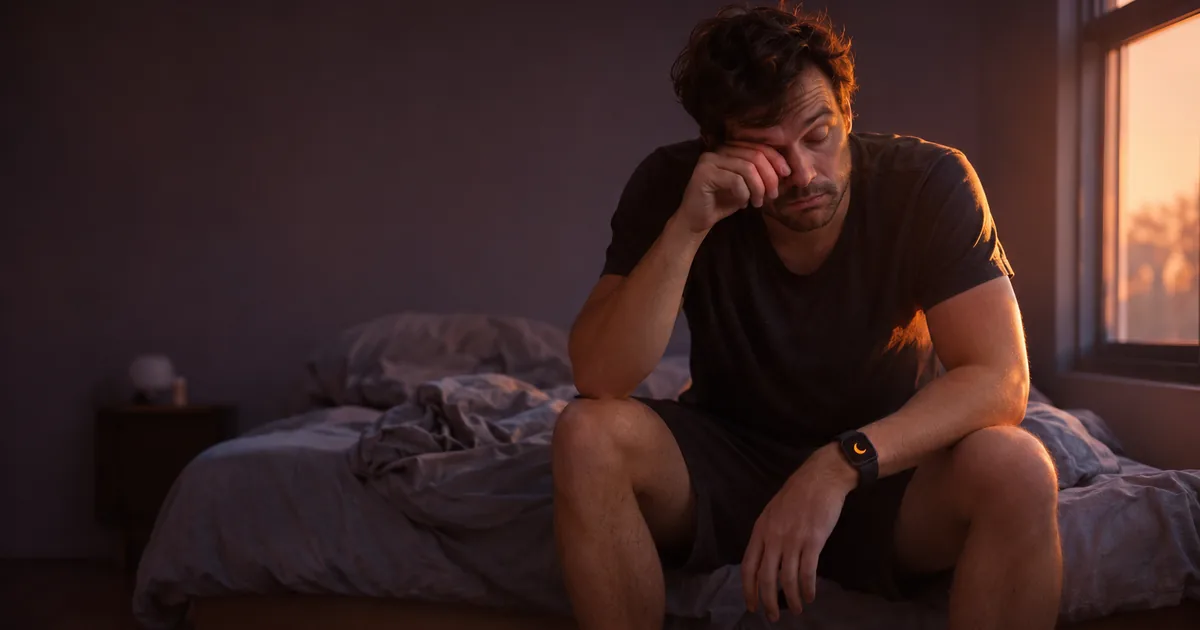
A workout after bad sleep is usually fine and often worth doing, as long as you match the effort to the night. After 6 to 7 hours, train as planned. After 5 to 6, keep the session but drop a set and skip max attempts. Under 5 hours or no sleep, go short and easy, or rest.
For the long-term picture of how sleep drives progress over months, read Sleep and Fitness: How Sleep Affects Your Results.
Should I work out after a bad night's sleep?
Yes, in most cases, but lighter than planned if you slept under 6 hours. One short night lowers performance a little; it does not erase your fitness or cost you muscle.
Two things decide the answer: how short the night was compared with your normal, and whether it is the first short night or the third in a row. Adults need 7 or more hours on a regular basis, according to the consensus statement of the American Academy of Sleep Medicine and the Sleep Research Society, so anything under 7 counts as short.
Get your free AI training and nutrition plan in 60 seconds
What does one short night do to strength, endurance and coordination?
It makes most kinds of exercise a bit worse, by single-digit percentages on average, with the biggest hit later in the day.
The largest review so far, a 2022 meta-analysis in Sports Medicine by Craven and colleagues, pooled 227 performance measures from 69 studies comparing normal sleep with 6 hours or less. The key findings:
- Average drop: about 7.6% lower performance after sleep loss, significant in every category tested: strength, endurance, sprint and power work, high-intensity intervals and skill.
- Time awake matters: after an all-nighter or a night cut short by waking early, performance fell by roughly 0.4% for every hour awake before exercising.
- Morning vs afternoon: afternoon and evening tasks were consistently worse, while morning tasks were largely unaffected.
- How you lost the sleep: no sleep at all and waking early hit consistently; going to bed late showed less consistent effects.
For lifting, a systematic review by Knowles and colleagues found that one night without sleep had little effect on strength, but several nights of restricted sleep could reduce force in multi-joint lifts such as squats and presses, not in single-joint exercises.
Injury risk is less settled: chronically short sleep is linked with more injuries in young athletes, with no good data for one bad night. Keep loads where your technique stays clean.
Is it bad to work out after no sleep?
Working out on no sleep is not harmful for a healthy person if you keep it light, but it is a poor day for heavy lifting, hard intervals or anything technical. Walk, do easy cardio or mobility, or take the day off.
By the afternoon after a night awake, the decline has stacked up and you are more likely to misjudge a load. If you are too drowsy to keep your eyes open, do not drive to the gym.
Workout after bad sleep: what to do by hours slept
When you are working out on little sleep, count the hours you actually slept, not the hours in bed, and compare them with your own normal: 6 hours is a short night for someone who usually sleeps 8.
| Hours slept last night | What to do today | Sample adjustment |
|---|---|---|
| 7 or more | Train as planned | No change |
| 6 to 7 | Train as planned; ease off only if it was well below your usual | If warm-up sets feel heavy, drop the last set of your hardest exercise |
| 5 to 6 | Train, but cap the effort | One set fewer on main lifts, stop 2 to 3 reps short of failure, no max attempts or race-pace efforts |
| Under 5 | Short session at easy to moderate effort | 20 to 40 minutes: working weights about 10 to 20% lighter, cardio you could talk through, technique and mobility work |
| None | Rest or very light movement | A 20 to 30 minute walk, gentle mobility, a short nap if you can; normal training after a proper night |
If this is the second or third short night in a row, move one row down the table.
Should I skip the gym if I slept 5 hours?
No, you do not need to skip it. After about 5 hours, do a shorter, lighter version of your plan: the same exercises, one set fewer, and a few reps left in the tank on every set.
Skip it if you also feel ill or feverish, if your resting heart rate is clearly above your usual, or if it is your third or fourth short night running. For other tired-day calls, see Should I Work Out Today? A Decision Guide for Tired, Sore and Sick Days.
What is the best workout after a bad night's sleep?
The best workout after a bad night's sleep is a familiar, moderate session: your usual exercises at lighter loads, or 20 to 40 minutes of steady cardio you could hold a conversation through. Save maximal lifts, new skills and all-out intervals for a rested day.
- Good choices: steady cycling, brisk walking or easy jogging; machine and dumbbell exercises you know well; single-joint exercises, which hold up better on short sleep; mobility work.
- Poor choices: one-rep max attempts, heavy squats or deadlifts to failure, Olympic lifts, exercises you are still learning, long all-out interval sessions.
- Warm up longer: add 5 minutes of easy cardio and an extra ramp-up set or two to judge how the weights feel today.
To scale any session step by step, see Rest Day or Lighter Workout? How to Scale a Session When You Are Tired.
Working out after no sleep: is it pointless?
No. Easy training keeps your routine and may even protect muscle: in a study of young men given five nights of 4 hours in bed, muscle protein synthesis fell, but not in a group that did three interval sessions.
Sleep deprivation and muscle loss: does one bad night cost you gains?
No. One bad night will not cost you muscle you could see or measure, but it briefly blunts muscle building, and many short nights in a row are a real problem.
In a randomized crossover study by Lamon and colleagues, 13 healthy young adults spent one night without sleep and one night sleeping normally. After the sleepless night, muscle protein synthesis was 18% lower, cortisol 21% higher and testosterone 24% lower the next day, with no change in markers of muscle breakdown. Keep eating protein at your normal meals; ideas are in Best Post-Workout Meal: What to Eat After Training.
Several short nights in a row: why sleep debt changes the answer
One short night is a blip; three or more in a row is sleep debt, which cuts strength in big lifts, so reduce volume for a few days, not just one session.
- Three or more nights under 6 hours: keep every session at moderate effort with roughly a third less volume until you have had two normal nights.
- Do not make up missed work with double sessions once sleep recovers. Ease back in over the following week.
- Watch the trend, not one reading: HRV below your usual for days, a rising resting heart rate and heavy legs together are the pattern in Overtraining Symptoms: The Early Signs Your Watch Shows Before You Feel Them.
Caffeine, naps and timing the session
Caffeine and a short nap can win back some performance, and training earlier in the day loses less than training late.
Caffeine
The International Society of Sports Nutrition position stand on caffeine reports that 3 to 6 mg per kg of body weight improves exercise performance, usually taken about 60 minutes before training, and that caffeine may help some people perform under sleep deprivation. For a 70 kg person, that is roughly 210 to 420 mg. Start at the low end if you rarely drink coffee; very high doses such as 9 mg per kg bring frequent side effects and no extra benefit. Keep it to the morning or early afternoon so tonight's sleep does not suffer. If you are pregnant, have a heart condition or take regular medication, ask your doctor first.
Naps
Keep a nap to about 20 minutes and no longer than 30, so you do not wake groggy from deep sleep, and finish it at least 8 hours before bedtime, which for most people means before 3 p.m.
Timing
If you can choose, train earlier in the day after a short night, since morning performance held up best in the Craven meta-analysis. Early sessions still need fuel; see What to Eat Before Early Workout Sessions.
Which apps adjust today's workout when I slept badly?
Most wearables give you a readiness number and leave the workout to you; few turn last night's data into a lighter version of the session you planned.
- Garmin: Training Readiness on supported watches is a 1 to 100 score built from last night's sleep score, recovery time, HRV status, acute load, sleep over the last 3 nights and stress over the last 3 days. Garmin devices also offer daily suggested workouts based on your previous activities.
- Oura: the Readiness Score weighs resting heart rate, HRV balance, body temperature, sleep and other contributors against your own baseline. Oura says scores below 70 suggest prioritizing rest and recovery.
- Trainera: offers a lighter version of today's planned workout to people training on their own on a paid plan, which you accept or decline.
How Trainera's daily readiness reads last night and offers a lighter session
On a Pro, Premium or Platinum plan, with no trainer or gym connected, Trainera shows "Today's readiness" on the Overview and a Readiness button on your training plan. It reads last night's sleep duration, HRV and resting heart rate from Apple Health on iPhone (an Apple Watch worn at night) or Health Connect on Android, and compares them only with your own usual values: your typical night over 14 days, HRV and resting heart rate over 21. One line says whether the data looks normal, or recovery is a bit low or low, with reasons in plain numbers, such as "You slept 5 h 20 min, less than your usual 7 h 10 min". There is no 0 to 100 score.
When recovery is a bit low, TRAI suggests a lighter version of today's workout, same exercises in the same order: one set fewer on each exercise with three or more sets. When it is low, also about 10% less weight, one round fewer on interval cardio and steady cardio about a fifth shorter. You tap "Use lighter session" or "Keep original"; only today changes. It is not on the Free plan or for clients of a trainer or gym, does not connect to WHOOP or Oura, never uses Garmin data, and is general wellness guidance, not medical advice.
When does poor sleep itself need attention?
If you regularly sleep under 7 hours even when you give yourself the time, or wake unrefreshed after full nights, talk to a doctor; no training tweak fixes an untreated sleep problem.
- Trouble falling or staying asleep most nights for several weeks.
- Loud snoring, gasping or pauses in breathing that a partner notices, or dozing off in the day.
- A resting heart rate that stays well above your usual for days. The American Heart Association puts a normal resting rate at 60 to 100 beats per minute and says to tell your healthcare professional if your heart rate has been slower or faster than usual.
- Chest pain, fainting, unusual shortness of breath or a racing heartbeat that does not settle: stop and get medical help right away. With a fever or feeling ill, skip the session.
Frequently Asked Questions
Keep Reading
Get your free AI training and nutrition plan in 60 seconds
1,800+ exercises, wearables and progress tracking, free with no card needed. AI food scanning comes with Premium. Train solo or with a certified coach.