Gym Check-In and Access Control Software: A Practical Guide for Owners
Choosing the right check-in and access control system shapes how members enter, how staff spend their time, and how tightly access ties to billing. This guide breaks down the options so you can pick what fits a small-to-mid gym.
Why check-in and access control matter more than they seem
The front door is the most-used feature in your gym. Every member touches it, often several times a week, and every one of those moments is a chance to save staff time, confirm a payment, or lose a member to friction. Yet many gyms still run on paper sign-in sheets or a receptionist ticking names off a list.
Modern check-in and access control software turns that daily ritual into clean data and a smoother experience. It tells you who is in the building, whether their membership is valid, and how busy each hour really is. For a small-to-mid gym, getting this right frees up staff and protects revenue at the same time.
The main types of check-in
There is no single correct method. The best gyms often mix two or three depending on their layout, hours, and membership base.
QR and app check-in
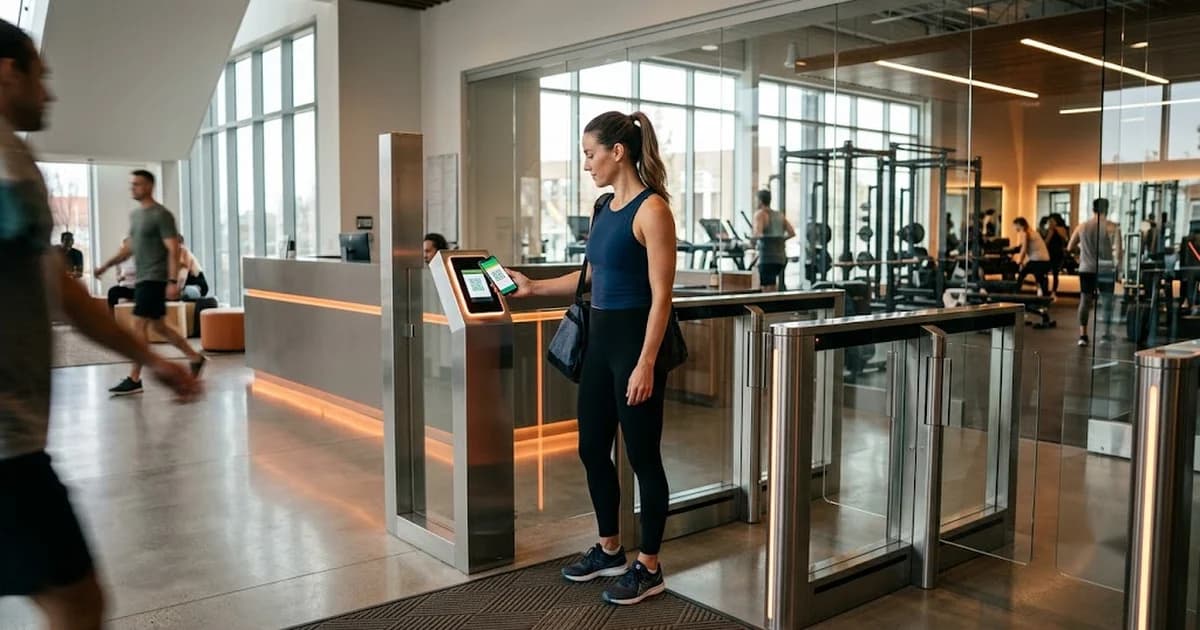
The member opens your app or a saved code and scans it at a reader or tablet. It is fast, cheap, and hard to share because the code can rotate or tie to a live account. This is the most common modern default because it needs almost no hardware beyond a scanner.
Key fobs and access cards
A physical fob or card taps a reader. Members find it familiar and reliable, and it works without a phone or signal. The downsides are the ongoing cost of the fobs, the admin of issuing and replacing them, and the ease of handing one to a friend.
Self-service kiosks
A tablet or terminal in the lobby lets members check in themselves, buy a day pass, or update details. Kiosks cut queues at busy times and reduce the load on your front desk without removing the staffed feel entirely.
24/7 and unstaffed door access
Here the software controls an electronic lock, turnstile, or gate directly. Members enter outside staffed hours using an app, fob, or PIN. This unlocks new membership tiers and extended hours, but it raises the bar on security, insurance, and reliable hardware.
What to look for when choosing a system
Feature lists blur together quickly. Focus on the handful of things that actually change daily life at the gym.
- Speed at the door. A check-in should take a second. Slow scans create queues and frustration.
- Reliable offline behaviour. If your internet drops, can members still get in? Good access hardware caches permissions locally.
- Real-time membership checks. The system should know instantly whether a member is paid up.
- Clear attendance analytics. Peak hours, no-shows, and class capacity should be visible without exporting spreadsheets.
- Simple staff tools. Front-desk staff should be able to override, add a guest, or fix a mistake in seconds.
- Hardware flexibility. You want a system that works with common readers and locks, not one that forces one expensive vendor.
How check-in ties to membership status and billing
This is where software earns its keep. When check-in is connected to your billing, the door itself enforces payment. A member whose card was declined can be flagged the moment they scan, prompting a friendly reminder rather than weeks of silent free access.
Well-designed systems let you set the rules: block entry immediately, allow a short grace period, or simply notify staff to have a quiet word. The goal is not to be harsh but to make sure the people training are the people paying. For a gym with hundreds of members, even a small share of lapsed access adds up to real lost revenue every month.
Tying access to billing also cleans up your data. Instead of reconciling a sign-in sheet against a separate payment system, you have one source of truth: who came in, when, and whether their account was in good standing.
Security and data considerations
Check-in data is personal data. An attendance log shows when a specific person is at your gym, which is exactly the kind of information privacy laws protect. Treat it with care.
Practically, that means a few habits. Limit access to attendance records to staff who genuinely need it. Do not keep logs longer than you have a reason to. Be clear with members, in your terms and at sign-up, about what you collect and why. If you use unstaffed access, add camera coverage at entry points and a clear incident process, because an empty gym raises safety and liability questions that a staffed one does not.
On the hardware side, favour readers and locks that fail safely, meaning they behave predictably in a power cut or network outage. Ask any vendor how member data is stored and whether it is encrypted in transit and at rest.
The staff time you get back
The clearest return on a good system is hours. A receptionist who no longer checks names, chases lapsed payments at the desk, or manually logs attendance can spend that time on tours, retention, and sales. For gyms running on thin margins, that shift matters more than almost any single feature.
Automated check-in also removes the awkward human moments: no staff member has to personally turn away a member whose payment failed, because the system handles it consistently and without judgement. That consistency is fairer to members and easier on your team.
How a branded member app changes the picture
A branded app pulls check-in, billing, bookings, and training into one place your members already carry in their pocket. Instead of a separate fob, the app becomes the key. Members open it, scan or tap in, and the same app shows their plan, next class, and payment status.
Trainera is an all-in-one AI fitness platform that gives gyms a branded member app alongside management tools, including app-based member check-in. Because check-in, membership, and billing live in the same system, access reflects payment automatically, and your brand, not a generic vendor's, is what members see every time they walk in.
If you are weighing your options, start by mapping how members enter today and where staff lose the most time. A short trial of app-based check-in will tell you quickly whether it fits your floor and your members.
Common mistakes to avoid
A few missteps show up again and again. The first is buying more hardware than you need: installing turnstiles and 24/7 locks before you have proven demand for extended hours ties up capital that would serve you better elsewhere. The second is choosing a closed system that only works with one vendor's readers, which leaves you stuck when prices rise or support slips.
A third mistake is treating check-in as separate from billing and bookings. When these run in different tools, staff spend their days copying information between systems and members get a disjointed experience. Finally, do not ignore the fallback path. Phones die, apps crash, and internet drops, so always have a way for a member to get in when technology fails, whether that is a fob, a staff override, or a cached permission.
Putting it together for a small-to-mid gym
You do not need every option at once. Most gyms do well starting with app or QR check-in tied to live membership status, keeping fobs as a fallback, and adding unstaffed door access only when extended hours justify the hardware. Choose a system that grows with you, keeps member data safe, and puts your brand front and centre.
Map your own entrance first, then match the tools to it rather than the other way around. The right setup should feel invisible to members and quietly reliable to staff. Get the door right, and everything behind it runs more smoothly.
Run a gym or studio? Trainera brings memberships, QR check-in, a branded member app and payouts into one gym management software — start free, no card needed.
Frequently Asked Questions
What is the difference between check-in and access control?
Do I need 24/7 door access hardware for a small gym?
How does check-in connect to membership billing?
Is member check-in data sensitive?
Can a branded member app replace key fobs?
Keep Reading
Run your coaching business on Trainera
Your own branded coaching app - clients, plans and payments in one place
Free up to 3 clients, no card. Web, iOS and Android under your brand - and we move your existing clients and plans across for free.
1000+ clients coached on Trainera