How to Lose Weight Fast: What a Week, 2 Weeks and a Month Can Do
How much weight you can really lose in a week, 2 weeks and a month, how much of it is water, and the plan that gets results fast without the rebound.
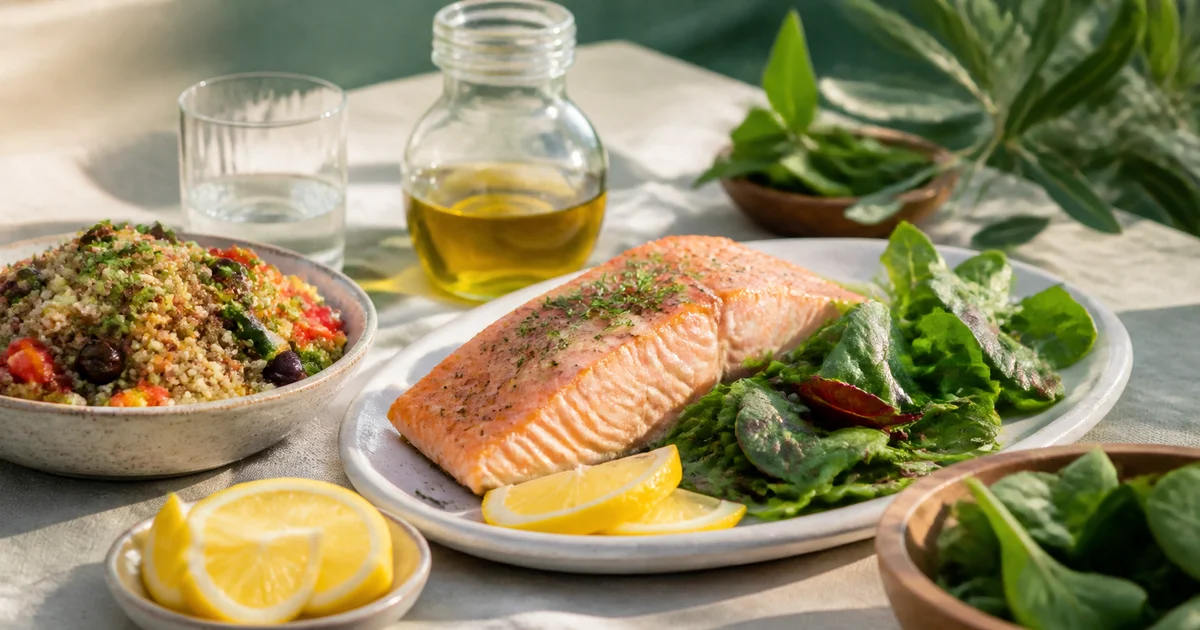
Here is how to lose weight fast and keep it off: eat about 500 to 1,000 calories a day below maintenance, get plenty of protein, lift weights two or three times a week and walk every day. Expect roughly 0.5 to 1 kg (1 to 2 lb) of real loss a week. Bigger drops in the first few days are mostly water.
That pace sounds slow when you want results by next weekend. But it is the fastest rate that holds up, and you will see more change in the first month than you probably expect. Below is what a week, two weeks and a month can realistically do, and how to keep the result.
What is the fastest safe rate of weight loss?
For most adults the fastest safe rate is about 0.5 to 1 kg (1 to 2 lb) a week. The NHS advises aiming for 0.5 to 1 kg a week, and the CDC notes that people who lose about 1 to 2 pounds a week are more likely to keep the weight off than people who lose it faster.
The math behind it: a kilogram of body fat holds roughly 7,700 calories (about 3,500 per pound). Losing 0.5 kg of fat a week takes an average deficit of around 550 calories a day. Losing 1 kg a week takes around 1,100 a day, which is only realistic if you have a lot of weight to lose.
- Lots to lose: 1 kg (2 lb) a week is reasonable at the start.
- Moderately overweight: 0.5 to 0.75 kg (1 to 1.5 lb) a week.
- Already fairly lean: about 0.5 to 1 percent of body weight a week, at most. Push harder than that and you start losing muscle.
If you are not sure where your calories should land, start with how many calories to eat to lose weight, then adjust after two weeks of real data.
Get your free AI training and nutrition plan in 60 seconds
How much weight can you really lose in 7 days?
In 7 days you can lose about 0.5 to 1 kg of actual fat, but the scale will often show more. When you cut calories, and especially carbs and salt, your body uses up stored glycogen and lets go of the water stored with it, so a drop of 1 to 2 kg in the first week is common.
That first-week number is real weight, but it is not fat, and it comes back as soon as you eat normally again. If you are searching for how to lose weight in a week before an event, these will legitimately help you look and feel lighter:
- Cut ultra-processed snacks, sugary drinks and alcohol completely for the week.
- Build every meal around a palm-sized or larger portion of protein plus vegetables.
- Keep salt moderate and drink water normally. Do not cut fluids, because dehydration only makes you feel worse.
- Walk 8,000 to 10,000 steps a day and do two or three full-body strength sessions.
- Sleep 7 to 9 hours. Poor sleep makes hunger harder to manage.
What can you lose in 2 weeks, and how much is water?
In 2 weeks, a solid deficit typically produces 1 to 2 kg of fat loss, and the scale may show 2 to 4 kg in total. Most of the extra is water and glycogen from week one. From week two on, the scale tracks fat loss much more closely.
| Timeframe | Realistic fat loss | What the scale may show | What drives the difference |
|---|---|---|---|
| 7 days | 0.5 to 1 kg (1 to 2 lb) | 1 to 2.5 kg | Glycogen and water, less food in the gut |
| 2 weeks | 1 to 2 kg (2 to 4 lb) | 2 to 4 kg | Week-one water loss plus steady fat loss |
| 1 month | 2 to 4 kg (4 to 8 lb) | 3 to 5 kg | Mostly fat after week one; the scale bounces day to day |
These are typical ranges for a moderate deficit, not guarantees. People with more weight to lose tend to sit at the top end. Women may also see a temporary 1 to 2 kg rise in water weight around their period, which can hide a full week of progress.
So if your goal is how to lose weight fast in 2 weeks, judge it on the 14-day trend, not on any single morning.
What does a fast but sustainable first month look like?
A good first month uses a moderate deficit, three strength sessions a week, daily walking and a protein target, then makes one small adjustment based on your weekly average weight. Here is a sample week for someone training on their own.
| Day | Training | Nutrition focus |
|---|---|---|
| Monday | Full-body strength, 45 min (squat, push-up or bench, row, hip hinge, plank) | Hit your protein target; log everything |
| Tuesday | Brisk walk 40 to 60 min | Vegetables at lunch and dinner |
| Wednesday | Full-body strength, 45 min (lunge, overhead press, pulldown or band row, glute bridge) | Plan tomorrow's meals in advance |
| Thursday | Walk 30 min plus 15 min easy intervals (bike, rower or incline walk) | Swap one snack for a high-protein option |
| Friday | Full-body strength, 45 min (repeat Monday, add a rep or a little load) | Decide on alcohol in advance, or skip it |
| Saturday | Long walk or hike, 60 to 90 min | One relaxed meal, still within your weekly calories |
| Sunday | Rest or mobility, 20 min | Weigh in on 3 to 7 mornings this week and compare averages |
Over the month, layer it in like this:
- Week 1: set your calorie target and a protein target, start the three strength sessions, and log food honestly.
- Week 2: raise daily steps by 1,000 to 2,000. Expect the scale to slow down after week one; that is normal.
- Week 3: compare weekly averages. If you lost less than about 0.25 kg in two weeks, cut 100 to 200 calories a day or add more walking.
- Week 4: keep everything the same and add load or reps to your lifts. Take measurements (waist, hips) as well as weight.
For protein, the International Society of Sports Nutrition position stand says 1.4 to 2.0 g per kg of body weight a day is enough for most people who exercise, spread over meals of about 20 to 40 g. At 70 kg that is roughly 100 to 140 g a day. If macros are new to you, our simple macros guide walks you through it. For realistic targets past the first month, see realistic weight loss goals per month.
Which fast-weight-loss tactics backfire?
Anything that mainly removes water, muscle or your ability to keep going will backfire. The number drops quickly, then comes straight back, often with extra.
- Crash diets well below 1,000 to 1,200 calories without supervision. Hunger, fatigue and muscle loss build fast, and most people rebound.
- Detox teas, laxatives and diuretics. They remove water and gut contents, not fat.
- Sweat suits, saunas and cutting water. Pure water loss, and risky if you are also training.
- Cardio only, no lifting. You lose more muscle, which leaves you smaller but softer, and harder to maintain.
- Skipping meals all day, then eating everything at night. The deficit disappears and the habit sticks.
- Cutting every carb overnight. The quick water loss returns the moment you eat bread again, which feels like failure even though it is not.
- Daily punishment workouts. More training is not better if you cannot recover. See how many days a week you should work out.
How do you lose weight quickly and keep it off permanently?
To lose weight fast naturally and permanently, pair a moderate deficit with habits you would still be happy doing in a year: regular meals built on protein and vegetables, strength training, daily movement and a planned maintenance phase. The diet ends; the habits do not.
- Keep lifting. Holding on to muscle keeps you strong and makes maintenance easier.
- Track trends, not days. Weekly averages and waist measurements tell the truth; single weigh-ins mislead.
- Plan breaks. After 8 to 12 weeks of dieting, spend a few weeks eating at maintenance before another push.
- Exit slowly. When you reach your goal, add back about 100 to 200 calories a day each week until your weight holds steady.
- Keep the anchors. Steps, protein at every meal and three workouts a week are what keep the weight off.
Even modest results count. The CDC points out that losing around 5 percent of your body weight can improve blood pressure, cholesterol and blood sugar.
When is rapid weight loss a bad idea?
Rapid weight loss is a bad idea if you are pregnant or breastfeeding, under 18, have a history of disordered eating, or take medication for diabetes or blood pressure, unless a doctor is guiding you. Very low calorie diets (under 800 to 1,200 calories) are something the NHS says are not suitable or safe for everyone and should be done with professional support.
Losing weight very quickly can also raise your risk of gallstones, according to the NIDDK, which advises avoiding crash diets. See a doctor if you get sharp pain in your upper right abdomen, regular dizziness or fainting, hair loss, missed periods, or if your weight keeps dropping without you trying.
How to turn this into your own plan
The plan above works best when the numbers are yours: your calories, your protein target, and workouts that fit your equipment and schedule. Trainera's AI coach, TRAI, builds a workout plan from more than 1,800 real exercises plus a nutrition plan, and answers your questions in your own language. The free plan, with no card needed, includes workout logging, a diet tracker and one AI training plan and one AI nutrition plan a month. If you want more plans or the photo-based food scanner, the paid tiers are listed on the pricing page.
Frequently Asked Questions
Keep Reading
Get your free AI training and nutrition plan in 60 seconds
1,800+ exercises, wearables and progress tracking, free with no card needed. AI food scanning comes with Premium. Train solo or with a certified coach.