How to Lose Belly Fat (Women): Hormones, Training and Diet Plan
Crunches will not shrink your waist on their own. Here is how to lose belly fat as a woman: why hormones move fat to the belly, a weekly workout, a simple diet plan and what results to expect week by week.
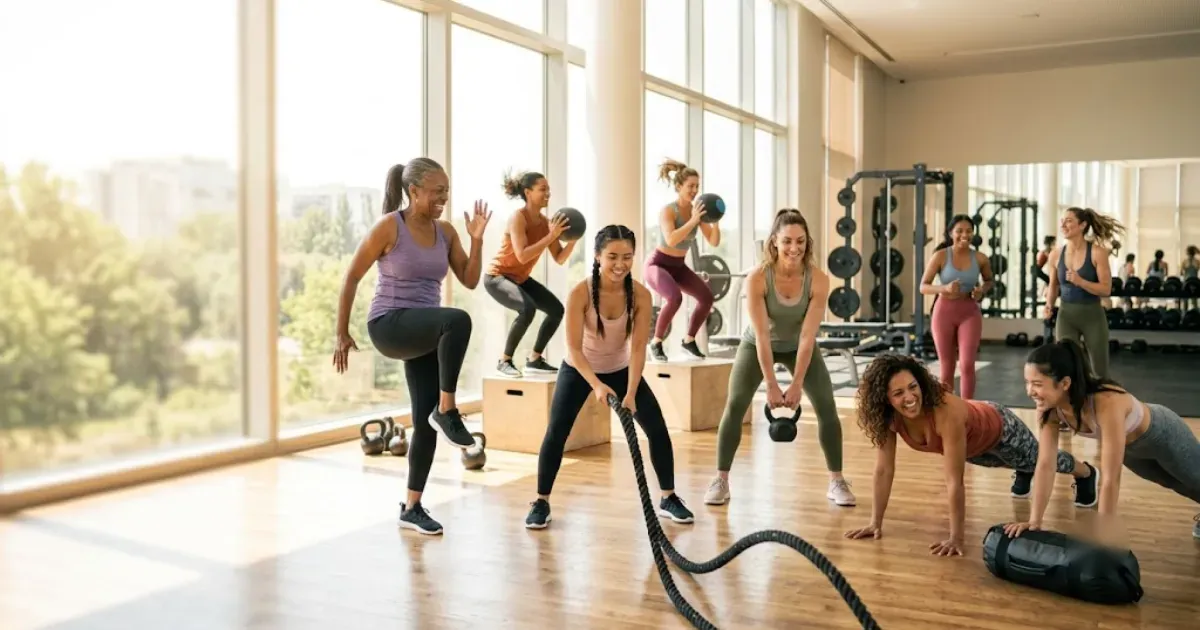
To lose belly fat, women need a steady, moderate calorie deficit, strength training two to three times a week, at least 150 minutes of moderate cardio, and enough protein, fiber and sleep. Crunches alone will not shrink your waist, because your body does not burn fat from the muscle you are working. Most women see a clear change in 8 to 12 weeks.
The rest of this guide covers why belly fat behaves differently in women, a weekly training plan you can follow alone, a simple way of eating, and a realistic timeline. Before you start, measure your waist so you have a number to track. The British Heart Foundation explains the method: find the bottom of your ribs and the top of your hips, wrap the tape around your belly halfway between them, breathe out naturally and read the number without pulling the tape tight (BHF: Why your waist size matters).
Why do women store belly fat differently from men?
Before menopause, estrogen tends to steer fat toward the hips, thighs and buttocks, while men store more of it around the belly. As estrogen falls in the years around menopause, more fat moves to the abdomen, including the deeper visceral fat around your organs.
Belly fat comes in two types:
- Subcutaneous fat sits under the skin. It is the part you can pinch.
- Visceral fat sits deeper, around the liver and intestines. Harvard Health says it makes up about 10% of body fat, but it is linked with heart disease, type 2 diabetes and other metabolic problems (Harvard Health: Taking Aim at Belly Fat).
Two quick checks tell you whether your waist is in a risk zone. Harvard Health treats a waist of 35 inches (about 89 cm) or more in women as a general sign of excess visceral fat. The BHF uses waist-to-height ratio instead: under 0.5 is the healthy range, 0.5 to 0.59 means increased risk and 0.6 or above means the highest risk. For example, if you are 165 cm tall, keep your waist below about 82 cm.
Get your free AI training and nutrition plan in 60 seconds
How do hormones, stress and sleep affect belly fat in women?
Hormones affect where you store fat. Whether you gain or lose it still depends mostly on energy balance. Stress and poor sleep push you toward more belly fat, mainly through appetite, cravings and lower activity.
- Menopause: lower estrogen shifts fat toward the belly. The same plan still works, but strength training becomes more important because muscle mass also declines with age.
- Stress: chronic stress keeps cortisol high and usually means worse sleep, more snacking and fewer workouts. You do not need a special cortisol diet. You need a plan that is simple enough to follow on stressful weeks.
- Sleep: Harvard Health reports that adults under 40 who slept five hours or less a night gained significantly more visceral fat. Aim for seven to eight hours.
- Alcohol: it adds calories that are easy to miss and tends to worsen sleep. Keep it occasional.
When to see a doctor: see a doctor if your belly grows quickly without clear weight gain, if you have persistent bloating or pain, or if belly weight comes with irregular periods, excess hair growth or extreme tiredness. These can point to PCOS, thyroid problems or other conditions that need proper testing.
What workout helps women lose belly fat?
The best workout for women to lose belly fat combines full-body strength training on 2 to 3 days with regular cardio. Moderate to vigorous aerobic exercise has the strongest evidence for reducing visceral fat. Strength training helps you keep, and build, the muscle that keeps your metabolism and shape where you want them.
The NHS physical activity guidelines are a good baseline: at least 150 minutes of moderate activity or 75 minutes of vigorous activity a week, plus strengthening activities for all major muscle groups on at least 2 days. The WHO uses the same 150-minute minimum. For fat loss, going above that minimum helps.
Sample week
| Day | Session | Time |
|---|---|---|
| Monday | Full-body strength A: squats, push-ups, rows, glute bridges, plank | 40 to 45 min |
| Tuesday | Brisk walk or easy cycling | 30 to 40 min |
| Wednesday | Full-body strength B: hip hinge (Romanian deadlift), lunges, overhead press, dead bug | 40 to 45 min |
| Thursday | Intervals: 8 rounds of 30 seconds hard and 90 seconds easy, then a cool-down walk | 25 min |
| Friday | Rest or a relaxed walk | 20 to 30 min |
| Saturday | Full-body strength C or a longer walk or hike | 45 to 60 min |
| Sunday | Rest, stretching or mobility | Optional |
Do 2 to 3 sets of 8 to 15 reps per exercise. Stop each set with one or two good reps left. Each week, add a rep, a set or a little weight. If you are new to lifting, the workout plan for women and our guide to strength training for women explain how to start safely.
Which exercises target the belly, and which are a waste of time?
No exercise burns fat from your belly specifically. As Harvard Health puts it, sit-ups can tighten your abdominal muscles but will not get rid of visceral fat. The best exercises for losing belly fat use a lot of muscle or keep your heart rate up for a long time.
| Exercise or method | What it does | Worth it? |
|---|---|---|
| Squats, lunges, hip hinges | Train the largest muscles, so they burn the most energy and build the most muscle | Yes, core of the plan |
| Push-ups, rows, presses | Build upper-body strength and posture | Yes |
| Brisk walking, cycling, intervals | Add weekly energy use and target visceral fat | Yes |
| Planks, dead bugs, side planks | Build core strength and stability | Yes, for strength, not fat loss |
| Hundreds of crunches a day | Train a small muscle and burn little energy | Low value |
| Waist trainers, sweat belts, "flat tummy" teas | Cause temporary water loss or compression | No |
Keep 1 or 2 core exercises at the end of your strength sessions. A strong core helps you lift better and can make your midsection look firmer once the fat comes off.
What does a diet plan to lose belly fat look like for women?
A diet plan to lose belly fat is a normal healthy diet with slightly fewer calories than you burn, plenty of protein, high fiber and few sugary drinks. No food melts belly fat. The deficit does the work, and protein and fiber make the deficit easier to stick to.
- Calories: eat about 300 to 500 kcal below your maintenance. Larger cuts usually cost you muscle, energy and consistency.
- Protein: about 1.2 to 1.6 g per kg of body weight a day, spread over 3 to 4 meals. For a 70 kg woman, that is roughly 85 to 110 g.
- Fiber: aim for around 30 g a day from vegetables, fruit, beans, lentils, oats and whole grains.
- Drinks: water, tea and coffee without sugar. Harvard Health specifically suggests avoiding foods and drinks sweetened with simple sugars such as fructose.
- Plate rule: fill half the plate with vegetables, a quarter with protein and a quarter with starchy carbs, plus a little healthy fat.
Sample day
| Meal | Example | Why it works |
|---|---|---|
| Breakfast | Greek yogurt with oats, berries and a spoon of nuts | Protein and fiber keep you full until lunch |
| Lunch | Chicken or chickpea salad with quinoa, olive oil and lots of vegetables | High volume, moderate calories |
| Snack | Apple with a small handful of almonds, or cottage cheese | Stops you arriving at dinner starving |
| Dinner | Salmon, tofu or lean beef with potatoes or rice and two vegetables | A protein-rich meal that supports training |
Swap foods to fit your culture, budget and schedule. A plan you can repeat every week beats a perfect plan you drop after ten days.
Can women lose belly fat with home workouts only?
Yes. Home workouts can help you lose belly fat as well as a gym can, as long as your sessions get harder over time and your diet supports a deficit. Where you train matters far less than consistency and progression.
- Lower body: squats, split squats, glute bridges, step-ups on a sturdy stair.
- Upper body: incline push-ups on a table or wall, then floor push-ups; rows with a resistance band or a loaded backpack.
- Core: plank, side plank, dead bug.
- Cardio: brisk walks outside, stair climbing, jump rope or short interval circuits.
Without heavy weights, make sessions harder by adding reps, slowing the lowering phase to 3 seconds, switching to single-leg versions or adding a pair of dumbbells or bands. Our home workout plan with no equipment gives you a full routine to follow.
How fast can women expect to see a smaller waist?
With a moderate deficit and regular training, most women lose about 0.5 kg a week or a bit less. The tape measure usually shows a change within 4 to 6 weeks, and the mirror within 8 to 12. Belly fat is often among the last places to shrink, especially after menopause, so be patient with it.
If you are searching for how to lose belly fat fast as a woman, be careful: very low-calorie diets and daily HIIT mostly cost you water, muscle and motivation, and the weight tends to come back. Track these instead:
- Waist measurement every 2 weeks, in the morning, under the same conditions.
- Body weight as a weekly average, not single days.
- Strength in your main lifts, to make sure you keep your muscle.
- How well you stick to the plan, as a percentage of planned sessions and meals completed.
If your waist has not moved in 3 to 4 weeks, cut about 100 to 200 kcal a day or add 2,000 to 3,000 daily steps, then reassess. For more on getting through the boring middle weeks, read how to stay consistent with workouts and diet.
How to turn this into your own plan
The plan above is a starting point. Your own version depends on your schedule, your equipment and what you like to eat. If you train on your own, Trainera's AI coach TRAI can build a workout plan from more than 1,800 real exercises plus a nutrition plan, and answer your questions in your language (see how the AI fitness coach works). The free plan needs no card and includes workout logging, a diet tracker and 1 AI training plan plus 1 AI nutrition plan a month. If you want feedback on form at home, TRAI Vision on the Platinum plan uses your phone or browser camera to count reps and give form corrections, without uploading video.
Frequently Asked Questions
Keep Reading
Get your free AI training and nutrition plan in 60 seconds
1,800+ exercises, wearables and progress tracking, free with no card needed. AI food scanning comes with Premium. Train solo or with a certified coach.