AI Personal Trainer Mirror and Body Scans: Are They Worth It?
Smart mirrors and AI body scans promise a coach on your wall. Here is what they actually measure, how accurate they are, and when a phone camera or a human coach is the better choice.
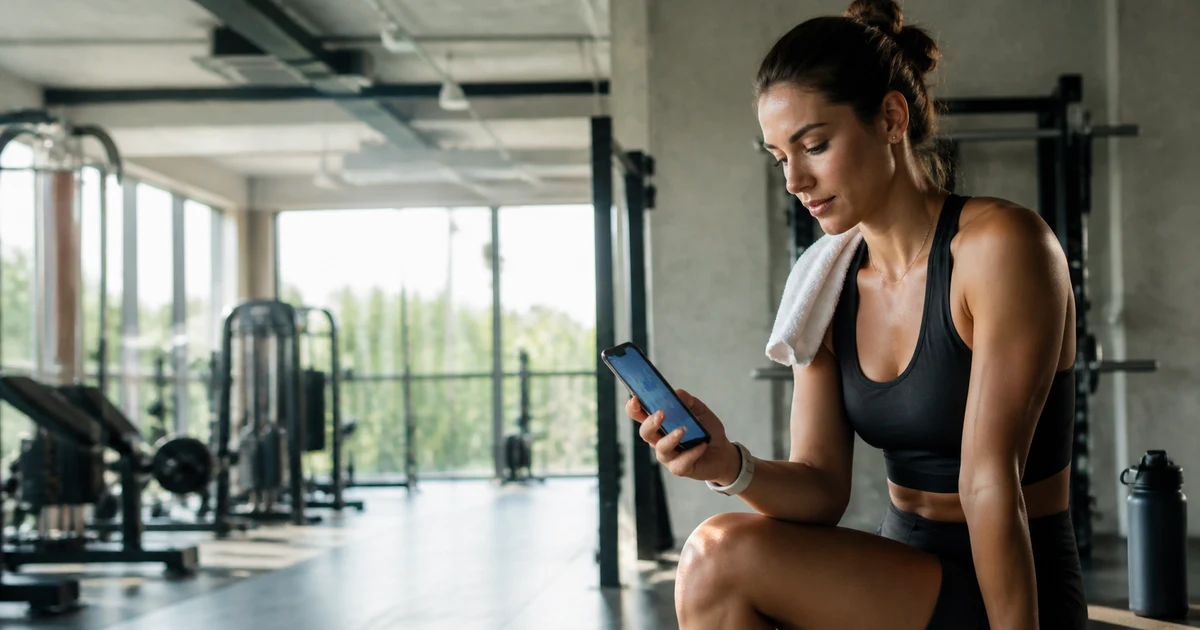
An AI personal trainer mirror is a wall-mounted screen with a camera that streams workouts, tracks your movement and cues your reps and form. It works well for consistency and basic technique feedback. Its body scans give estimates rather than lab measurements, though, and a phone camera now covers much of what a mirror does for less money.
Before you spend serious money on hardware, here's what the tech actually does, how accurate it is and where it falls short.
What is an AI personal trainer mirror and how does it work?
It's a screen that looks like a mirror when switched off, with a built-in camera and software that follows your body while you train. The "AI" part is pose estimation: a model finds your joints in every video frame and compares their angles and timing with what the exercise should look like.
Most smart mirrors combine the same building blocks:
- Camera and pose estimation: detects key points like shoulders, hips, knees and ankles, then tracks how they move.
- Rep counting: counts one rep each time a movement cycle completes, for example hips going down and back up in a squat.
- Form cues: flags things like knees caving in, a shallow squat or hips sagging in a plank.
- Workout library: live or recorded classes, usually behind a monthly subscription on top of the hardware price.
- Integrations: heart rate from a watch or chest strap, sometimes connected weights.
The camera only sees what's in front of it. It can count reps and judge joint angles, but it doesn't know how heavy your dumbbells are unless you log it or use connected weights. We look at how reliable the counting part is in Is AI Rep Counting Accurate?
Get your free AI training and nutrition plan in 60 seconds
How accurate are AI body scans for body fat and posture?
An AI personal trainer body scan is good at tracking change over time and much weaker at telling you your exact body fat on a single day. Treat the number as a trend line, not a verdict.
The best evidence comes from dedicated 3D optical scanners, the booth-style devices some gyms use. In a study of 188 adults published in Clinical Nutrition, a commercial 3D optical scanner was compared with DXA, the lab reference method. Key findings:
- On average, the scanner read body fat about 1.9 percentage points lower than DXA.
- For individuals, the 95% limits of agreement ran from about 11 points under to about 7 points over. Someone at 25% on DXA could plausibly see anything from the mid teens to the low thirties.
- Repeat scans were very consistent, with precision close to DXA itself.
The authors concluded the scanner was precise and accurate "if offsets are considered". In plain terms: the same device, used the same way, shows you whether you're trending in the right direction. It's not reliable for comparing your number with a friend's or with a different machine. Phone and mirror scans are newer and less studied, so assume at least the same error.
To get useful trends from any body scan:
- Scan at the same time of day, ideally in the morning before eating or training.
- Wear the same tight-fitting clothes and stand in the same spot and pose.
- Scan every 3 to 4 weeks, not daily. Fat loss is too slow to show up day to day.
- Back it up with a tape measure at the waist and a weekly average of your scale weight.
Posture scans work from images of how you happened to stand at that moment. A note like "forward head" or "uneven shoulders" is an observation, not a diagnosis. If you have pain, numbness or a joint that keeps getting worse, see a doctor or physiotherapist rather than relying on a scan.
Do AI personal trainers in gyms work better than ones at home?
Neither is better by default. An AI personal trainer in a gym usually wins on equipment and load tracking, while an AI personal trainer at home wins on convenience, and convenience is what keeps most people training.
In gyms, AI tends to show up as body scanning stations, strength machines that log weight and reps automatically, and app-based plans. The advantage is progressive overload: the system knows you lifted 40 kg for 10 reps last week and can suggest 42.5 kg this week. At home, a mirror or phone mostly sees bodyweight work and light dumbbells, which is plenty for beginners but limits progression after the first months.
The factor that matters more than location is whether the system tracks load and progression, not just reps. A camera that counts 12 perfect squats with the same weight for six months isn't coaching you forward.
What can a phone camera do that a mirror can't, and the reverse?
A phone can move: you can put it to your side for squats, on the floor for push-ups or take it to the gym. A mirror gives you a big screen and a fixed setup that needs no fiddling before each session.
| Factor | Phone camera app | AI personal trainer mirror |
|---|---|---|
| Upfront cost | Phone you already own | Hardware purchase plus installation |
| Ongoing cost | Free or app subscription | Usually a monthly content subscription |
| Camera angle | Any angle, including side view | Fixed, front view only |
| Where you can use it | Home, gym, hotel, park | One spot on one wall |
| Screen size | Small, hard to read mid-set | Large, easy to follow classes |
| Setup per session | Prop it up, check you fit in frame | Step in front and start |
| Floor exercises | Easy to place the phone low | Can lose you near the floor |
| Upgrades over time | Software improves on new phones | Hardware ages, depends on vendor support |
Camera angle matters more than people think. Many form errors, like a rounded lower back in a deadlift or how deep your squat really is, show up far better from the side. Research also shows the limits of camera-based tracking in general: a systematic review of pose estimation in sport and exercise found that general-purpose systems struggle with fast movements, occlusion and unusual positions, and concluded that "much more data is needed to be able to obtain good performance in different contexts". Good lighting, fitted clothing and a clear background help any system, phone or mirror.
Are AI personal trainers good enough to replace a coach for beginners?
For a healthy beginner who needs structure, a sensible plan and reminders to show up, AI personal trainers are good enough to start with. They don't replace a coach who can see your whole history, adjust for pain and teach complex lifts hands on.
A solid beginner target follows public health guidance. The NHS guidelines for adults recommend at least 150 minutes of moderate activity or 75 minutes of vigorous activity a week, plus strengthening activities that work all the major muscle groups on at least 2 days. The WHO physical activity fact sheet makes the same core points: any amount of activity is better than none, and muscle strengthening benefits everyone.
Here's a sample week an AI coach can realistically guide at home:
| Day | Session | What the AI helps with |
|---|---|---|
| Monday | Full body A: squat, push-up, dumbbell row, plank (3 sets each) | Rep counting, depth and hip position cues |
| Tuesday | Brisk walk, 40 minutes | Heart rate and steps from your watch |
| Wednesday | Full body B: split squat, overhead press, glute bridge, dead bug (3 sets each) | Rep counting, balance and range of motion |
| Thursday | Brisk walk or easy cycling, 40 minutes | Activity logging |
| Friday | Full body A again, add 1 to 2 reps per set | Progress tracking against Monday |
| Saturday | Longer walk, hike or bike ride, 50 to 70 minutes | Activity logging |
| Sunday | Rest or gentle mobility | Nothing, take the day off |
A human coach is worth paying for, at least for a few sessions, if you have a past injury, ongoing joint pain or a medical condition, want to learn barbell lifts or train for a specific event. If you choose one, check their qualification; our comparison of NASM, ACE and ISSA certifications explains what each covers. Talk to a doctor before starting if you have a heart condition, have had chest pain or dizziness during exertion, or are pregnant and new to exercise.
What should you check before buying smart fitness hardware?
Check the total cost over two or three years, what still works without a subscription and whether the camera fits your space. Most regret comes from those three points, not from the tech itself.
- Total cost of ownership: add the hardware price to 24 or 36 months of subscription. Compare that with a gym membership plus a few coaching sessions.
- Features without a subscription: some devices become little more than a mirror if you cancel.
- Space and distance: check the manufacturer's minimum distance and make sure your full body, arms overhead, fits in frame in your room.
- Privacy: find out whether video is processed on the device or uploaded, and whether the camera has a physical cover.
- Exercise coverage: does it track the training you actually do, including free weights and floor work, or only its own classes?
- Data and wearables: can you export workouts and sync with the health app or watch you already use?
- Return window and vendor support: wall-mounted hardware is awkward to return and depends on the company keeping it updated.
- Try the cheap version first: train with a phone camera app for 4 to 8 weeks. If you stick with it and want a bigger screen, then buy hardware.
If you're also weighing paid apps against free ones, AI Personal Trainer: What It Does, Free vs Paid breaks down what you get at each level.
How do you turn this into a personal plan?
Start with a plan and a phone, track your training and a monthly body measurement for a couple of months, and only then decide whether hardware or a human coach would add something.
Trainera is one way to do that. It runs on web, iOS and Android in 28 languages, and the free plan (no card) includes workout logging, a diet tracker and 1 AI training plan plus 1 AI nutrition plan a month from TRAI, the AI coach, which builds plans from 1,800+ real exercises and answers questions in your language. It connects with Apple Health, Health Connect, Garmin Connect, Fitbit and Polar. On the Platinum plan, TRAI Vision runs pose detection on your phone or in your browser (no video is uploaded), counts reps out loud on 902 exercises and gives a form correction per rep on 252 of them. If you'd rather work with a person, the trainers marketplace lets you find a personal trainer by specialty and location.
Frequently Asked Questions
Keep Reading
Get your free AI training and nutrition plan in 60 seconds
1,800+ exercises, wearables and progress tracking, free with no card needed. AI food scanning comes with Premium. Train solo or with a certified coach.