What to Eat Before Workout at Night (and After, Before Bed)
Training after work or late at night changes how you should eat during the day, right before the session and before bed. Here is what to eat, when to eat it, and how much.
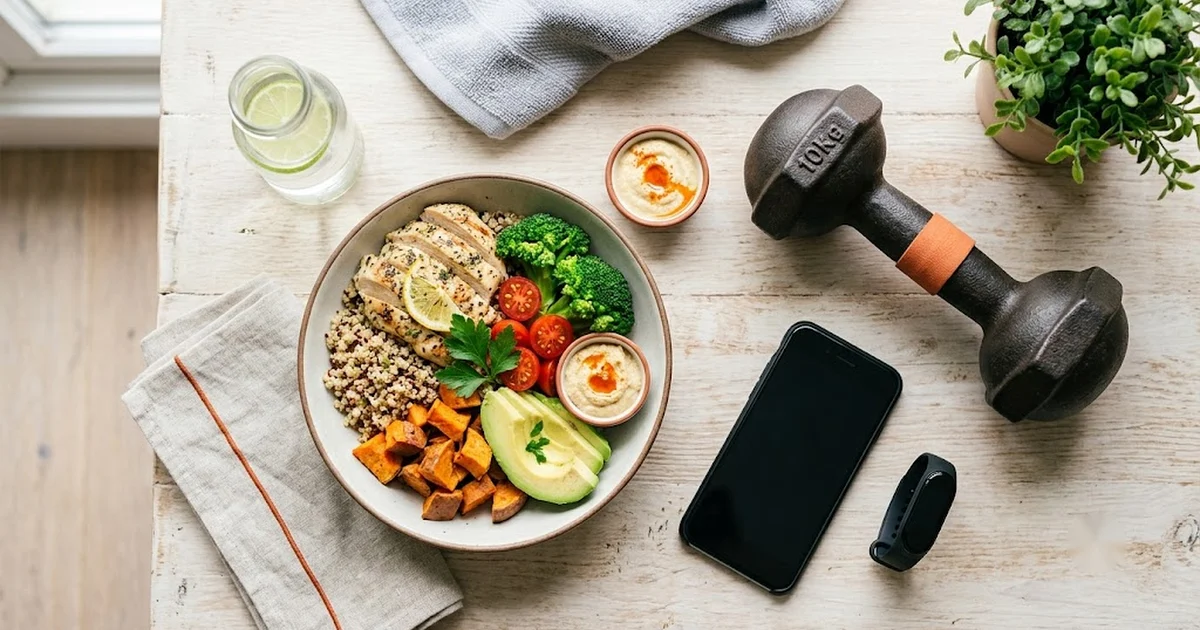
What to eat before workout at night: a normal meal with carbs and protein 2 to 4 hours before you train, or a small carb-based snack like a banana, toast with honey or yogurt with fruit 30 to 60 minutes before. Keep fat and fiber low close to the session, and finish with a light protein snack before bed.
That is the short version. The rest of this guide is for people who train after work or late at night, often alone, and want to know what to eat during the day, how long before an evening workout to eat, and what to eat after a late workout when bed is an hour away. The numbers come from the joint position paper on sports nutrition from Dietitians of Canada, the Academy of Nutrition and Dietetics and the American College of Sports Medicine. That paper was written for athletes, so treat its figures as the upper end for an ordinary hour in the gym.
How should you eat during the day if you train in the evening?
Eat normally through the day, spread your protein over 3 or 4 meals, and add an afternoon snack so you don't arrive at the gym having eaten nothing for six hours. Most evening sessions go badly because of the long gap between lunch and training, not because of the last snack.
The joint position paper puts daily protein for active people at about 1.2 to 2.0 g per kg of body weight. It recommends roughly 0.3 g/kg (about 15 to 25 g for most people) after key sessions and every 3 to 5 hours across several meals. For someone who weighs 70 kg, that works out to about 85 to 140 g of protein a day, eaten in 4 or 5 portions of about 20 to 30 g.
Sample day for a 6:30 pm workout
| Time | Meal | Example |
|---|---|---|
| 7:30 | Breakfast | Oats with milk and berries, 2 eggs or a pot of Greek yogurt |
| 12:30 | Lunch | Rice, potatoes or a wrap, chicken, beans or tofu, vegetables |
| 15:30 to 16:30 | Pre-workout snack | Turkey sandwich, or Greek yogurt with a banana and a little granola |
| 18:30 to 19:30 | Training | Water; nothing else needed for about an hour of lifting |
| 20:00 | Dinner | A normal plate with 25 to 40 g protein, carbs and vegetables |
| 22:30 (optional) | Before bed | Cottage cheese or a glass of milk if you're still hungry |
Get your free AI training and nutrition plan in 60 seconds
What should you eat before a workout after work?
Have a snack that is mostly carbs, with a bit of protein, 1 to 2 hours before you leave work, or a smaller carb-only snack 30 to 60 minutes before you start. Choose foods that digest easily, because rich, fatty or very high-fiber food just before training is what usually causes cramps and nausea.
The position paper notes that choices high in fat, protein or fiber may need to be avoided before exercise to reduce the risk of stomach problems. In practice, a sandwich on white or light bread will sit better than a bean salad or a burger right before you train.
| Food | Approx. carbs | Approx. protein | Best timing before training |
|---|---|---|---|
| 1 medium banana | 27 g | 1 g | 30 to 60 min |
| 2 rice cakes with 1 tbsp honey | 30 g | 2 g | 30 to 60 min |
| 1 slice toast with jam | 25 g | 3 g | 45 to 60 min |
| 170 g plain Greek yogurt and a banana | 33 g | 17 g | 60 to 90 min |
| 40 g oats cooked in 250 ml milk | 39 g | 13 g | 1.5 to 2 h |
| Turkey or ham sandwich (2 slices bread) | 30 g | 15 to 20 g | 1.5 to 2 h |
| Plate of rice or pasta, chicken, vegetables | 50 to 80 g | 30 to 40 g | 2 to 4 h |
Values are rounded averages and vary by brand and portion, so check labels if you track closely. If you use a pre-workout drink or coffee for an evening session, read Caffeine Before a Workout: Timing, Dose and Cautions first, because caffeine stays in your system for many hours and can push back your bedtime.
How long before an evening workout should you eat?
About 2 to 4 hours for a full meal, 1 to 2 hours for a small meal, and 30 to 60 minutes for a light carb snack. The bigger and richer the meal, the longer you need to wait.
For sessions longer than 60 minutes, the position paper recommends 1 to 4 g of carbohydrate per kg of body weight, eaten 1 to 4 hours before exercise. Go toward the low end when you eat close to the session and toward the high end when you eat a full meal several hours before. For a 70 kg person, that means about 70 g of carbs an hour before (a banana plus two slices of toast with jam) up to a large pasta meal 3 or 4 hours before. For sessions under about 45 minutes, the paper says you don't need carbohydrate during exercise, so a normal meal earlier in the day is usually enough.
| Time before training | What to eat | Example |
|---|---|---|
| 3 to 4 hours | Full meal | Rice or pasta, lean protein, vegetables |
| 1.5 to 2 hours | Small meal | Sandwich, oats with milk, yogurt bowl |
| 30 to 60 minutes | Small, mostly carb snack | Banana, rice cakes with honey, toast with jam |
| Under 30 minutes | Little or nothing | Water; a few bites of fruit if you feel shaky |
For more detail on what to eat before a workout and when, including morning sessions, see Pre-Workout Meal Timing: How Long Before You Train.
What can you eat before a workout if you only have 30 minutes?
Something small and fast to digest: half to one banana, a couple of rice cakes, a small glass of juice, or a few dates. Skip protein bars that are high in fat or fiber, nuts, and large shakes. They take longer to settle and are the usual cause of side stitches.
What to eat before workout at night: late sessions after 9 pm
If you ate dinner 2 to 3 hours before a late session, you probably need nothing more than water. If dinner was earlier, or you skipped it, have a light meal about 90 minutes before or a small carb snack 30 to 60 minutes before, and keep it low in fat so you are not lying down on a full stomach afterward.
- Dinner at 6 pm, training at 9 pm: eat a normal dinner, then a banana or a slice of toast at 8:15 if you're hungry.
- No dinner, training at 9:30 pm: have a sandwich or a small bowl of rice with chicken around 8 pm, then a proper recovery snack after the session.
- Shift workers training after a late shift: treat the session like an evening one in your own day. Eat a meal 2 to 4 hours before and a lighter one after, and keep your main meals at roughly the same times each day.
Avoid caffeine before late sessions unless you have already tested how it affects your sleep. Water is enough for an hour of training. If the session is long and hard, a sports drink can help.
What should you eat after a late workout when you go to bed soon?
Have a small snack with about 20 to 40 g of protein and some carbohydrate, such as Greek yogurt with honey, cottage cheese with fruit, or milk with toast. If your normal dinner comes after training anyway, just eat dinner and make it slightly smaller and lower in fat.
A 2019 review in Frontiers in Nutrition found that protein eaten before sleep is digested and absorbed during the night. In the studies it covered, people took single doses of 20 to 40 g. The review also says the optimal dose has not been settled. Good options for what to eat after a late night workout before bed:
- 250 g plain Greek yogurt with a teaspoon of honey and berries (about 25 g protein)
- 200 g cottage cheese with a sliced pear (about 22 to 24 g protein)
- A large glass of milk and a slice of toast with peanut butter (about 15 to 18 g protein)
- A protein shake made with milk or water, with a banana if you trained hard
- Scrambled eggs on one slice of toast
If you train hard again the next morning, add more carbs (rice, potatoes, bread, fruit) to refill glycogen. If your next session is two days away, a protein snack is plenty. For full meal ideas, see Best Post-Workout Meal: What to Eat After Training.
Does eating late after training hurt sleep or fat loss?
A light snack after evening training does not appear to hurt sleep or fat loss. A large, fatty meal right before you lie down is more likely to cause problems. For fat loss, your total intake over the day matters far more than the clock.
On sleep: an ETH Zurich summary of a 2019 meta-analysis reports that exercise in the four hours before bed did not harm sleep. The one exception was vigorous training within an hour of bedtime, and that finding was preliminary and based on a single study. If you train hard late at night and struggle to fall asleep, finish a little earlier or end with an easy cool-down.
On the food itself: the Frontiers review found no effect of pre-sleep protein on how quickly people fell asleep, how well they slept, or how hungry they were the next morning. It also reported no negative effect on resting energy expenditure or fat metabolism the next morning. Where people go wrong is eating a full dinner, then a late snack on top, and calling it recovery. If fat loss is the goal, count the late snack as part of your day's calories, not as an extra.
Large or greasy meals close to bedtime can trigger heartburn when you lie down, so keep the late snack small and simple. The guide Eating Before Sleep: How Late Meals Wreck Your Recovery covers this in more depth.
When to check with a doctor
- You use insulin or other glucose-lowering medication. Training in the evening can lower blood sugar overnight, so agree on a plan for food and doses with your doctor or diabetes team.
- You get heartburn several times a week despite eating earlier and lighter.
- You often feel dizzy, faint or very shaky during evening sessions even when you have eaten.
How to turn this into your own plan
Start with three fixed points: when you train, when you eat your last real meal before it, and what you eat afterward. Keep that routine for two weeks and write down how the sessions feel and how you sleep. Then change one thing at a time, such as moving the snack earlier or adding carbs after hard sessions.
If you'd like help building and tracking this, Trainera's free plan (no card needed) includes a diet tracker, workout logging, and one AI training plan and one AI nutrition plan a month. TRAI, the AI coach, builds a nutrition plan around your schedule and answers questions in your language. On the Premium plan, the AI food scanner logs calories and macros from a photo of your meal.
Frequently Asked Questions
Keep Reading
Get your free AI training and nutrition plan in 60 seconds
1,800+ exercises, wearables and progress tracking, free with no card needed. AI food scanning comes with Premium. Train solo or with a certified coach.