Workout for Women at Home: A 4-Week Beginner Plan for Weight Loss
A no-equipment, 4-week home workout plan for women: three full-body strength sessions, simple cardio, a 10-minute ab finisher and clear rules for progressing as you lose weight.
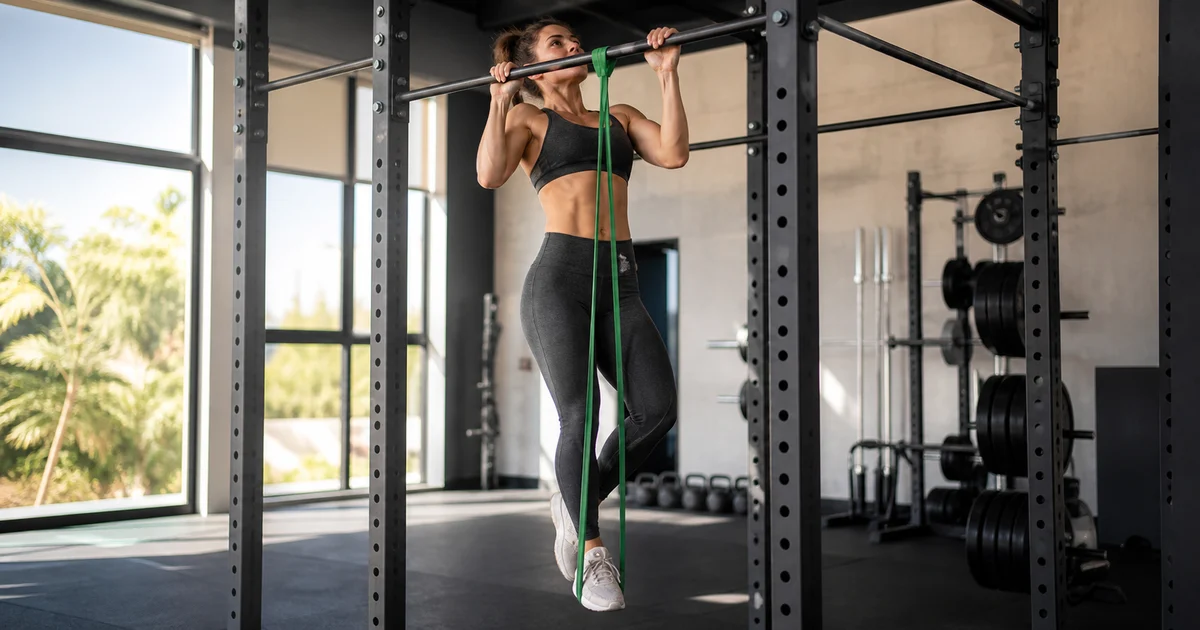
A good workout for women at home combines three bodyweight strength sessions a week (squats, glute bridges, push-ups, lunges and planks) with brisk walking or short cardio circuits on other days. Beginners need no equipment, about 30 to 40 minutes per session, and a modest calorie deficit if the goal is weight loss.
Below you get exactly that: the exercises, a sample week, a 4-week progression table and clear rules for making it harder once it starts to feel easy. Everything fits in a living room with a chair, a wall and a backpack. If you want a broader overview of training without equipment first, read our home workout plan with no equipment.
Can women get results working out at home only?
Yes. Your muscles respond to effort, not to the building you train in, and bodyweight exercises are enough to build strength, improve fitness and support fat loss for at least the first few months.
Official guidance agrees. The NHS lists exercises that use your own body weight, such as push-ups and sit-ups, as strengthening activities, and recommends doing them on at least 2 days a week alongside at least 150 minutes of moderate activity (NHS physical activity guidelines for adults). The WHO physical activity fact sheet uses the same 150-minute baseline and notes that muscle strengthening benefits everyone.
The one real limit is load. After a few months, plain squats and bridges stop being challenging, so you will need harder variations, single-leg work, a loaded backpack or resistance bands. That is covered in the progression section below.
Get your free AI training and nutrition plan in 60 seconds
What does a beginner home workout for women look like?
A beginner session is a full-body routine of 6 to 8 basic movements, done for 2 to 3 sets of 8 to 15 reps, with a 5-minute warm-up before it. It should feel challenging by the last few reps, never painful.
Warm up with 1 minute each of marching on the spot, arm circles, bodyweight good mornings, slow squats to a chair and step jacks. Then pick your level for each exercise:
| Movement | Beginner version | Harder version | Main muscles |
|---|---|---|---|
| Squat | Sit-to-stand from a chair | Free squat, then pause squat | Thighs, glutes |
| Hip hinge | Glute bridge on the floor | Single-leg glute bridge | Glutes, hamstrings |
| Push | Push-up against a wall or kitchen counter | Push-up on knees, then full push-up | Chest, shoulders, triceps |
| Pull | Backpack row (bent over, bag filled with books) | Heavier bag, 3-second lowering | Upper back, biceps |
| Lunge | Supported reverse lunge, holding a chair | Free reverse lunge, then split squat | Thighs, glutes, balance |
| Core | Dead bug | Plank, then side plank | Abs, deep core |
Rest 60 to 90 seconds between sets. Stop each set when you have about 2 good reps left in the tank. That margin keeps your form clean and still gives your muscles a reason to adapt.
When to check with a doctor first
Talk to your GP before starting if you are pregnant or recently gave birth, have a heart condition, high blood pressure or a joint injury, or get chest pain, dizziness or unusual breathlessness when active. After childbirth, leaking or a bulge along the middle of your stomach during exercise is a good reason to see a pelvic health physiotherapist.
Which home workout helps women lose weight?
The best workout for women to lose weight is a mix of strength training to keep muscle and regular cardio to raise daily energy use, combined with a modest calorie deficit. Exercise helps a lot, but the deficit is what actually moves the scale.
The NHS suggests reducing intake by around 600 calories a day as a safe and sustainable approach (NHS calorie counting guide). For most women, a steady loss of about 0.5 to 1 kg (1 to 2 lb) a week is realistic, and slower is fine. Our guide to realistic weight loss goals per month explains what to expect, and how to build a weight loss meal plan shows how to set up the food side step by step.
For home workouts to lose weight, these cardio options work well in small spaces:
- Brisk walking outside, 20 to 45 minutes. Simple, low impact and easy to repeat daily.
- Stair step-ups on the bottom stair, 30 seconds on, 30 seconds off, for 10 to 15 minutes.
- Low-impact circuit: step jacks, marching high knees, squat to chair, standing knee-to-elbow, 40 seconds each, repeated 3 to 4 times.
- Dancing or a follow-along video if that is what gets you moving.
Use the talk test for intensity. Moderate means you can talk but not sing. Vigorous means you can only say a few words before needing a breath. Beginners should spend most of their cardio time at moderate effort.
What is calisthenics, and is it good for women?
Calisthenics is strength training using your own body weight: squats, lunges, push-ups, planks, dips, and later pull-ups and pistol squats. It is an excellent fit for women training at home because every exercise can be made easier or harder without buying anything.
The key idea is a progression ladder. Instead of adding weight, you move to a harder version of the same movement. A push-up ladder looks like this:
- Wall push-up
- Kitchen counter push-up
- Push-up on a sofa arm or low table
- Push-up on knees
- Full push-up from the floor
- Push-up with feet raised on a step
A calisthenics workout for women is no different from one for men. Lower-body and glute work tends to progress quickly, and upper-body pushing usually takes longer, so stay patient there. You will not get bulky from bodyweight training. You will get stronger and firmer, and daily tasks will feel easier.
Which ab exercises can women do at home?
The most useful abs workout at home for ladies uses exercises that train the core to stay stable: dead bugs, planks, side planks, bird dogs and reverse crunches. They protect your back and carry over to every other exercise.
One honest note: ab exercises strengthen your core, but they do not burn fat from your stomach specifically. Belly fat comes off with overall fat loss, through the calorie deficit and the full routine above. Here is a 10-minute ab finisher you can add after any strength session:
- Dead bug: 2 sets of 8 per side, lower back pressed into the floor.
- Bird dog: 2 sets of 8 per side, slow and controlled.
- Front plank: 2 sets of 20 to 40 seconds (on knees if needed).
- Side plank: 2 sets of 15 to 30 seconds per side, knees bent to start.
- Reverse crunch: 2 sets of 8 to 12, curling the hips up rather than swinging the legs.
Breathe out as you brace and do not hold your breath through long planks. If you notice doming along the midline of your stomach, choose the easier version.
What does a 4-week home plan look like, day by day?
This 4-week plan uses three full-body strength sessions, three cardio days and one full rest day each week. Each strength session takes about 30 to 40 minutes including the warm-up.
Workout A: squat, glute bridge, push-up (your level), backpack row, dead bug, front plank.
Workout B: reverse lunge, single-leg or regular glute bridge, push-up (your level), backpack row, bird dog, side plank.
| Day | Weeks 1 and 3 | Weeks 2 and 4 |
|---|---|---|
| Monday | Workout A | Workout B |
| Tuesday | Brisk walk, 20 to 30 min | Brisk walk, 30 to 40 min |
| Wednesday | Workout B | Workout A |
| Thursday | Low-impact circuit, 15 to 20 min | Low-impact circuit, 20 to 25 min |
| Friday | Workout A + ab finisher | Workout B + ab finisher |
| Saturday | Longer walk or active hobby, 40 to 60 min | Longer walk or active hobby, 45 to 60 min |
| Sunday | Rest and light stretching | Rest and light stretching |
Change the sets, reps and rest each week so the plan keeps asking a little more of you:
| Week | Sets per exercise | Reps | Rest | Focus |
|---|---|---|---|---|
| 1 | 2 | 8 to 10 | 90 s | Learn the movements, find your level |
| 2 | 3 | 10 to 12 | 75 s | Add the third set |
| 3 | 3 | 12 to 15 | 60 s | Slow 3-second lowering on every rep |
| 4 | 3 to 4 | 10 to 12 | 60 s | Move one step up the ladder on 2 or more exercises |
The walks and circuits add up to roughly 75 to 125 minutes of cardio a week. After this plan, add 10 minutes to your walks every couple of weeks until you reach the 150 minutes of moderate activity the guidelines recommend. Log every session, even briefly. Seeing your reps climb from week 1 to week 4 will keep you going better than anything else.
How should you progress when the workouts get easy?
When you can finish every set at the top of the rep range with 2 or more reps to spare, make the exercise harder. Change only one thing at a time so you can tell what is working.
Your options, roughly in order of how often to use them:
- More reps within the range, then more sets (up to 4).
- Harder variation: the next step on the ladder, such as counter push-up to knee push-up.
- Slower tempo and pauses: 3 seconds down, 1-second pause at the bottom.
- Single-leg work: split squats, single-leg bridges, step-ups.
- Added load: a heavier backpack or a set of resistance bands.
- Shorter rest, mainly for conditioning days.
After week 4, you can repeat the cycle with harder variations or move to a longer program. Our workout plan for women from beginner to intermediate is a natural next step if you want more structure and volume.
How do you turn this into a personal plan?
This plan gives you a starting point, but your schedule, equipment and fitness level are specific to you. Trainera is a fitness app on web, iOS and Android for people who train on their own. Its free plan needs no card and includes workout logging, a diet tracker, 1 AI training plan and 1 AI nutrition plan a month. Its AI coach, TRAI, builds a workout plan from more than 1,800 real exercises, most of them with video, and answers questions in your language. You can tell it you train at home with no equipment and want to lose weight. If you train alone and want feedback on form, TRAI Vision on the Platinum plan uses your phone or browser camera without uploading video. It counts reps out loud on 902 exercises and gives a form correction per rep on 252 of them. Plan details are on the pricing page.
Frequently Asked Questions
Keep Reading
Get your free AI training and nutrition plan in 60 seconds
1,800+ exercises, wearables and progress tracking, free with no card needed. AI food scanning comes with Premium. Train solo or with a certified coach.