Halal Nutrition and Macro Tracking: A Gulf Food Guide (2026)
How to track macros with halal and Gulf foods when generic calorie apps miss local dishes, plus practical protein and macro targets for life in the Arabian Peninsula.
Get your free AI training and nutrition plan in 60 seconds
TL;DR
Tracking macros in the Gulf breaks down when your app has no entry for kabsa, machboos, or a proper plate of hummus with warm khubz. You end up logging a Western approximation and wondering why your numbers never add up.
- Halal is about sourcing, not macros. A halal meal still needs the same protein, carb and fat accounting as any other meal.
- Generic apps miss local dishes because their databases are built around American and European foods, so mixed rice dishes and Levantine mezze get logged badly.
- Photo meal analysis plus a large food database is the fastest fix for Gulf eating, since you can shoot the plate instead of hunting for a matching entry.
- Start with protein. Aim for roughly 1.6 to 2.2 g per kg of bodyweight and let carbs and fats fill the rest around rice, dates and grilled meat.
At a Glance
| What you need | Solo / global apps | Trainera |
|---|---|---|
| Gulf and Levantine dishes in the database | Thin, mostly user-submitted entries with wild variation | Large food database plus 1,100+ recipes with macros and diet tags |
| Logging a mixed rice plate | Manual search for each component, easy to under-count | Photograph the plate and get recognized foods with calories and macros |
| Arabic interface | Often English only or partial translation | Full Arabic interface with complete right-to-left layout |
| Barcode scan for local groceries | Hit or miss on regional products | Barcode scanning built into the diet tracker |
| Dietary preferences and allergens | Basic tags, rarely enforced in plans | Allergen and dietary preferences applied to nutrition plans |
| Ramadan schedule support | No awareness of suhoor and iftar timing | Multi-day plan builder you can shape around suhoor and iftar |
| Macro charts and history | Usually behind a paywall | Diet tracker with history, macro charts and water tracking |
| Shopping list | Manual or missing | Auto-generated shopping list from your plan |
| Coaching option | Separate app or none | Optional trainer marketplace, or stay fully self-guided |
Halal and macros are two different questions
People often mix these up. Halal describes how a food is sourced and prepared, mainly the meat and the absence of alcohol and pork. Macros describe how much protein, carbohydrate and fat a food gives you. A plate of grilled lamb kabsa is halal, and it also carries a specific mix of protein from the meat, carbs from the rice, and fat from the ghee or oil used to cook it. Tracking one does not replace the other.
The good news is that a halal kitchen is easy to build a strong diet around. Grilled and roasted meats, fish from the Gulf, lentils, chickpeas, yogurt and labneh, dates, rice and fresh vegetables are all staples, and they cover protein, fiber and micronutrients well. The tracking problem is not the food itself. It is that most apps were never built to recognize these dishes. If you want a deeper walkthrough of matching Gulf ingredients to entries, see our guide to the calorie counter for Middle Eastern foods.
Why generic calorie apps miss Gulf dishes
Most global calorie apps grew their databases in the United States and Europe. Their strongest entries are packaged Western products and chain restaurant meals. When you search kabsa, machboos, mandi, harees, thareed or majboos, you get a handful of user-submitted entries with numbers that swing from one contributor to the next. One person logs kabsa at 300 calories a serving and another at 900, and neither tells you the portion they measured.
Mixed dishes make it worse. A single plate of chicken machboos is rice, meat, onions, dried lime, tomato and spice cooked together, so there is no clean barcode and no single tidy entry. You end up logging rice, then chicken, then guessing the oil, which is slow and usually undershoots the fat. Sweets like kunafa, luqaimat and basbousa are dense in sugar and fat and almost always logged too low. That is how people eat carefully all week and still stall.
How photo analysis and a big database fix this
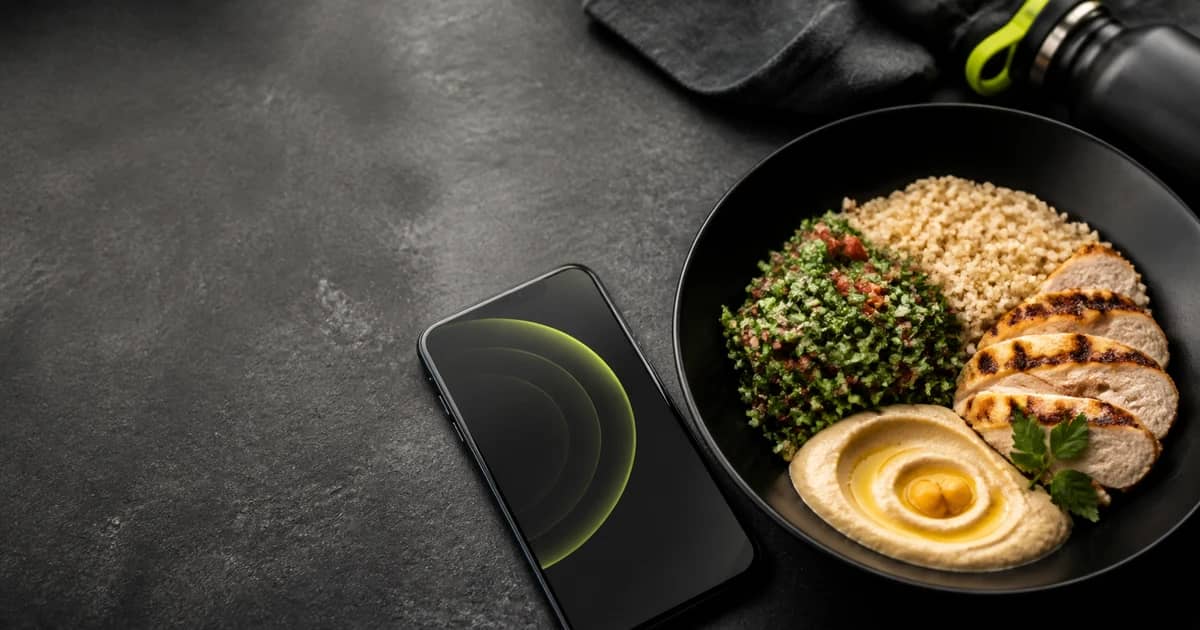
The practical answer is to stop searching and start photographing. Trainera includes AI photo meal analysis, so you take a picture of the plate and it returns recognized foods with calories and macros. For a mixed rice dish this is far faster than logging each component by hand, and it captures the parts people usually forget, like the oil the rice was cooked in. We go deeper on how this handles regional plates in our piece on AI photo meal analysis for Gulf cuisine.
Photo analysis works best sitting on top of a large, well-labeled food database and a recipe library. Trainera pairs it with 1,100+ recipes that already carry macros and diet tags, plus barcode scanning for packaged groceries and an AI nutrition chat when you want to ask about a substitution. You can also set allergen and dietary preferences so your plans respect what you actually eat. If you are weighing options across apps, our comparison of the best macro tracking app lays out what matters.
Practical macro targets to start with
Before you track, you need a target. Work out your maintenance calories first, then decide whether you are losing, gaining or holding. The free TDEE calculator gives you a daily energy figure, and the macro calculator splits it into protein, carbs and fat. For most people, protein is the anchor. Somewhere between 1.6 and 2.2 grams per kilogram of bodyweight supports muscle whether you are cutting or building.
In Gulf terms this is simple to hit. A palm-sized portion of grilled chicken, fish or lean lamb at each main meal, a bowl of lentils or chickpeas, and yogurt or labneh will carry most of your protein. Rice and khubz cover carbohydrate, so let portion size do the work there rather than cutting them out. Dates before or after training are a clean, traditional carb source. If you want to check your protein floor specifically, the protein calculator is a quick sanity check, and our guide on how to calculate macros for your goal explains the reasoning.
Ramadan and the Gulf eating rhythm
Nutrition in the region is not spread evenly across the day. During Ramadan the whole schedule compresses into suhoor and iftar, and even outside Ramadan late dinners and long family meals are normal. Tracking has to bend to that. A multi-day nutrition plan builder lets you load protein and slower carbs into suhoor, break the fast sensibly at iftar with dates and water before the heavy plate, and still land near your daily targets. Our full walkthrough on Ramadan nutrition for suhoor and iftar covers the timing in detail.
The Gulf heat matters too. Hydration is easy to neglect when you are fasting or training in summer, so water tracking is worth taking seriously alongside your macros. If you train in the region, our notes on fat loss and the Gulf lifestyle tie the food side together with day-to-day habits.
Privacy, language and staying consistent
Consistency is what actually moves the numbers, and small friction points kill it. Logging in a language you think in helps, which is why the full Arabic interface with complete right-to-left layout is more than a nice touch for many users here. Automatic language detection means the app meets you where you are. And because you can run Trainera fully self-guided, you can track macros privately without any coach seeing your data unless you choose to send a coaching request through the optional trainer marketplace.
Put together, the loop is straightforward. Set a target with the calculators, plan a few days that fit halal Gulf staples, log meals by photo or barcode as you go, and watch the macro charts and history tell you whether to adjust. That is a system you can keep up during a normal week and during Ramadan alike.
Ready to track halal and Gulf meals without fighting your app? Start free with Trainera and log your first plate today, or by photo on Premium.
Related reading
Frequently Asked Questions
Does eating halal change how I should track macros?
Why do generic calorie apps struggle with Gulf dishes like kabsa or machboos?
How much protein should I aim for on a halal Gulf diet?
Can I track macros during Ramadan with Trainera?
Keep Reading
Put this into practice with Trainera
Get your free AI training and nutrition plan in 60 seconds
1800+ exercises, wearables and progress tracking, free with no card needed. AI food scanning comes with Premium. Train solo or with a certified coach.