Calorie Counter for Middle Eastern Foods: Tracking Gulf and Arabic Dishes in 2026
Most calorie counters were built around Western food and fall apart the moment you eat kabsa, machboos, or a plate of Arabic sweets. Here is how to track Gulf and Middle Eastern meals accurately without guessing.
Get your free AI training and nutrition plan in 60 seconds
TL;DR
Counting calories in the Gulf is harder than it should be because global apps were built around Western portions and packaged food, not kabsa, machboos, shawarma, or a majlis full of dates. You end up guessing, and guesses ruin your numbers. The fix is a large regional food database, photo meal analysis, and barcode scanning working together.
- Regional dishes matter. Rice-heavy Gulf staples, oily shawarma, and sugar-dense Arabic sweets are easy to underestimate by hundreds of calories.
- Global apps miss local food. Search kabsa or luqaimat and you often get one bad crowd-sourced entry or nothing at all.
- Photo and barcode fill the gaps. Snap a plate or scan a wrapper instead of hunting for entries that do not exist.
- Trainera combines AI photo meal analysis, barcode scanning, a large recipe library, and a full Arabic interface so tracking fits Gulf eating habits.
At a Glance
| What you need | Solo / global apps | Trainera |
|---|---|---|
| Gulf dishes like kabsa, machboos | Often missing or one poor entry | Recognized by photo and recipe library |
| Arabic sweets and dates | Vague, easy to underestimate | Photo analysis estimates calories and macros |
| Packaged food from local shops | Barcodes sometimes unrecognized | Barcode scanning built in |
| Arabic interface | Rare, often partial | Full Arabic with complete RTL layout |
| Macros, not just calories | Usually yes | Calories, protein, carbs, fat and charts |
| Ramadan suhoor and iftar tracking | No local context | History and macro charts fit the schedule |
| Water tracking in heat | Sometimes | Built into the diet tracker |
| AI nutrition chat for questions | Rare | Ask about any dish or swap |
| Free calculators for targets | Varies | TDEE, calorie and macro calculators free |
| All-in-one training plus nutrition | Usually separate apps | Workouts and nutrition in one place |
Why global calorie counters miss Gulf food
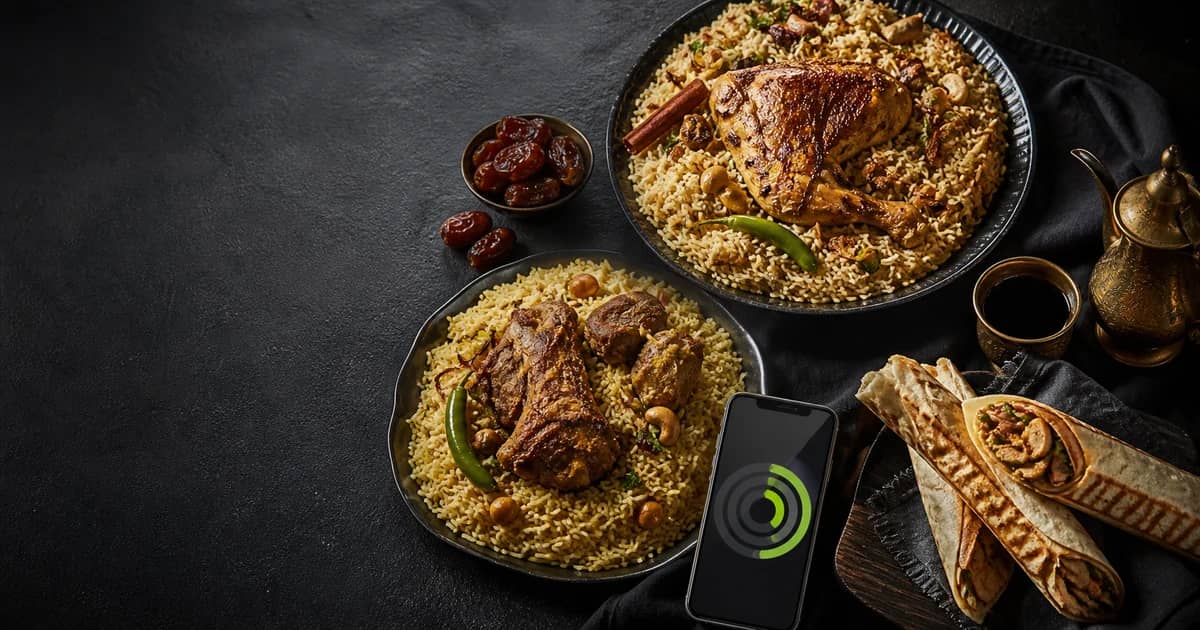
Open a popular international calorie app and search for kabsa. You will probably find a single user-submitted entry with a round number and no source, or you will find nothing and end up logging plain white rice with chicken. That approximation quietly erases the ghee, the fried onions, the tomato and spice base, and the way the rice soaks up fat from the meat. A real plate of kabsa can carry far more calories than the sum of its clean parts, and the app never tells you.
The problem is structural. Most of these databases grew from Western supermarket products and home cooking. They handle a boxed cereal or a grilled chicken breast well. They struggle with dishes that are cooked communally, served on a large shared platter, and portioned by hand rather than by scale. Gulf and Levantine cooking is exactly that kind of food, so the tracking breaks down right where people in the region actually eat.
The dishes that trip people up
A few categories cause most of the damage. Rice-based mains like kabsa, machboos, biryani, and mandi look like protein plus a carb, but the cooking fat pushes them higher than expected. Shawarma is another one. The meat is basted, the bread absorbs oil, and the garlic sauce or tahini adds calories that a quick log ignores. Hummus feels healthy and it is nutritious, but it is also calorie dense because of the tahini and oil, so the difference between two spoons and half a bowl is large.
Then there are dates and Arabic sweets. Dates are wholesome and a Ramadan staple, yet they are concentrated sugar, and it is easy to eat six or seven while talking. Luqaimat, kunafa, basbousa, and baklava are built on syrup, ghee, and semolina or nuts. A modest serving of any of these can rival a full meal. None of this means you should avoid the food you grew up with. It means you need numbers you can trust so you can fit these dishes into your day on purpose.
How photo, barcode, and a big database solve it
Three tools cover almost every situation. First, AI photo meal analysis. You photograph the plate and the app recognizes the foods and estimates calories and macros. This is the fastest way to log a home-cooked kabsa or a plate of mixed mezze, because you skip the search entirely. Second, barcode scanning for packaged items from your local supermarket, from labneh tubs to regional snack brands. Third, a large recipe and food library so that when you do search, common Gulf and Middle Eastern dishes are already there with sensible values.
Trainera puts all three together. You can snap a meal, scan a wrapper, or pick from 1,100 or more recipes with macros and diet tags, then adjust the portion. If you are unsure whether your estimate makes sense, the AI nutrition chat lets you ask about a specific dish or a smart swap. You can read more about how this works for local food in our guide to AI photo meal analysis for Gulf cuisine.
Tracking through Ramadan and long summers
Two things shape eating in the region more than almost anywhere else: Ramadan and heat. During Ramadan your whole day compresses into suhoor and iftar, and the temptation is to overload iftar with dates, fried starters, and sweets after a long fast. A tracker with history and macro charts helps you see the real total across both meals instead of guessing. Our Ramadan nutrition guide for suhoor and iftar macros goes deeper on how to structure it.
The Gulf summer adds another layer. When temperatures climb, hydration and electrolytes matter, and appetite often shifts toward lighter, cooler food. Water tracking sits inside the same diet tracker, so you are not juggling separate apps. Keeping calories and water in one view makes it easier to stay consistent when the weather works against you.
Set your targets before you track
Logging food only helps if you know what you are aiming for. Before you count a single meal, get a baseline. Use the free TDEE calculator to estimate how many calories you burn in a day, then set an intake target with the calorie calculator. From there, split those calories into protein, carbs, and fat using the macro calculator. Protein is usually the number people miss, and rice-heavy meals make it easy to eat plenty of carbs and not much else. If halal tracking is part of your routine, our guide to halal nutrition and macro tracking covers it in detail.
Privacy and language, done right
Two practical things matter to a lot of people in the Gulf and often get ignored by global apps. The first is language. Trainera runs a full Arabic interface with a complete right-to-left layout, so the whole experience reads naturally rather than feeling like a rough translation. The second is that everything stays self-guided if you want it that way. You can use the entire app, log every meal, and follow AI plans without ever contacting a coach. If you later decide you want one, the trainer marketplace is there, but it is optional. For a broader view of what a strong regional app looks like, see our roundup of the best Arabic fitness app options.
To be fair, the big international apps still do some things well, especially barcodes for global brands and habit reminders. If you eat mostly imported packaged food, they can work. The moment your plate is a home-cooked Gulf or Levantine meal, though, the gaps show up, and that is where a regional-aware tracker earns its place.
You do not have to give up kabsa, dates, or kunafa to hit your goals. You just need honest numbers and a tool that understands the food in front of you. Start free with Trainera and track your next Middle Eastern meal, by photo on Premium, instead of guessing.
Related reading
Frequently Asked Questions
Why do global calorie apps struggle with Gulf and Middle Eastern food?
How do I count calories for a dish that is not in the database?
Are dates and Arabic sweets really that high in calories?
Can I track calories in Arabic?
Keep Reading
Put this into practice with Trainera
Get your free AI training and nutrition plan in 60 seconds
1800+ exercises, wearables and progress tracking, free with no card needed. AI food scanning comes with Premium. Train solo or with a certified coach.